

Lahti
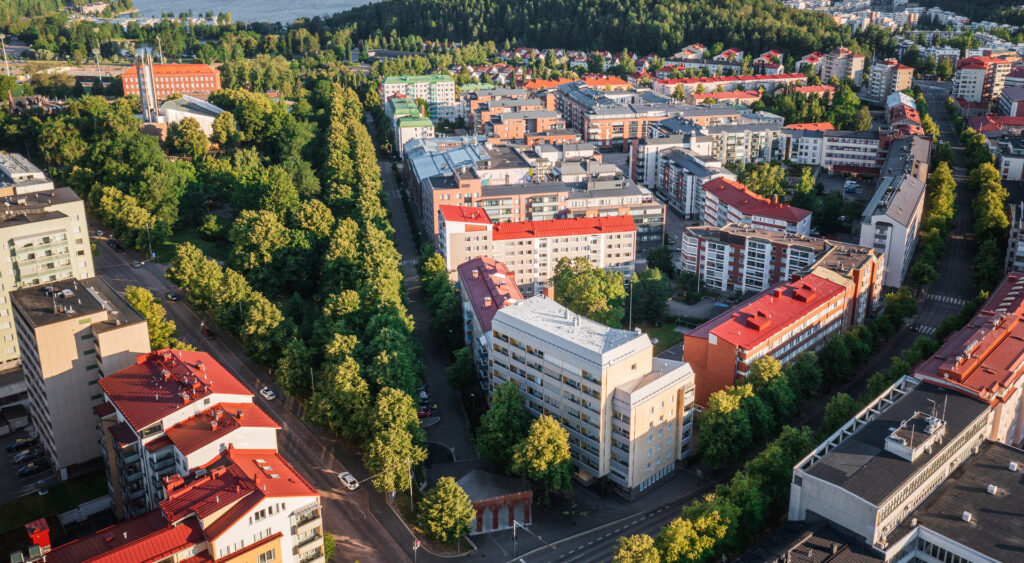
I went back to Finland in late August, 2025, my fourth annual visit, call it a pilgrimage, to the Sibelius Festival that is held every year in the small city of Lahti on Lake Vesijärvi, in South Eastern Finland. My first trip was because of the great composer, Jean Sibelius (1865 – 1957), and his music has certainly brought me back to Finland as I get more and more involved in the great man’s work and his influence on contemporary classical music. Maybe I was always going to love Finland because I loved Sibelius, or was it the other way round, the two are now too intertwined to be unravelled. Both the composer and the country have many layers, but maybe at their heart is a still core that moves me and tells me to focus on the things in our lives that are often unspoken, but undemonstratively who we are. In Finland, I find myself questioning who I am, often silently celebrating the good things but also, searching for what I would like to become. As I am learning too who or what I’m not. Finland, increasingly, feels like my safe place.
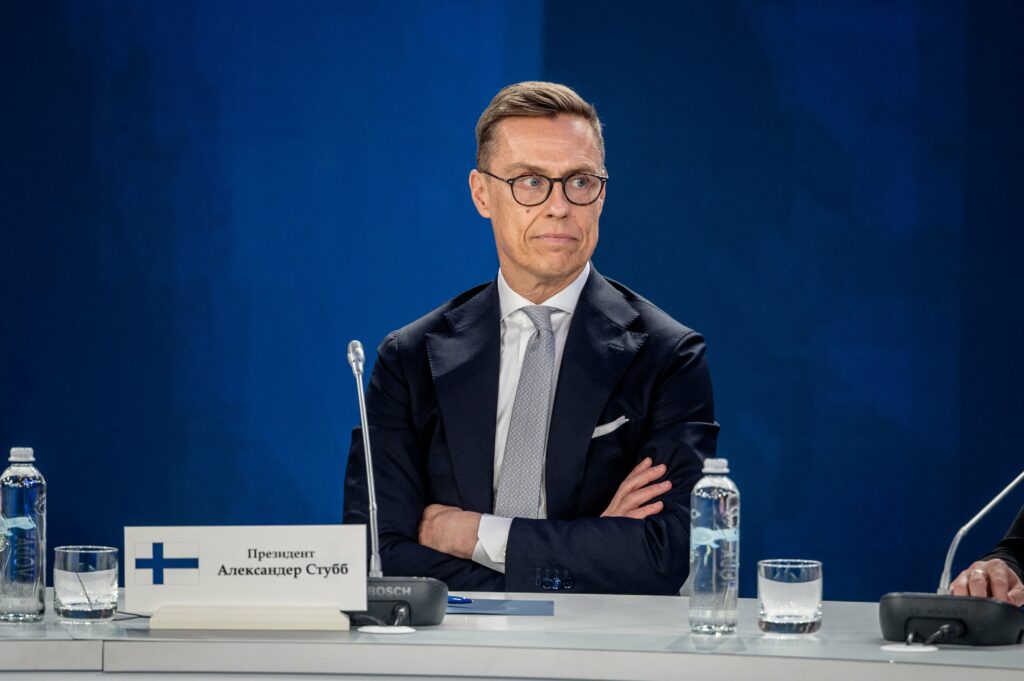
When international politics is becoming more and more unstable, and when politics in so may countries has become bad-tempered and divisive, on news bulletins, I see Finland’s president, Alexander Stubb as the voice of reason, and when I visit the country, an apparently efficient working social democracy, Finland feels like a template for how the rest of us should be organising our lives.
I’m not a Finn, I know. but I’m proud of my, admittedly small, percentage of Viking DNA, I celebrate my British/Irish dual nationality, as a Northern European, and I value my citizenship of the European Union. I am aware that one of the main reasons for my love of Finland, is its apparent tolerance of other ways of life which might come from a belief in being part of a community where the climate is not always so friendly. Lahti is home to a truly important classical music festival, and classical music is one of my greatest passions, but it is many other things too. I feel free to be myself here and I truly value the reasons why Finland is voted the happiest country in the world.
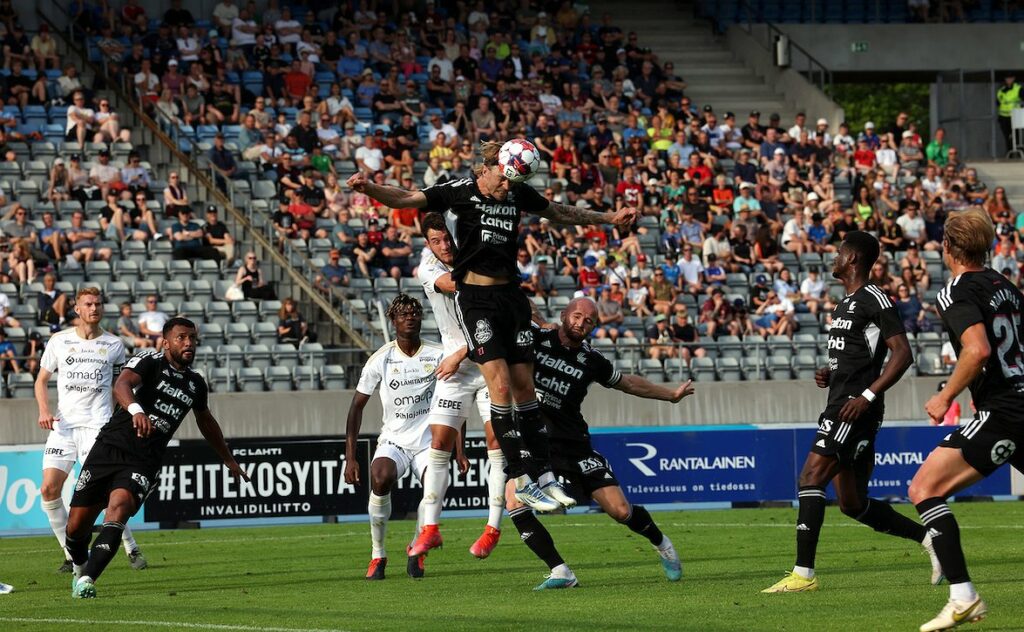
The relatively small city of Lahti has an impressive sporting history, with an heroic team, Lahti FC, which might not be world-famous (yet), but which definitely kicks above its weight, as does Finland itself. I was terrible at football as a schoolboy, but I follow this team, somehow inspired by their determination and resilience. I’m only sad that my visits to the Sibelius Festival never seem to coincide with them playing at home. Maybe next time.
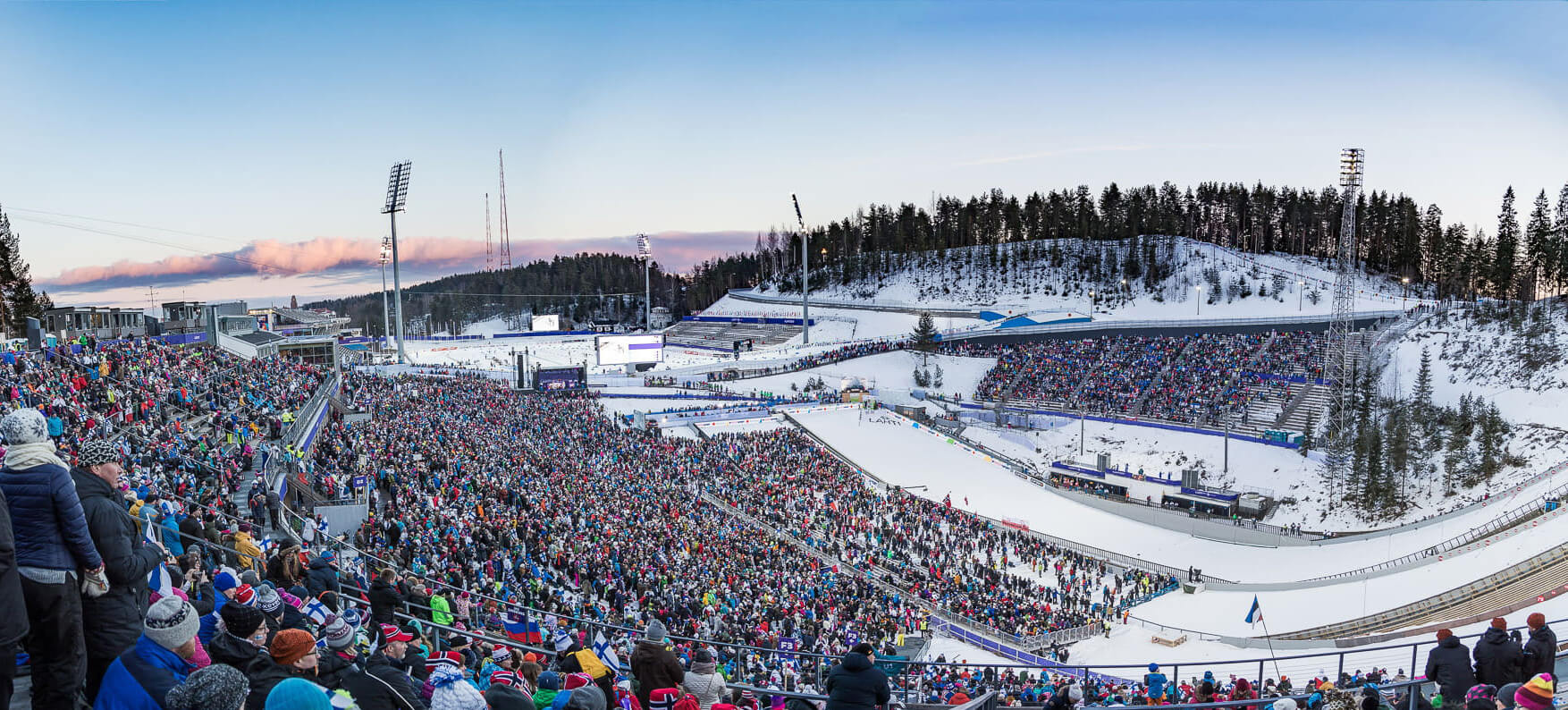
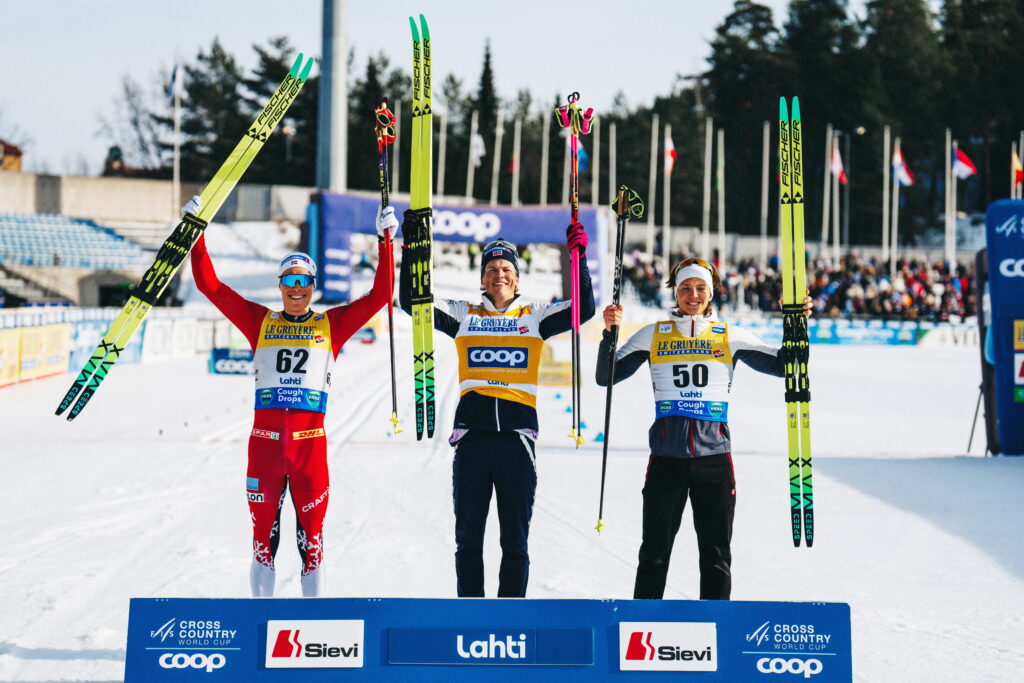
Lahti is also home to the Lahti Ski Games, the international Nordic skiing event. Nordic skiing is distinct from alpine skiing, as it is to do with long distance velocity over relatively flat countryside, as opposed to speeding down precipitous mountain terrains. You can’t visit Lahti without being aware of this tradition. Just as I was never going to be a footballer, it’s also true that I have never been skiing. My only, and rather feeble, point of common interest is that I used to be an enthusiastic roller-bladder. I first saw a brave man speeding his way through the traffic in downtown Minneapolis in the mid 1990s, and I loved the idea so much that I took it up when I returned home. It was, I believe, invented in Minnesota as an out-of-season training tool for skiers. Hugh, my roller-blading coach, told me that if I could roller-blade, where you can fall over in four different directions, then I should be able to ski, where you can only fall over in two directions. I have never checked this out, so don’t try this at home. My roller-blading days are now behind me, so I am unlikely to ever go skiing as a replacement. But, as they say, never say never.
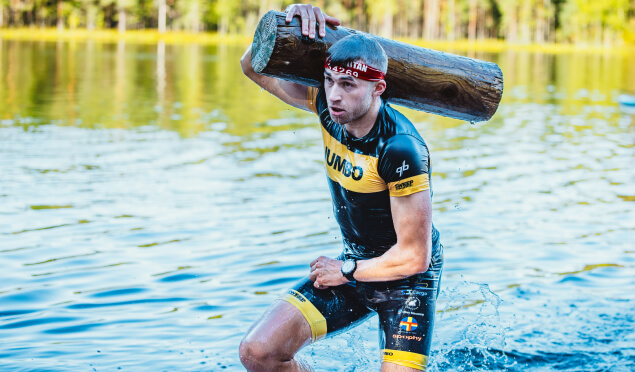
Lahti now holds annual Spartan Games events, and last year held the European Spartan Games championships. Now, for the record, I know that I’m no Spartan, but, believe it or not, I was tempted once, a few years ago, to train for one of these cross-country endurance events, like the Ironman Triathlon competition. In sports, I was often told that what I lacked in skill, I sometimes made up for by resilience and bloody-mindedness. Sadly I never achieved that ambition of trying my luck as a Spartan when I trained with a group of online friends in some pretty vigorous Warrior Training, but it led me to taking up the forever interesting martial art of kung fu. I have often admired Lahti’s sporting history, but the impressive Spartan Games is, sadly, another event in which I will never take a part.
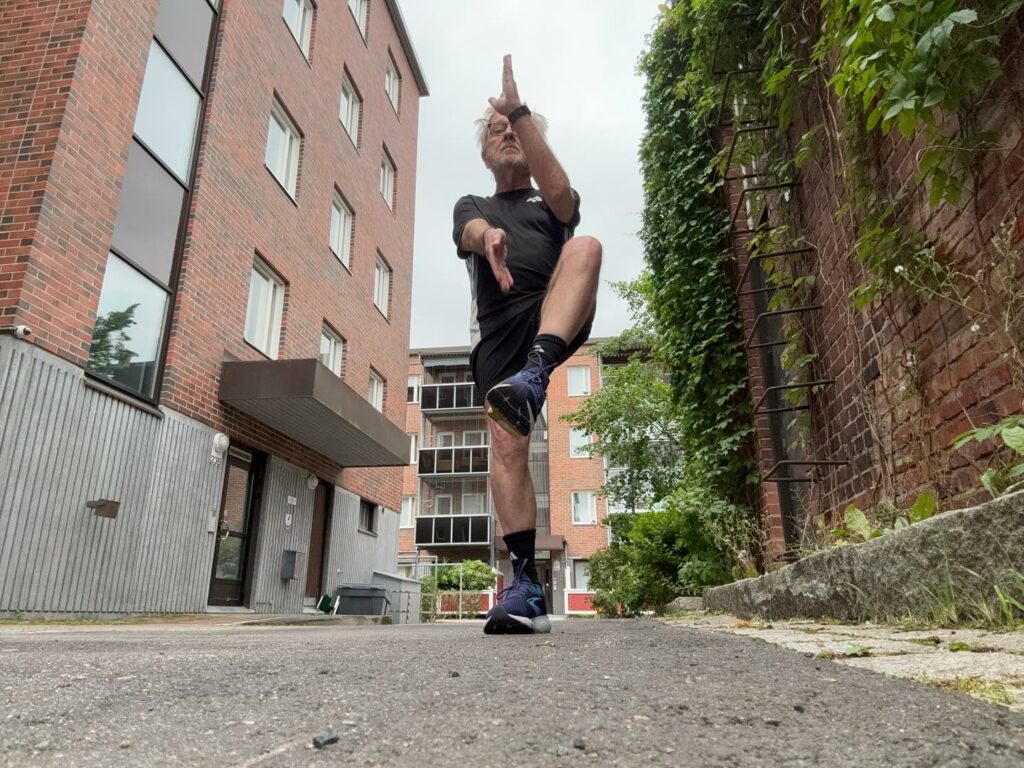
The only sporting activity I do practice when I am in Lahti is my daily martial arts training, it keeps me fit and satisfies that small part of me that would love to have been really good at those other sports that the Finns have made their own.
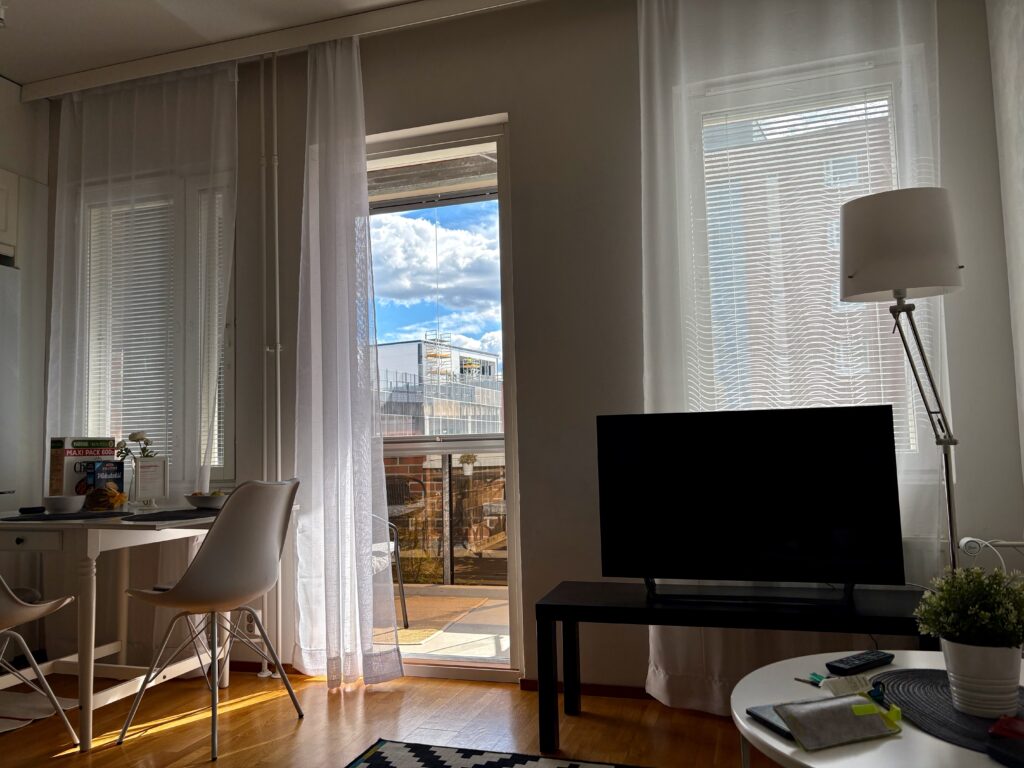
Finnish sporting prowess, toughness and endurance, maybe comes from the country’s tough history on its way, from foreign occupation to fully independent nationhood in 1917, just one hundred years ago. I think one of the many things I admire about Finland is that sense of the new and the modern. It has equipped it well for the digital age where it has become a world leader in digital technologies. Renting an apartment every year in the centre of this very modern and familiar city feels like I have a second and very up-to-date hometown.
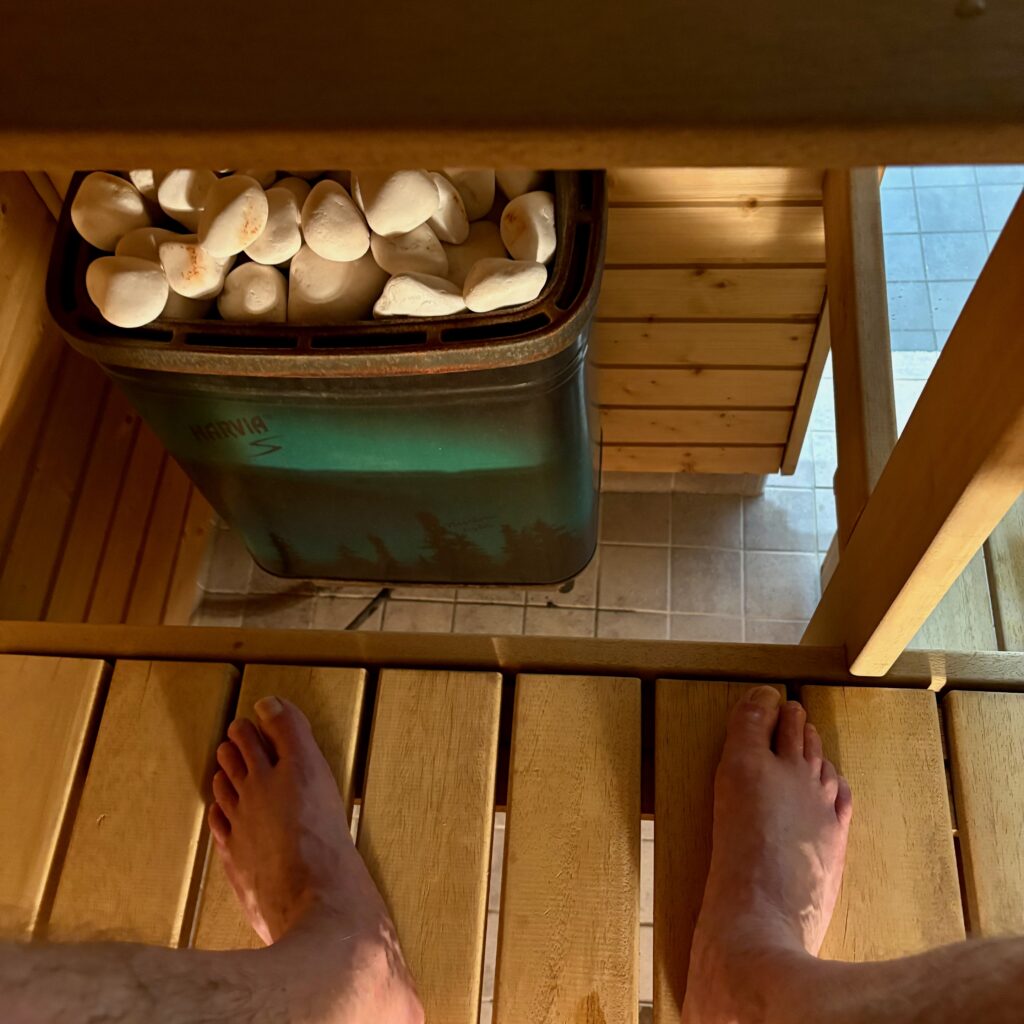
I have even got used to the very Finnish tradition of the daily sauna – there’s always been one in the apartment. It’s an amazing experience of relaxation, purification and calm to take time out in this particular type of steamy heat. The word for steam vapour in the Finnish language is höyry, but there is a different word for the steam in a sauna, löyly, which means spirit, breath or soul. If you don’t understand the difference, you haven’t spend enough time in a Finnish sauna.
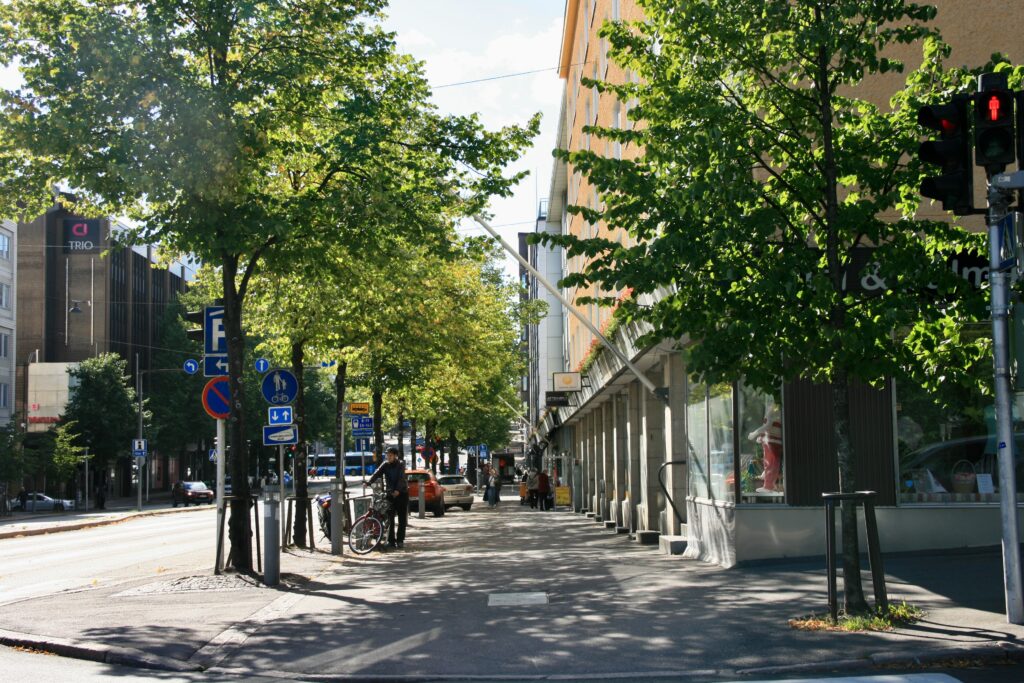
Lahti town is hardly Manhattan, or London; it might seem at first glance to be an ordinary place, but I have grown to love it for its solid charms, its orderliness, its cleanliness, its progressive modernity, and its general ambience of calm.
It’s a great place for coffee too. Finland has the world’s highest coffee consumption per capita, with residents averaging four to nine cups a day. There is a Finnish law making it compulsory for Finnish employers to give their workers at least two ten-minute coffee breaks a day.
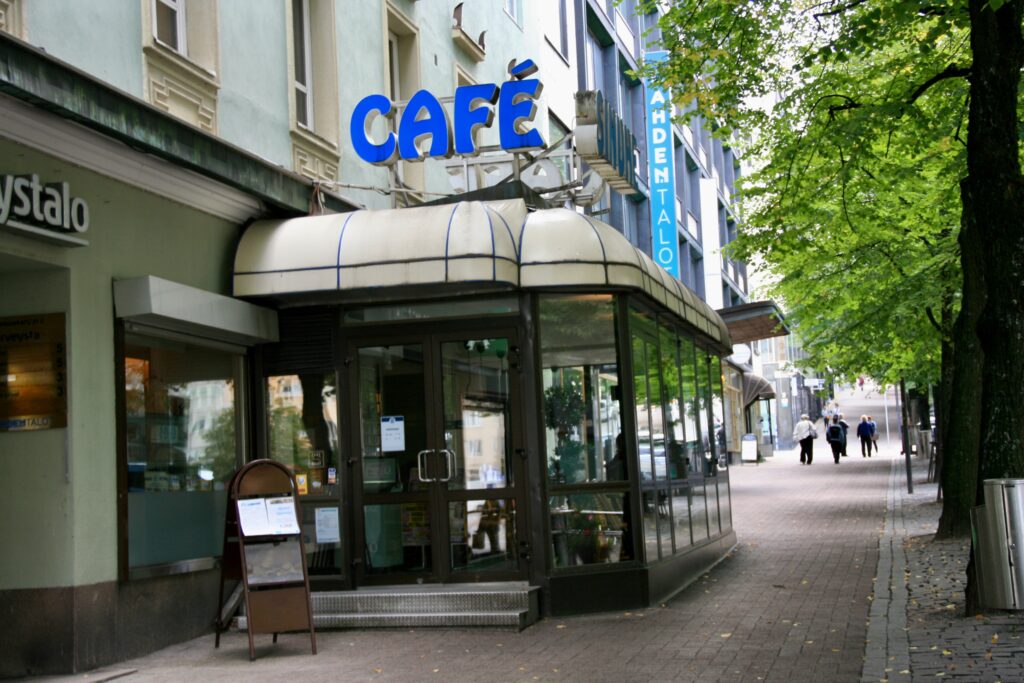
Coffee-drinking for me, is a daily ritual, ok, yes and an addiction, so I was in my element to find so many coffee houses in every Finnish town. Because it is Finland, maybe the least chatty of nations, you are expected to honour the ritual of coffee-drinking but you are not forced to make conversation while partaking. It is sociable enough to sit together and to enjoy the experience in silence. And, even better, it is the norm to have a sweet bun, a pulla, to accompany your cup. Coffee and buns! What is there not to love about that!
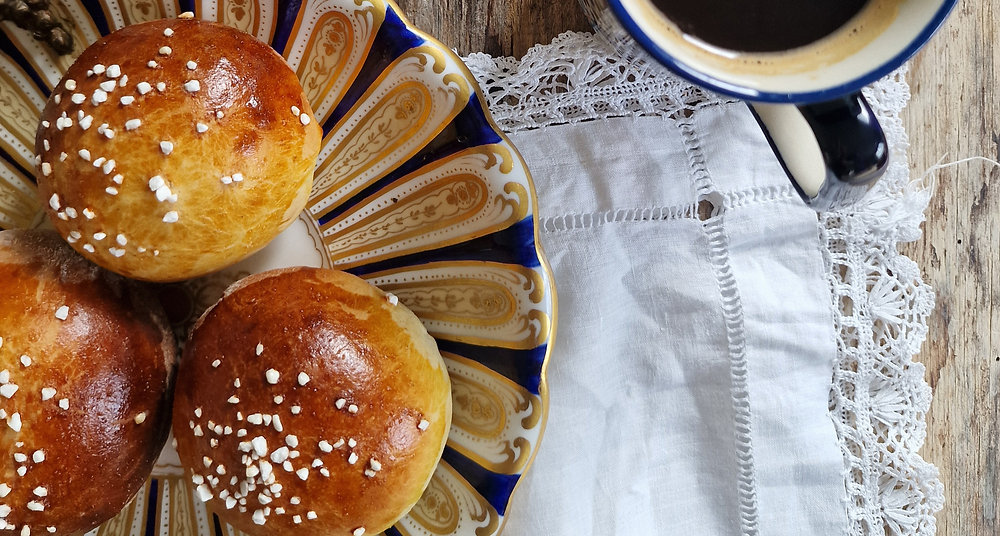
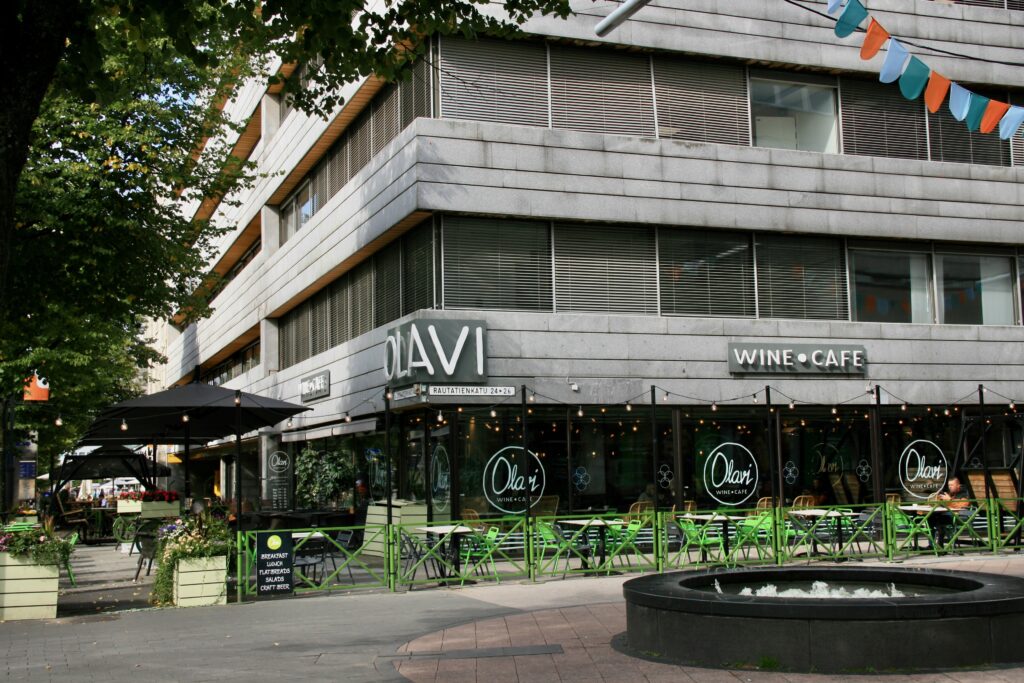
One of the rituals I enjoy on arriving in Lahti is to go for a coffee and pulla at Olavi’s in the city centre.
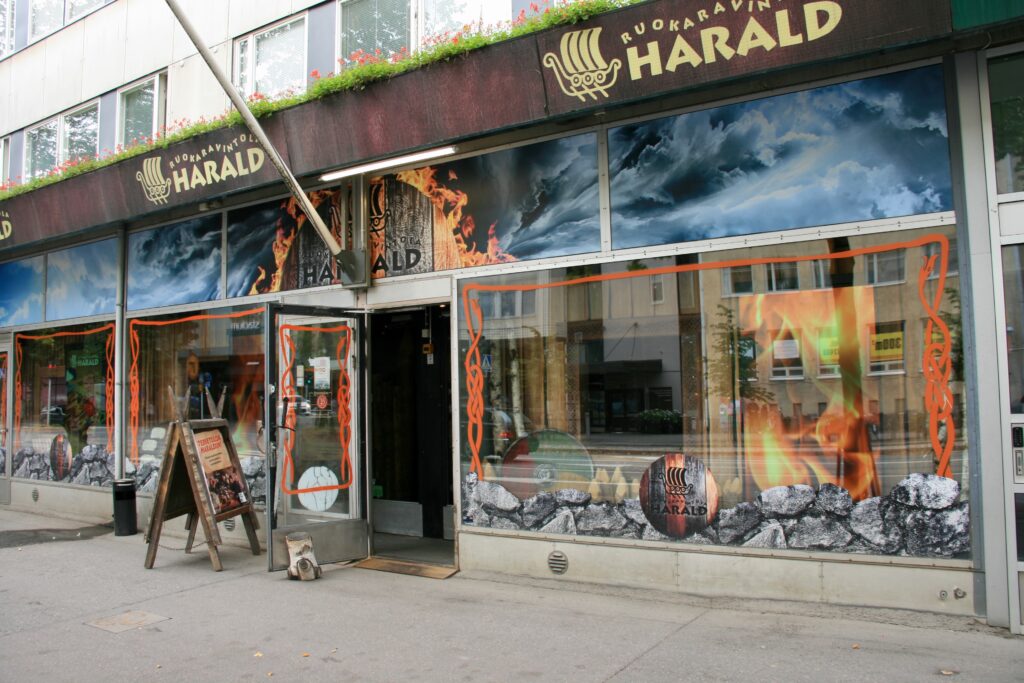
Harald, the Viking style restaurant, another of my favourites, might give you the choice of wearing a horned helmet and offer food on platters, skewered with swords, but the food is actually Viking gourmet. Here is a sample from their menu:
Fairhair’s starter shield for two: Lingonberry-cured salmon, tarred Baltic herring, smoked duck, reindeer heart and beaver salami. Potato flatbread from Penttilä farm, sourdough bread, tarred lingonberries, game mousse and smoked perch mousse. Ash cheese from Jumo cheesery, salad with gooseberry vinaigrette, pickled cucumber, carrot chips and oat, tomato-basil salsa, herb- marinated beans and toasted pumpkin seeds.
Main Course, Viking warrior’s sword: Reindeer tenderloin, ptarmigan breast (fowl may contain shot), roast lamb, spicy BBQ sausage and vegetables skewered on a sword served with creamy cheese potatoes, Vikings’ shield potatoes, Harald’s tar- mustard sauce, mushroom sauce, honey-roasted root vegetables and tarred lingonberries.
You can have wine, but also, and probably better, either Harald’s strong beer, or mead.
I go once every year.
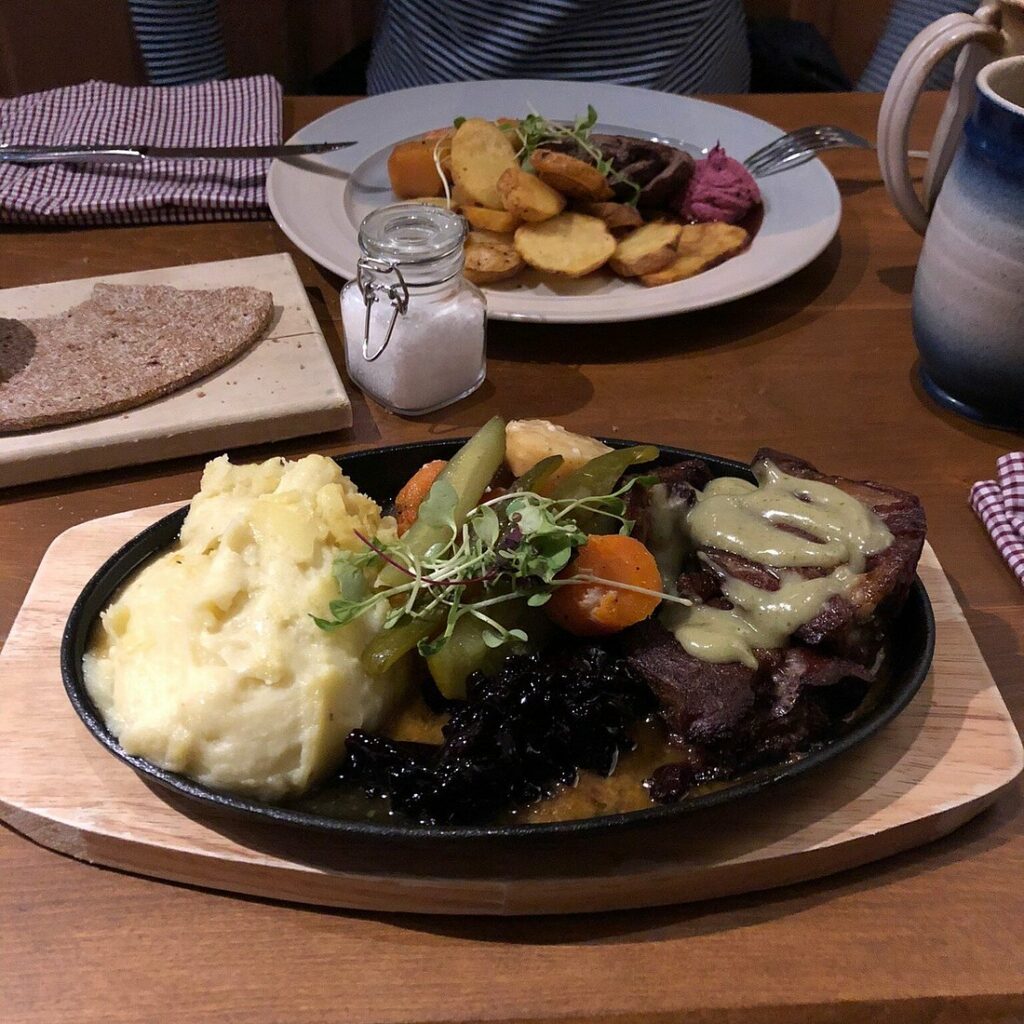
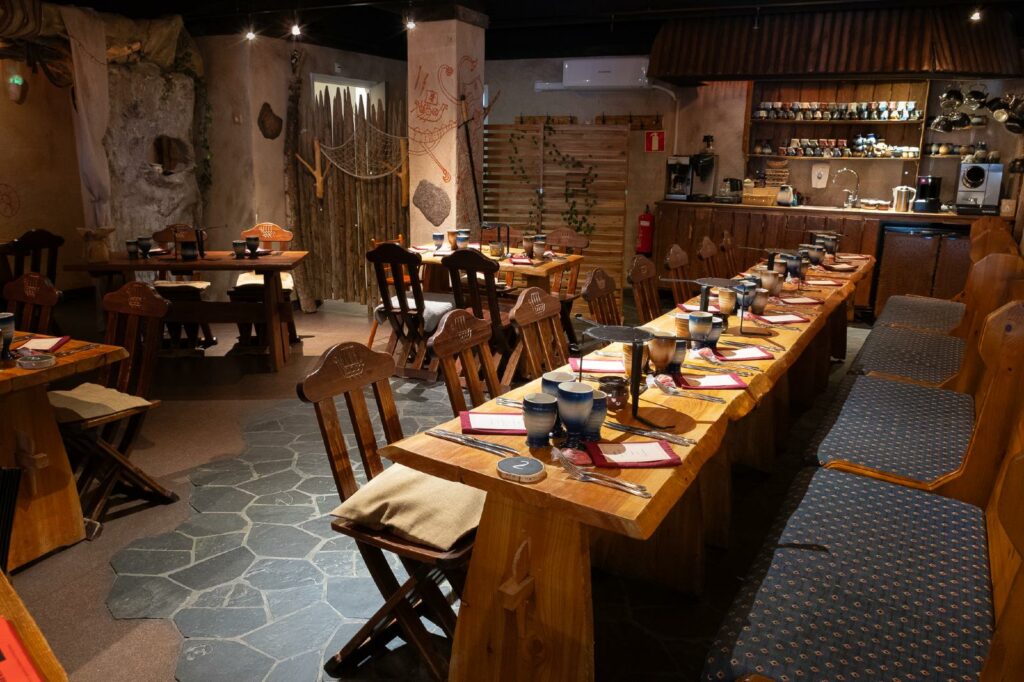
If Viking cuisine (fowl may contain shot) is not to your thing, then there is the Roux Restaurant, specialising in Finnish and Nordic haut-cuisine inspired by the head chef and co-owner Sami Häkkinen
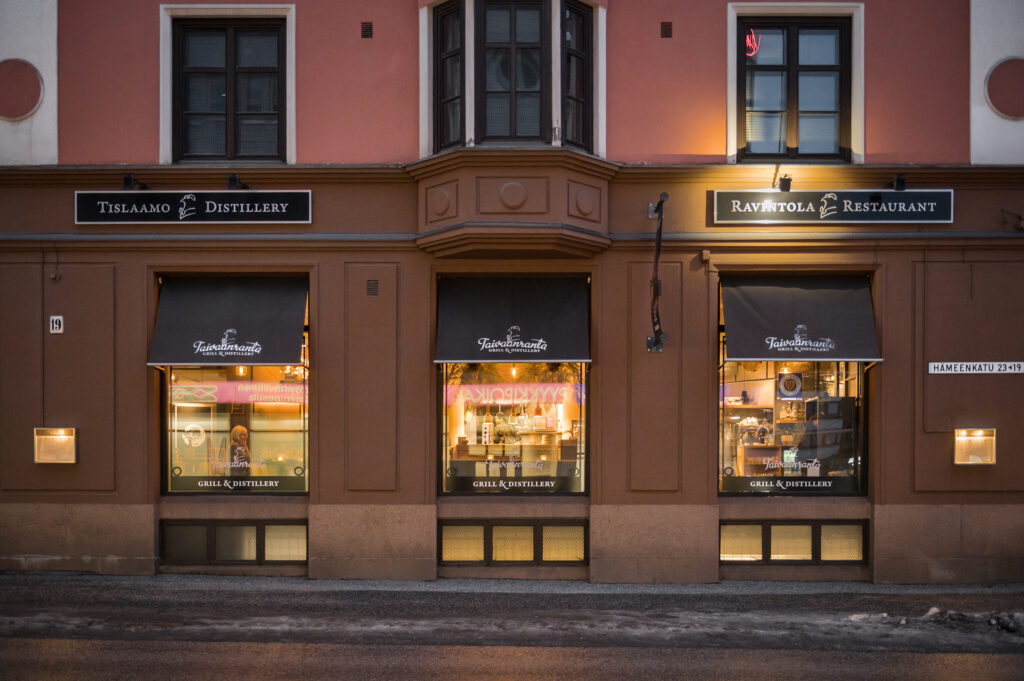
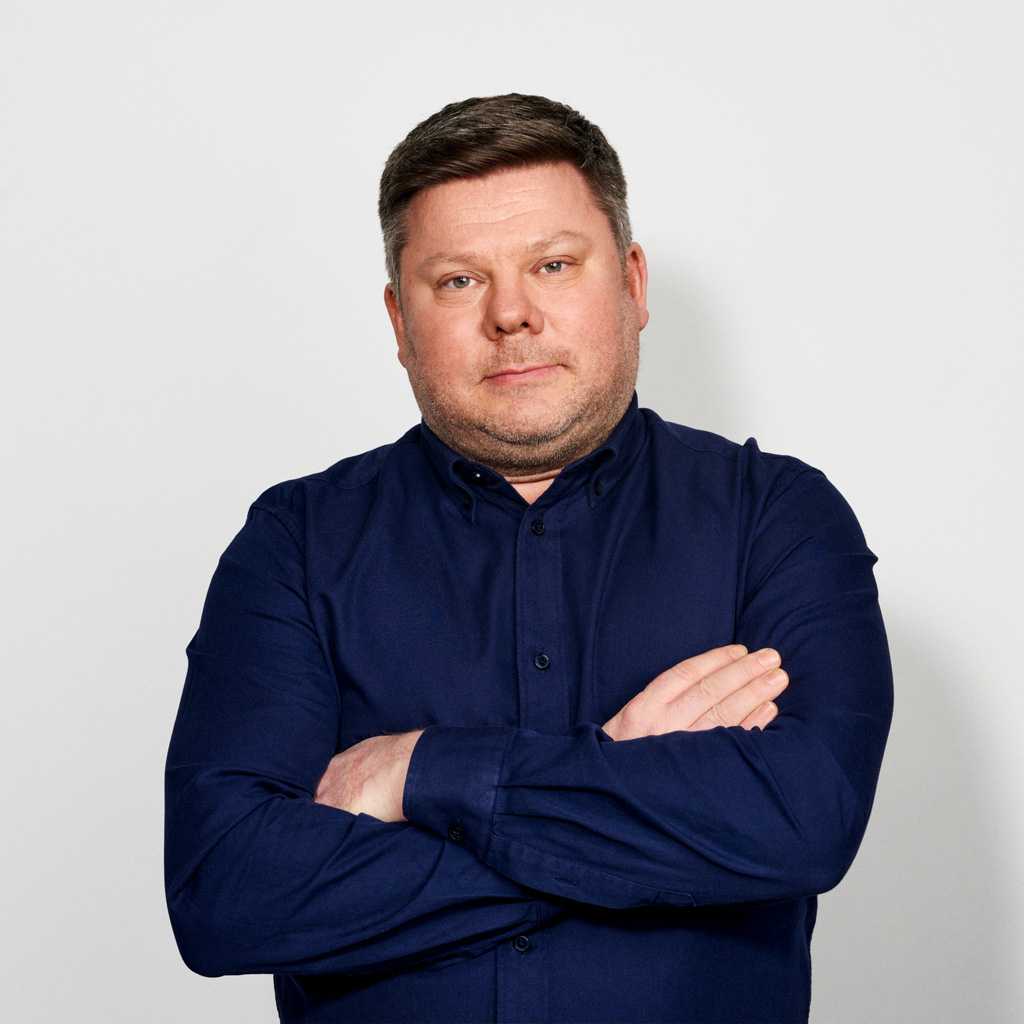
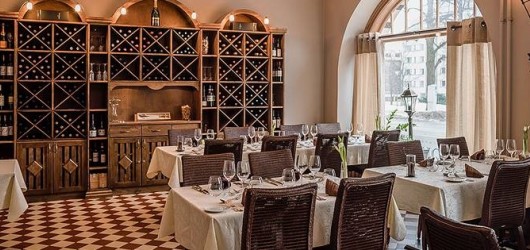
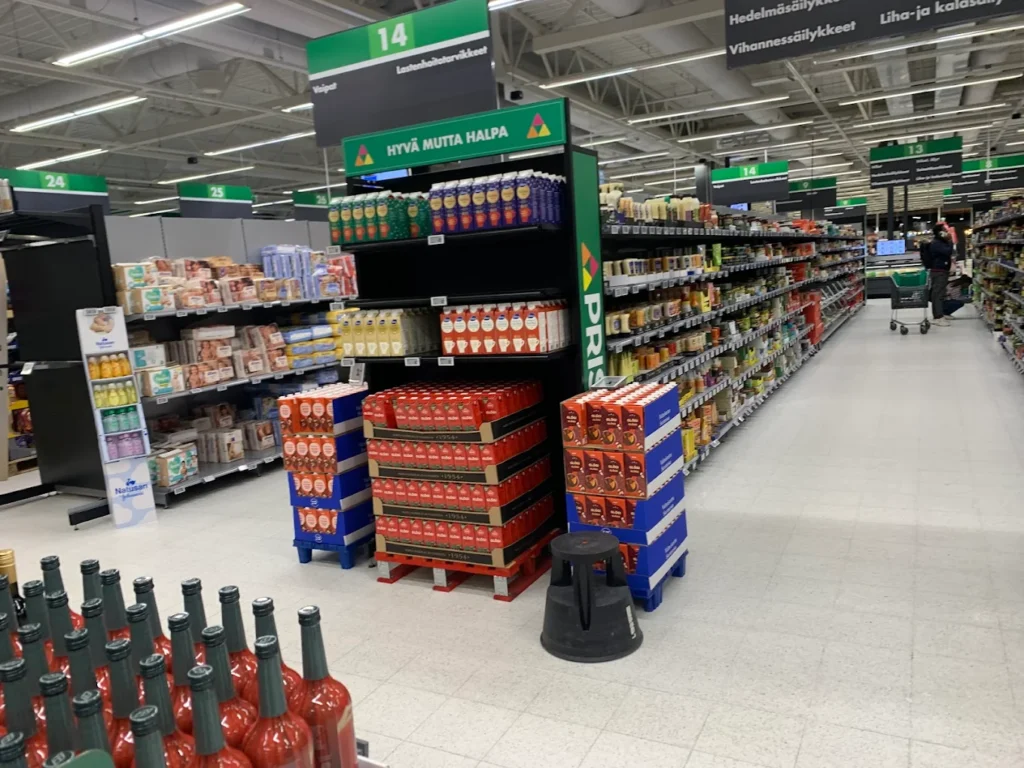
I know I can be mildly obsessive at times, but I have to admit to liking orderliness, noticing the small discrepancies that other people might ignore, appreciating object organised in colour-coded and neat lines. Consequently, I love the Roux Restaurant but I also love Finnish supermarkets.
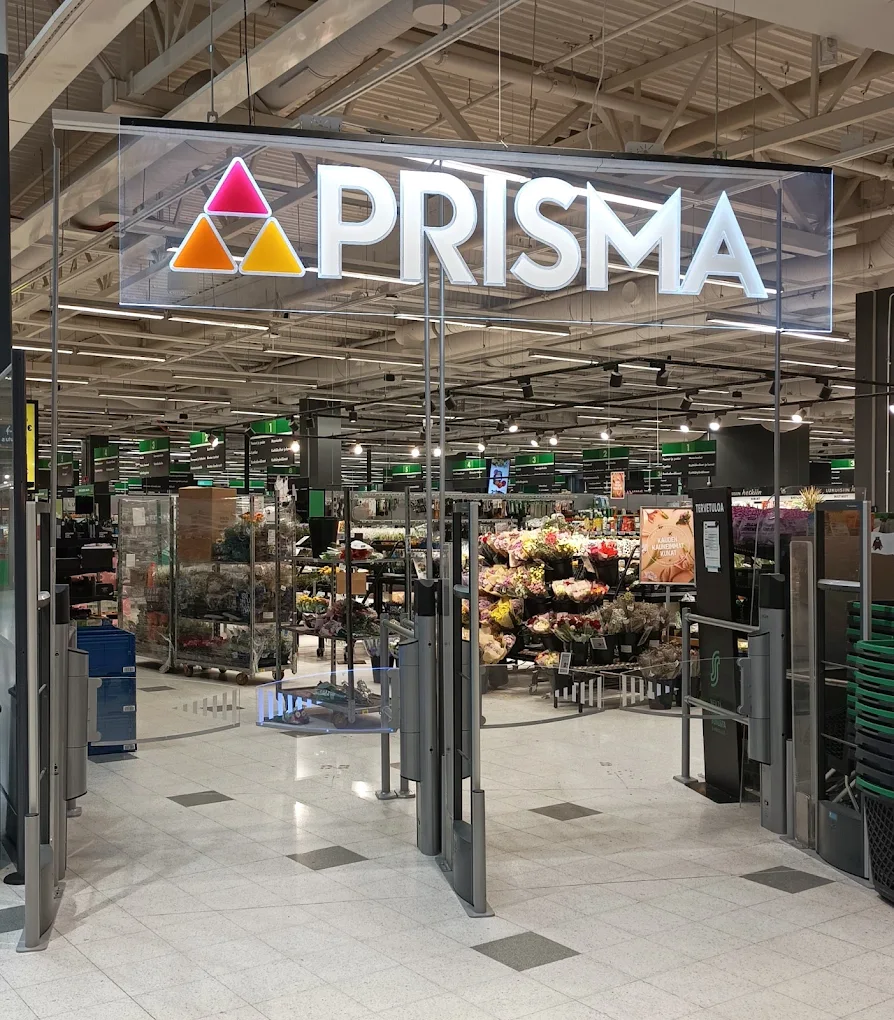
The supermarkets in Finland take orderliness to an art form – and straight lines definitely mean straight.
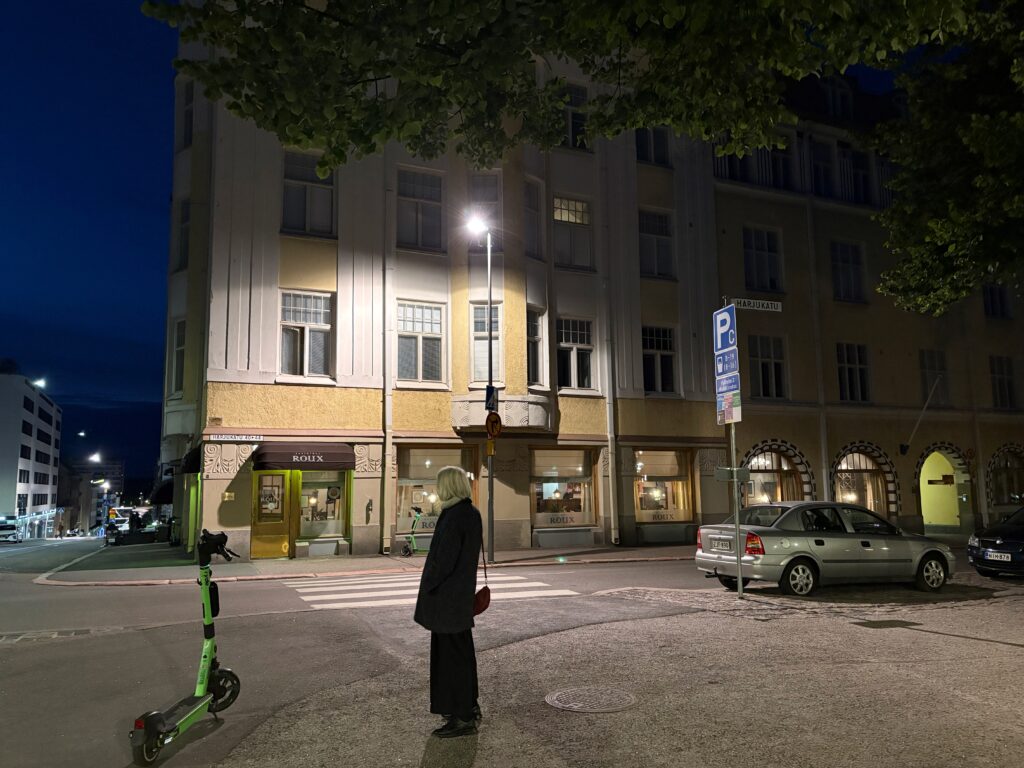
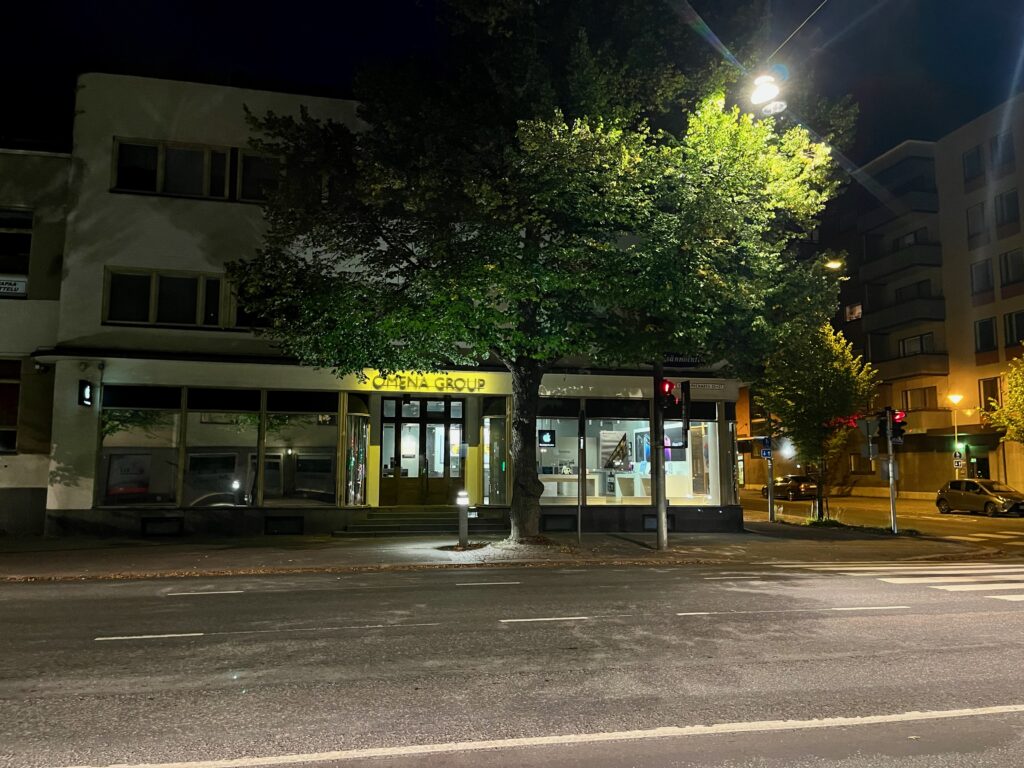
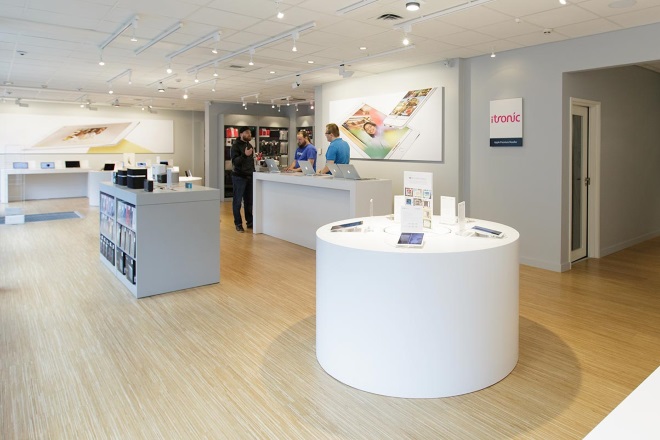
There is, of course, in this most digital of countries, a superb Apple Store, I’d walked past it a couple of times before spotting that Omega is Finnish for Apple
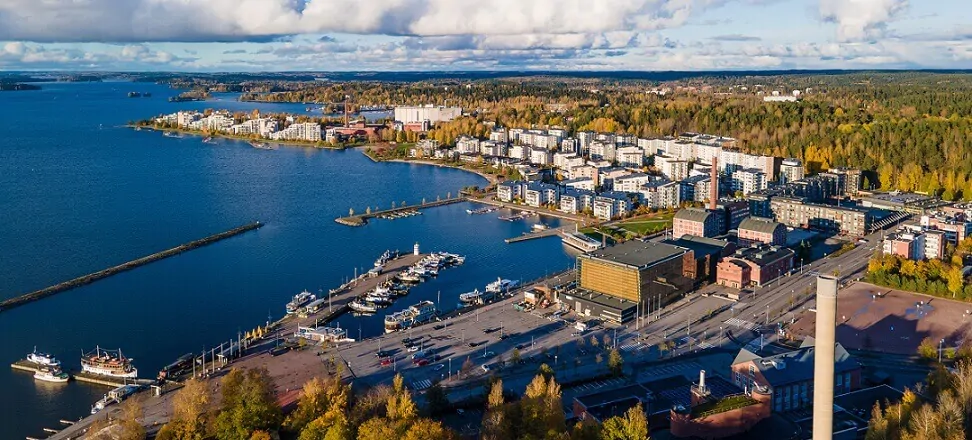
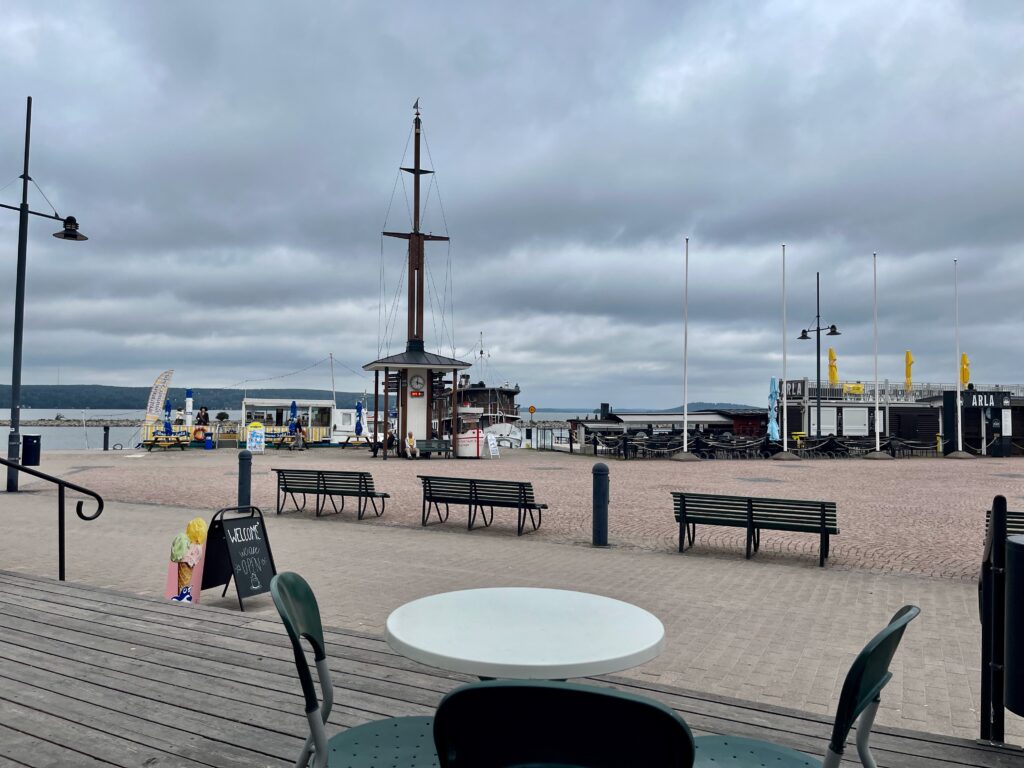
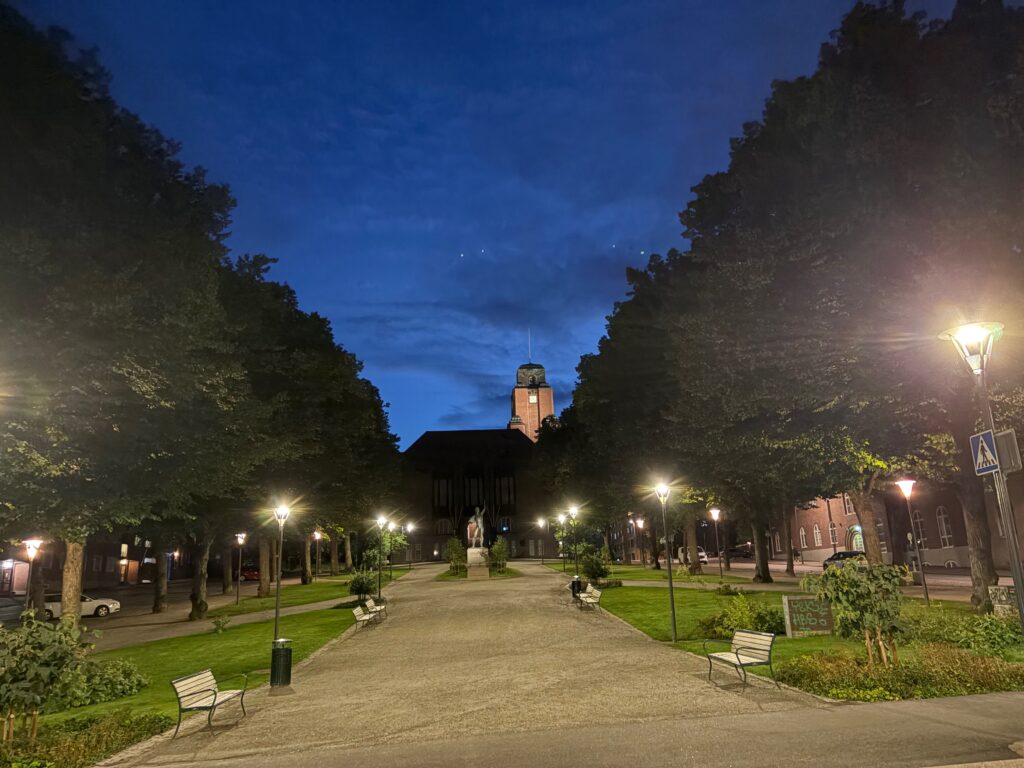
Even, or especially, on a overcast day, Finland’s dramatic cloud formations give Lahti’s lakeside waterfront a meditative serenity. I was very happy to be back after another year.
Day-Trip to Tampere
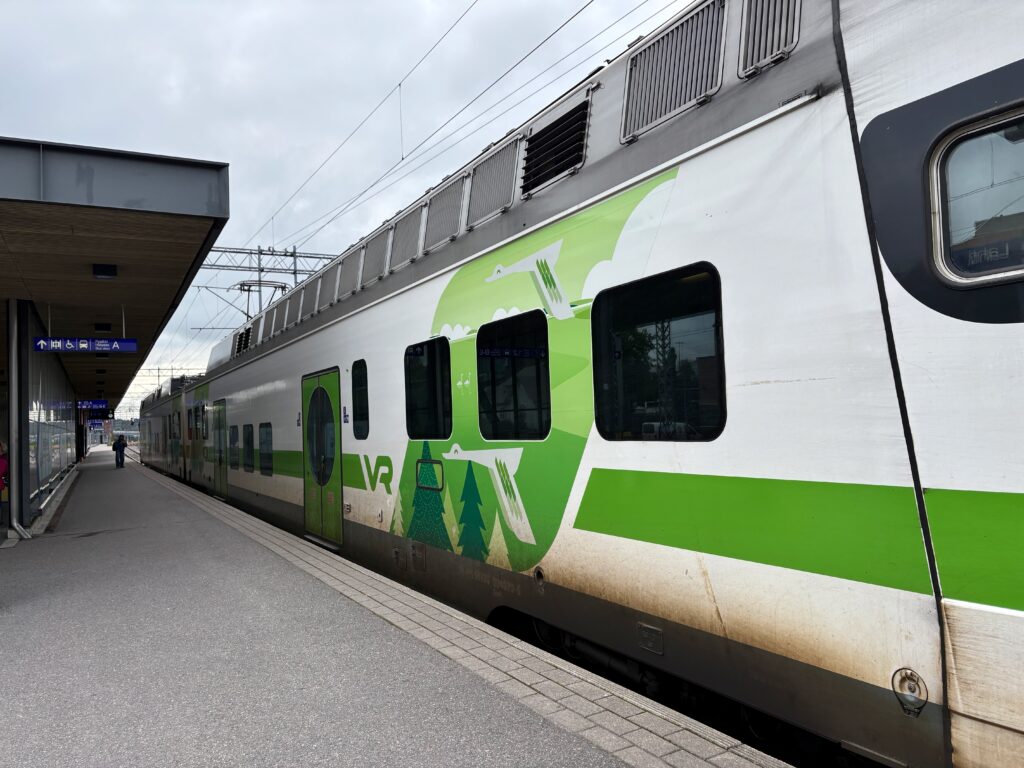
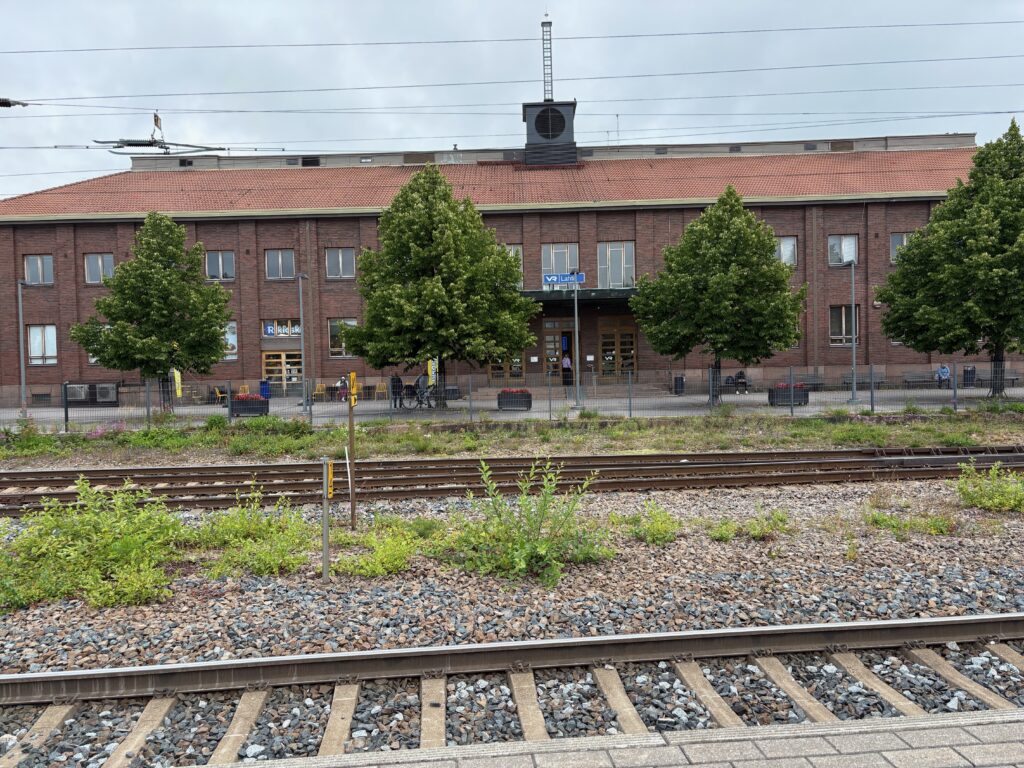
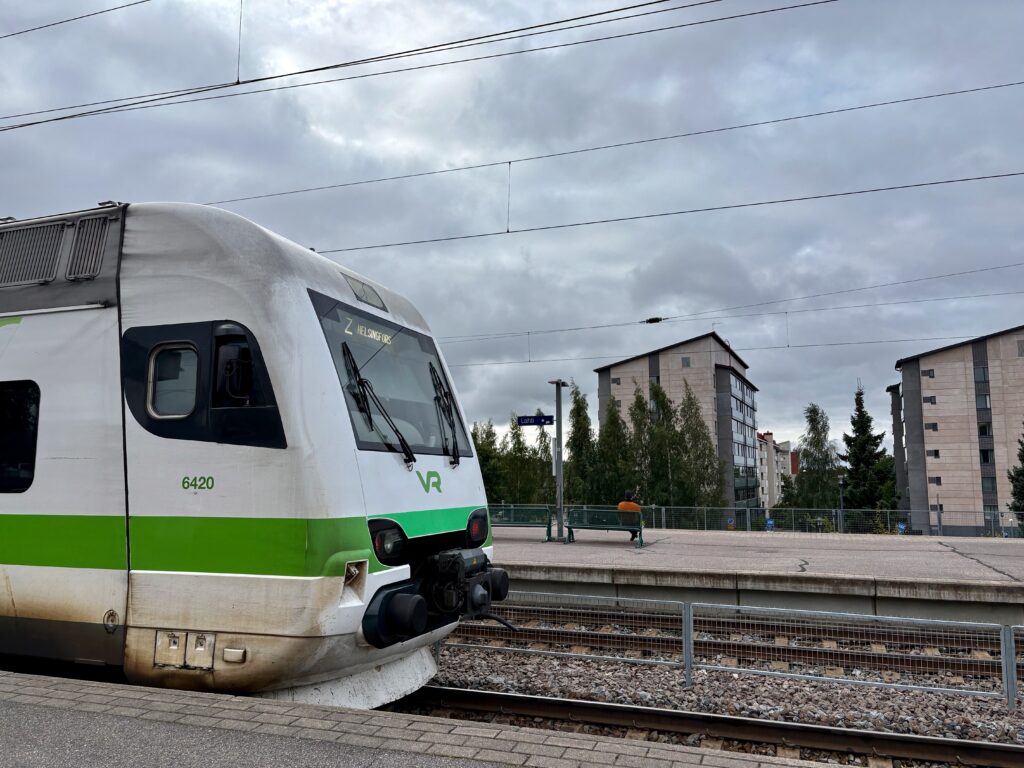
With a day to spare before the Sibelius Festival started, I took a train to the city of Tampere, 133 km North of Lahti, too meet two friends, Mike Horwood and Eevi Apponen who volunteered to squeeze as much as possible into a one day trip to this city, which could be called Finland’s Manchester. They had worked out, with some much-appreciated precision, how to spend a great day here. They were the best kind of tour guides, intelligent, funny and well-informed.
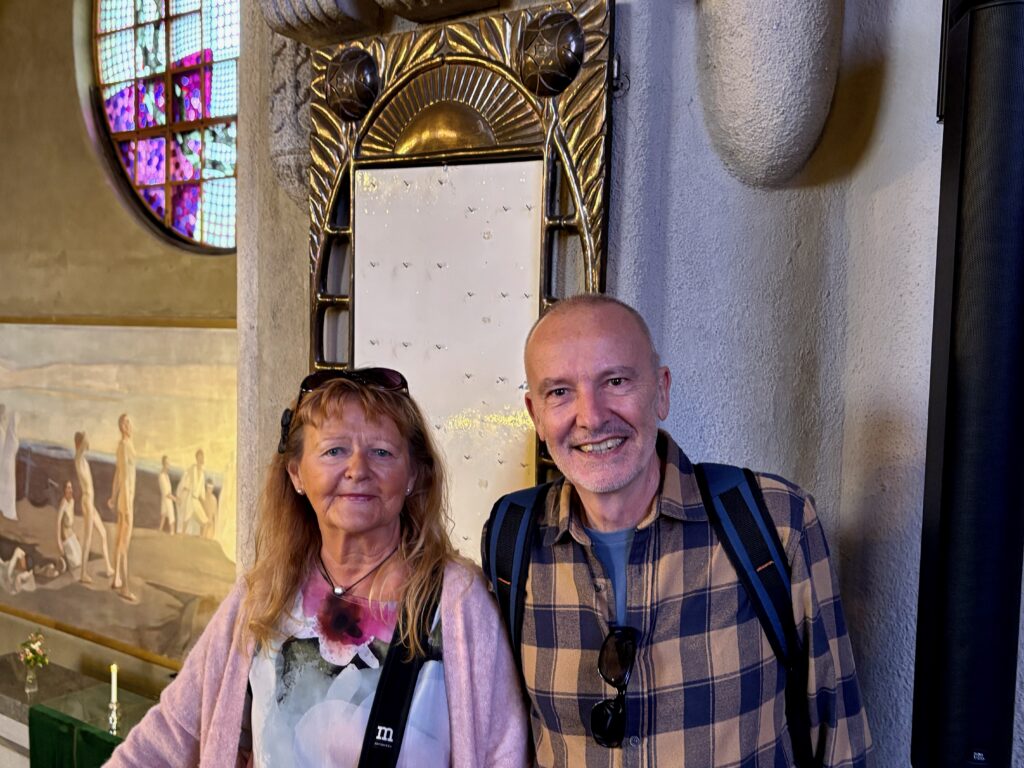
Mike is a fellow writer, he, like me, is a poet and a novelist – we share the same publisher, Ward Wood Publishing, so we have more than a few things in common. Eevi is an academic, a former Nordic ski champion and she’s now my best Finnish friend. we had a great day together.
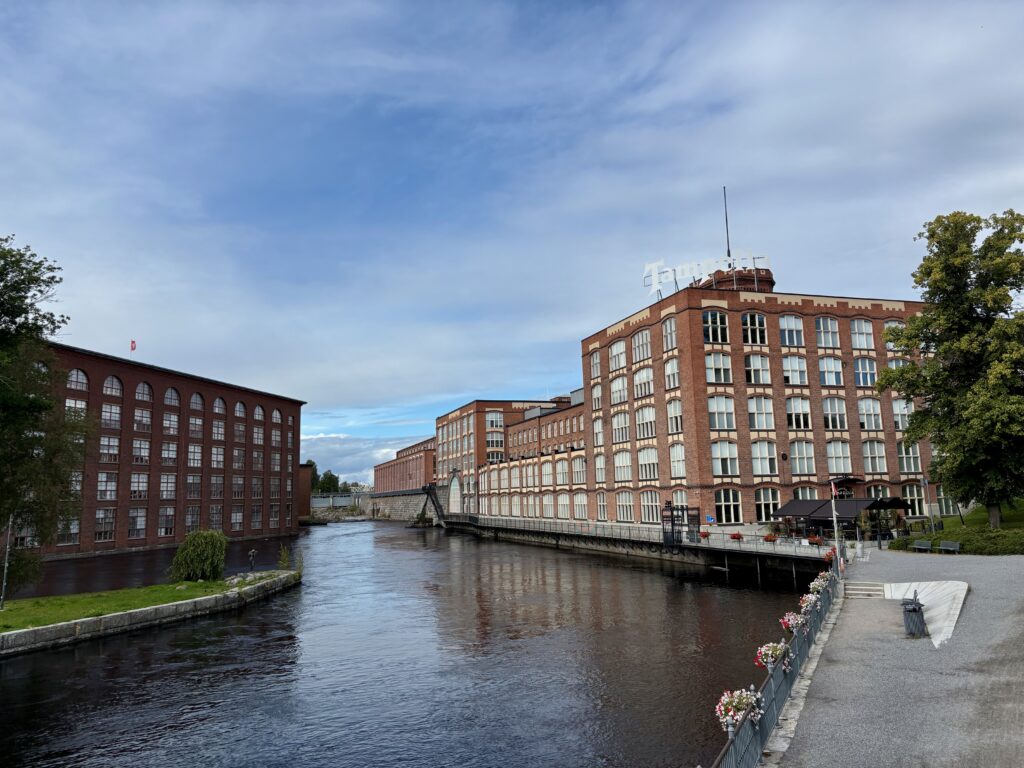
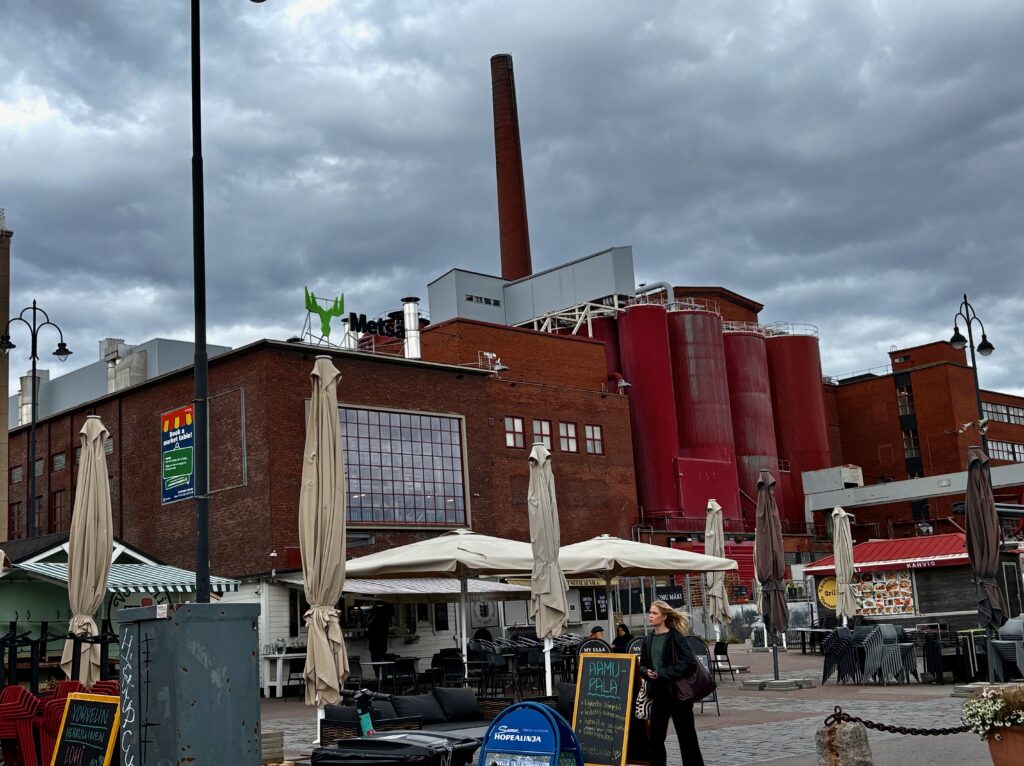
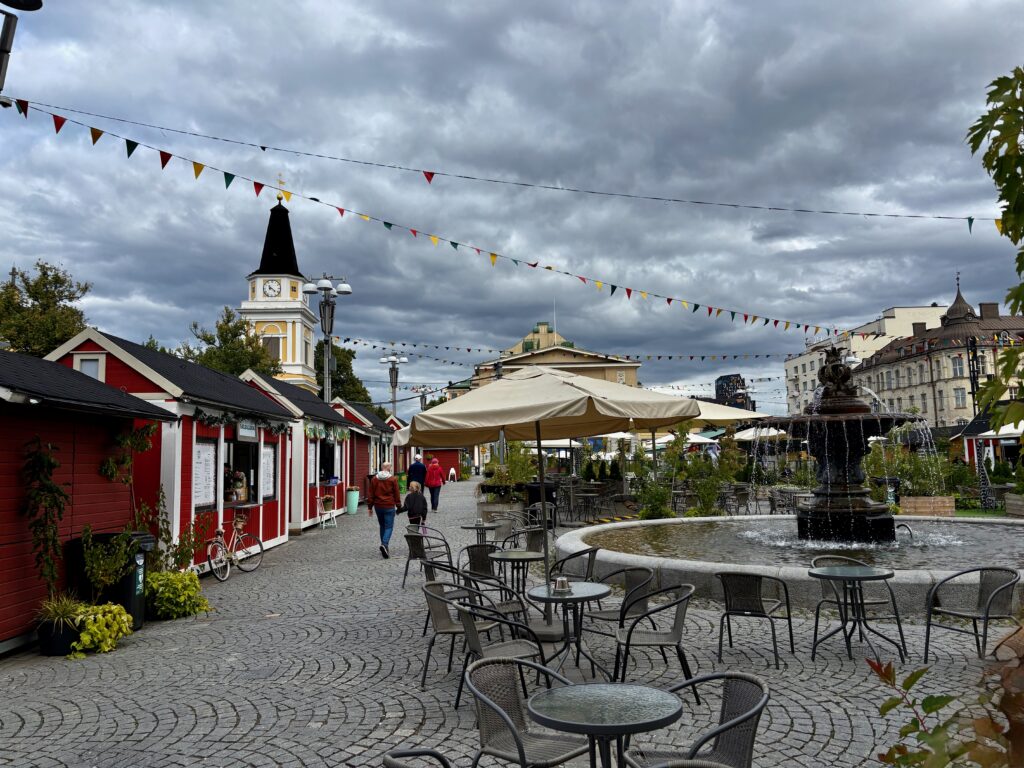
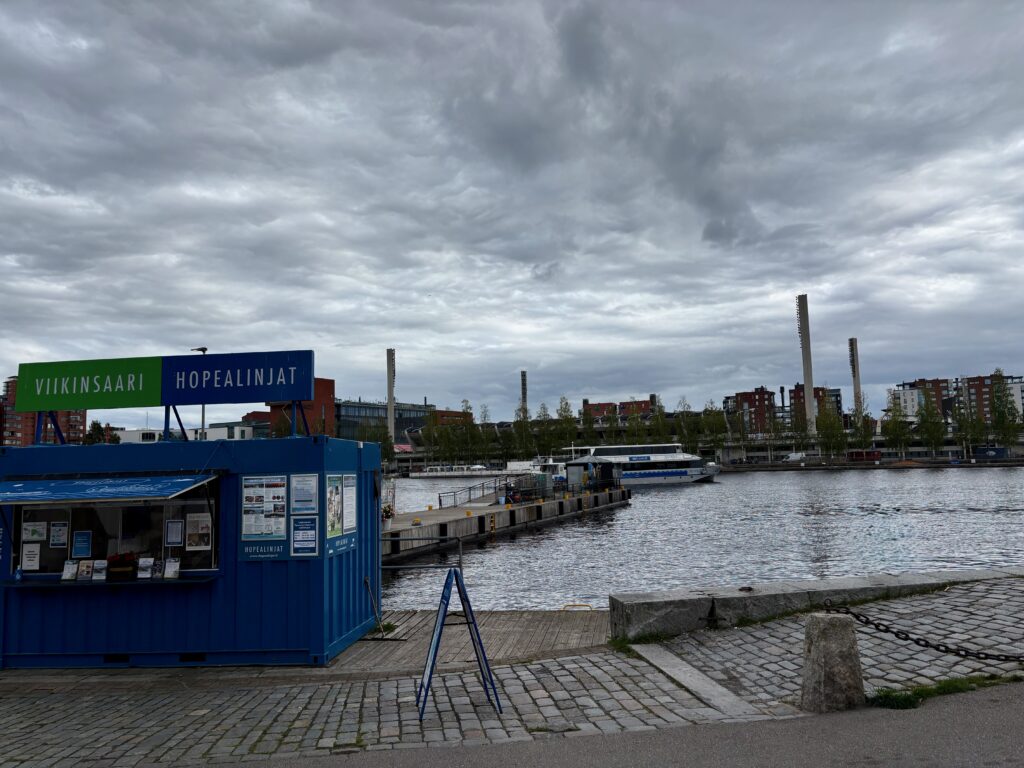
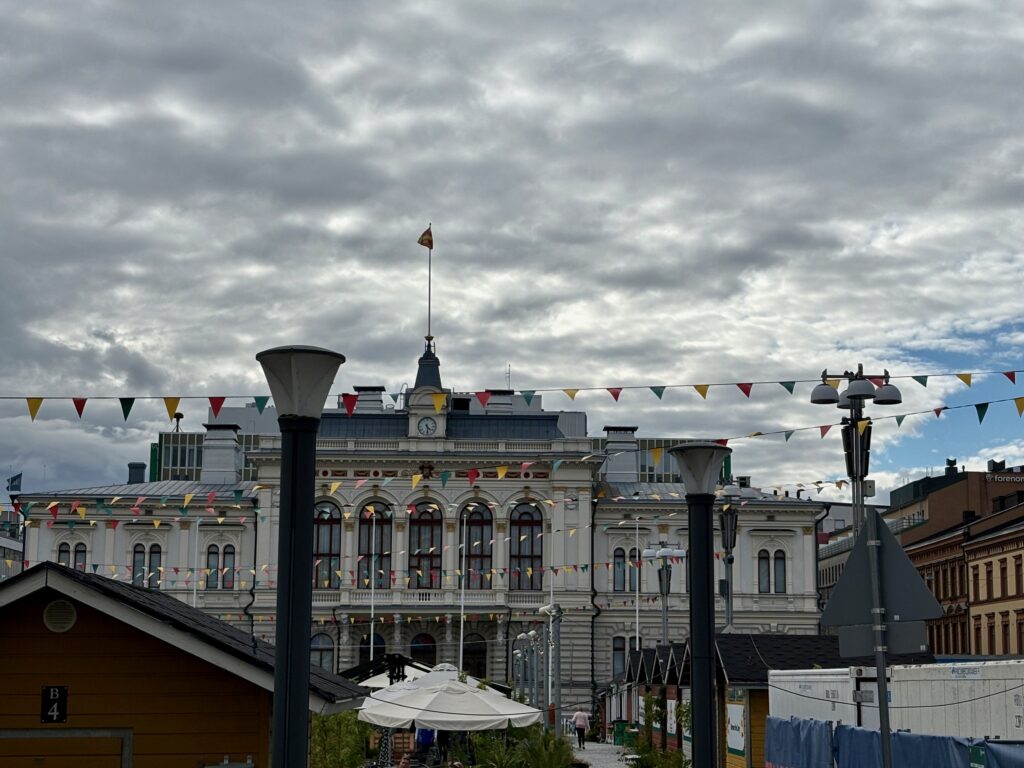
It didn’t take long to spot the many similarities with the Manchester in England where I worked in television for two decades. It’s not just the ‘Venetian Gothic’ architecture, the canals and industrial chimneys, or the rain, it is a real cultural hub with an active arts community, a symphony orchestra, a thriving jazz scene and some great galleries and museums. It is also a city like Manchester, recovering from its industrial past by reinventing itself for the 21st century. I want to go back to Tampere.
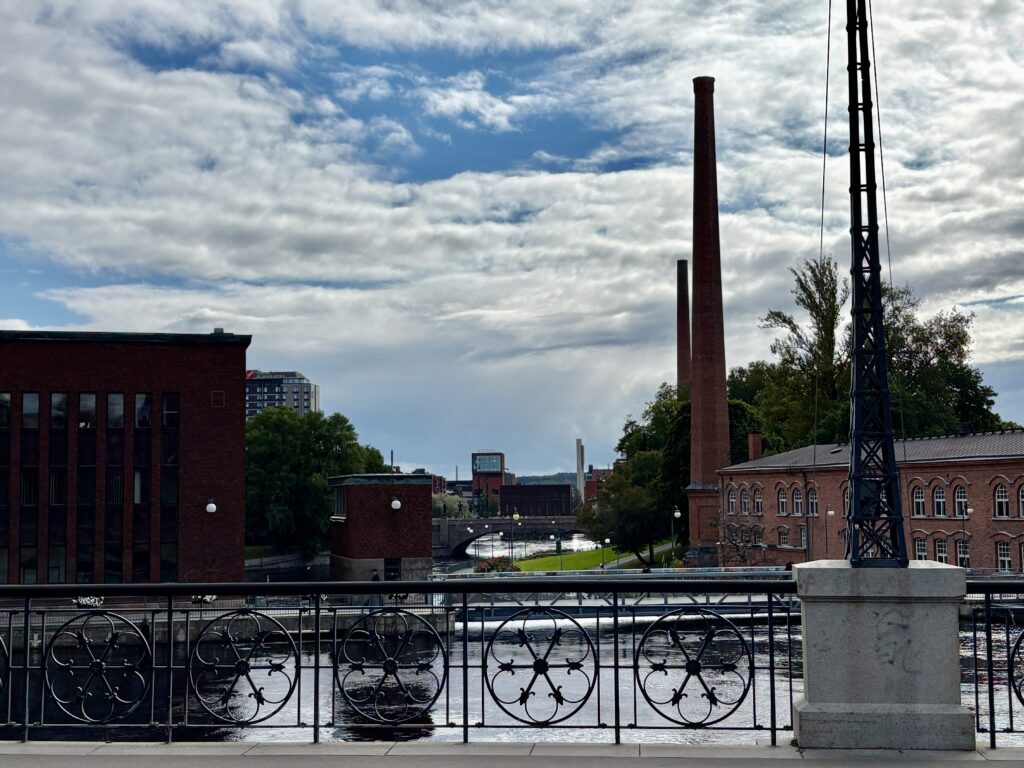
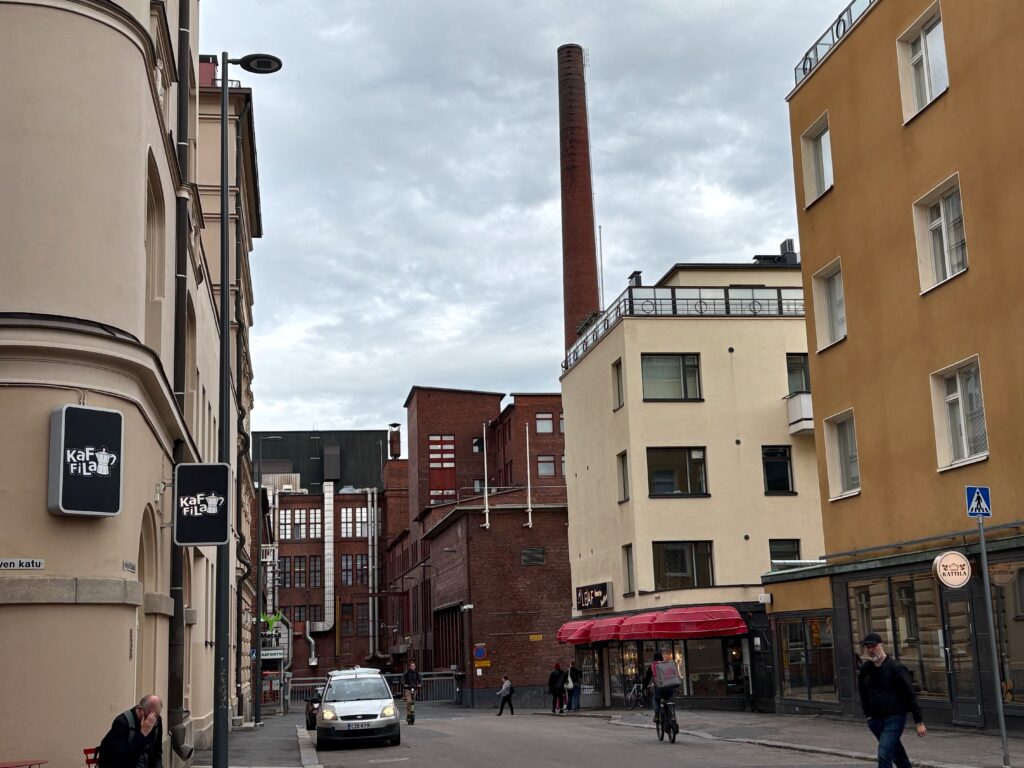
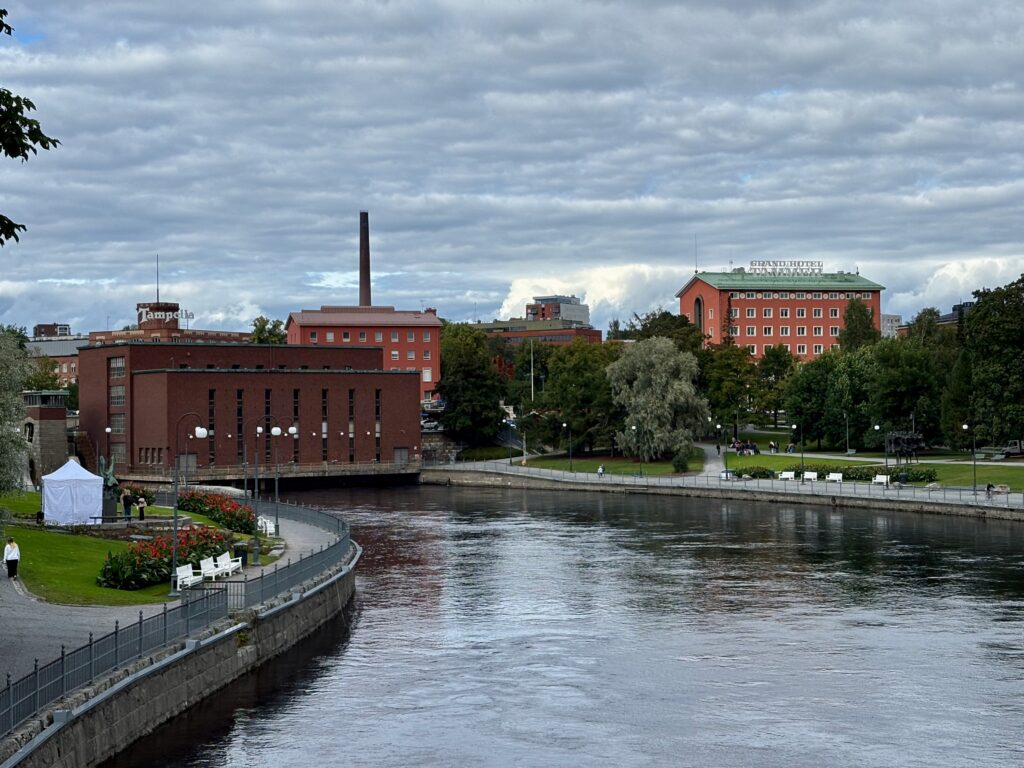
On this day-trip, one building stood out and I still remember it vividly. I had never seen anything like it before, even though I have long been an enthusiastic visitor to churches around the world. Churches say far more than just about the religion followed within their walls.
Tampere Cathedral
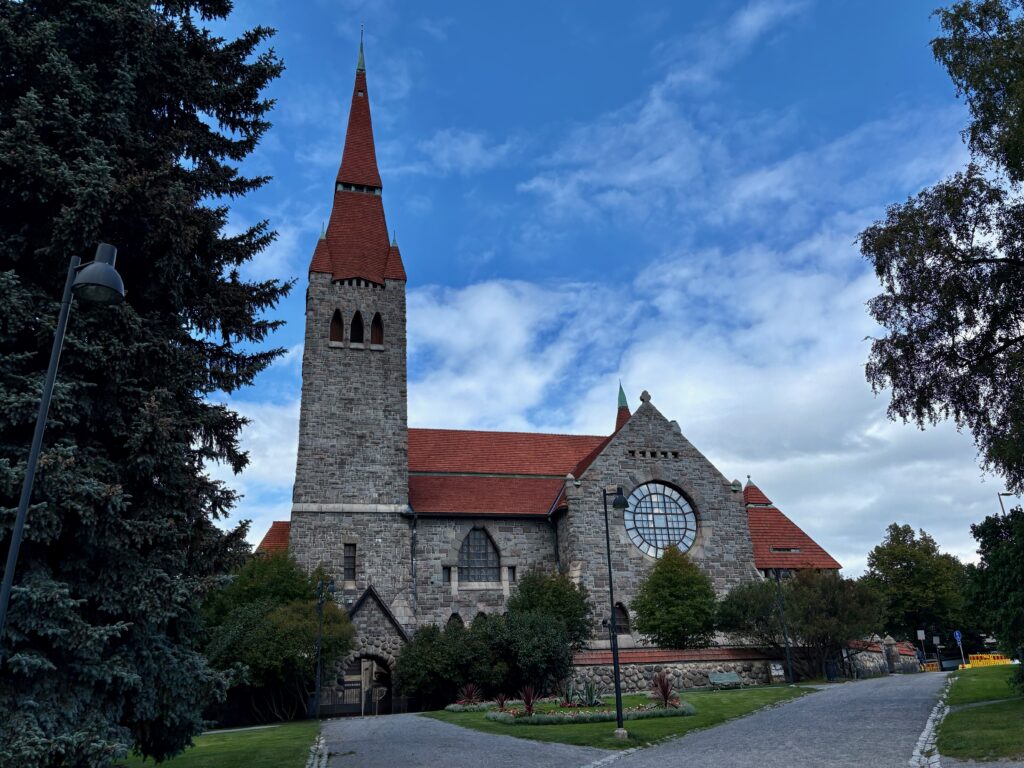
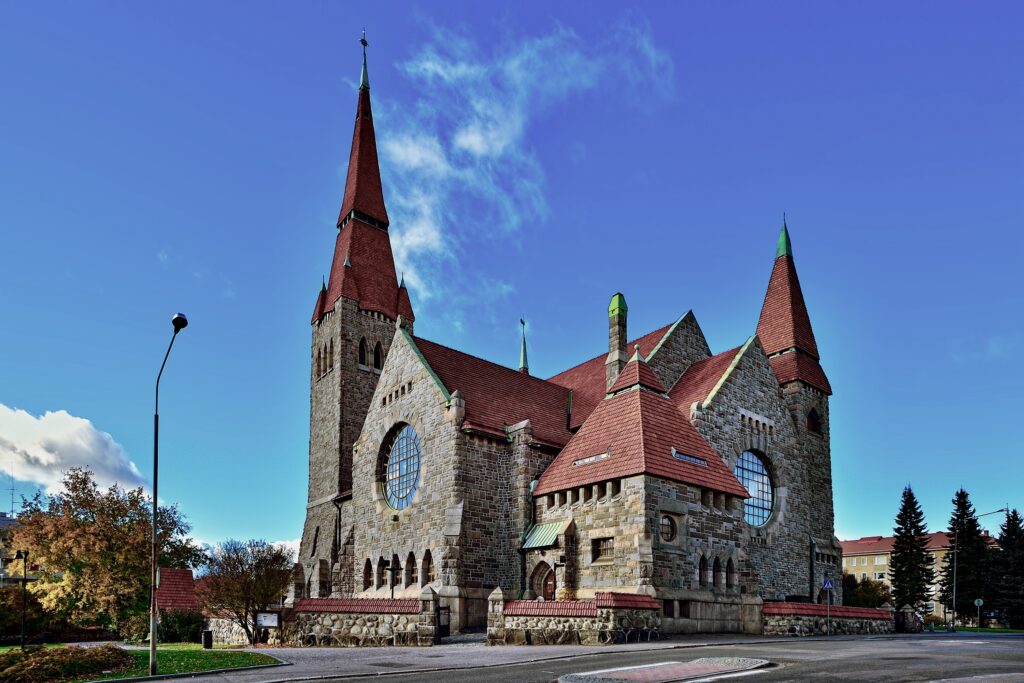
Tampere Cathedral, the Church of St John, struck me immediately as a fairytale building, something out of Hans Christian Anderson, perhaps. with its chunky, almost gingerbread walls. It was designed by Lars Sonck (1870 – 1956) in what is knowns as National Romantic style, built out of natural stone, with Neo-Gothic towers and Jugendstil, or Art Nouveau, features outside and in. I remembered being amazed by the Ars Nouveau buildings in Helsinki, but hadn’t realised that they were the work of the same architect, Lars Sonck. The late 19th century and early twentieth century were epic years for Finnish architecture, reflecting the emergence of a new nation on the world stage, albeit one with an ancient history and culture.
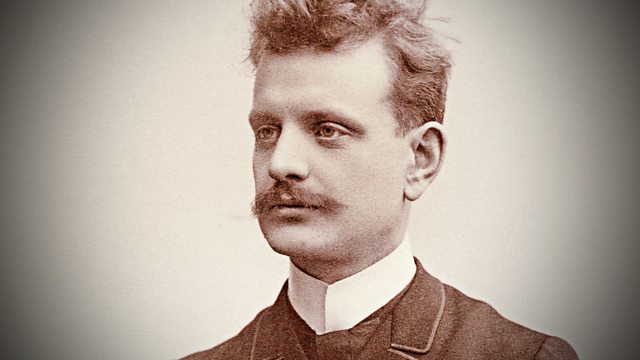
It was an inspiring time to be young, like Jean Sibelius in the fast developing world of Finnish classical music, and as it must have been for the young artists and architects like , Lars Sonck, who could run free in the brave new arts at the birth of a new nation.
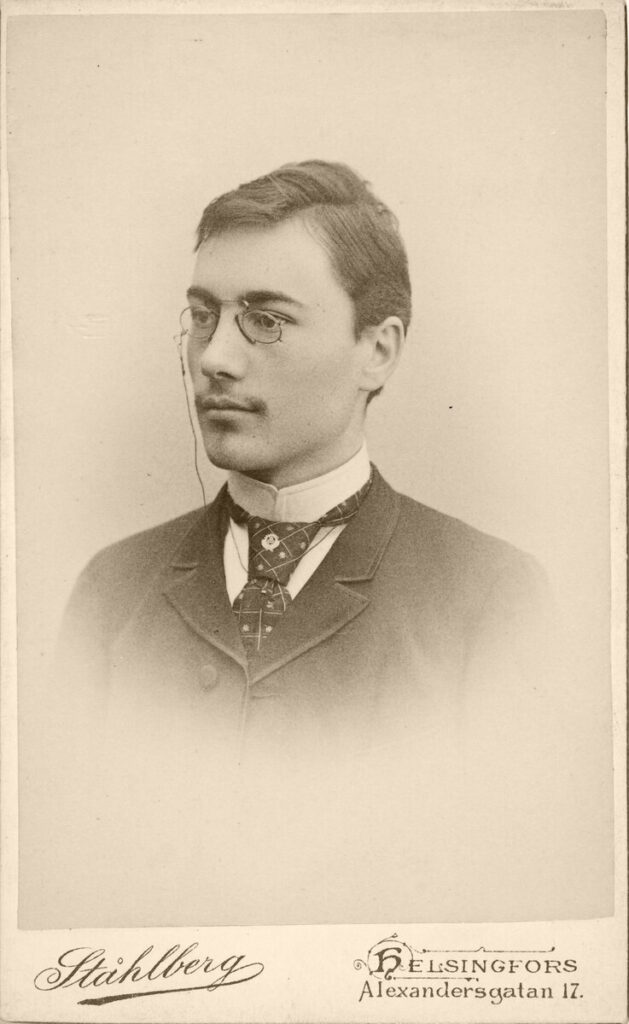
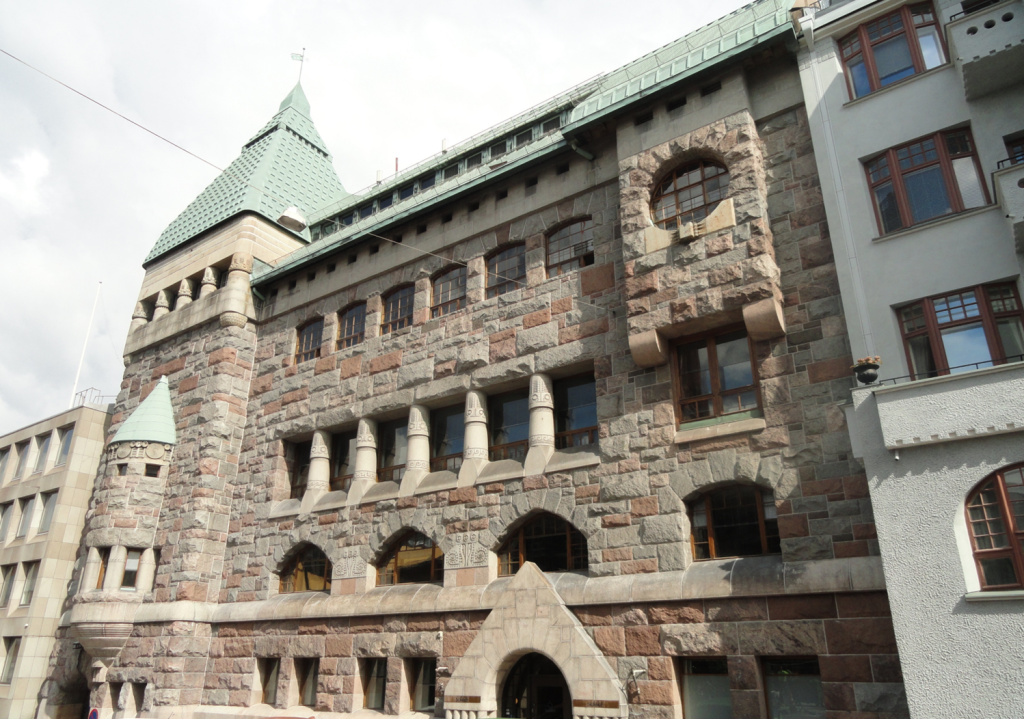
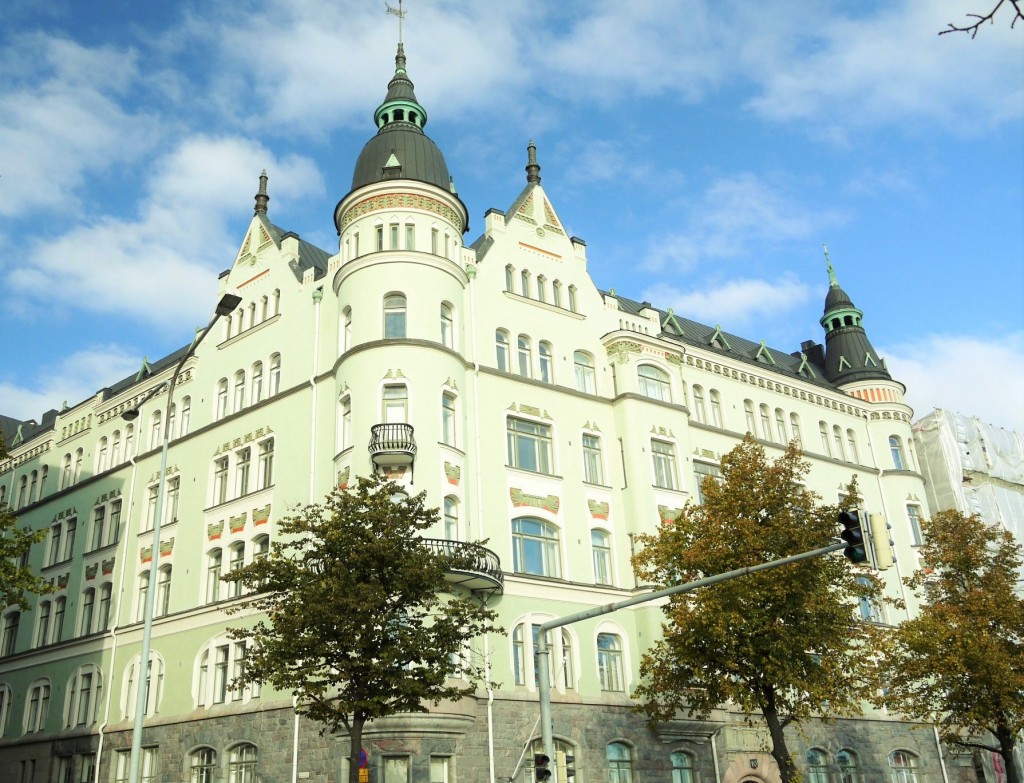
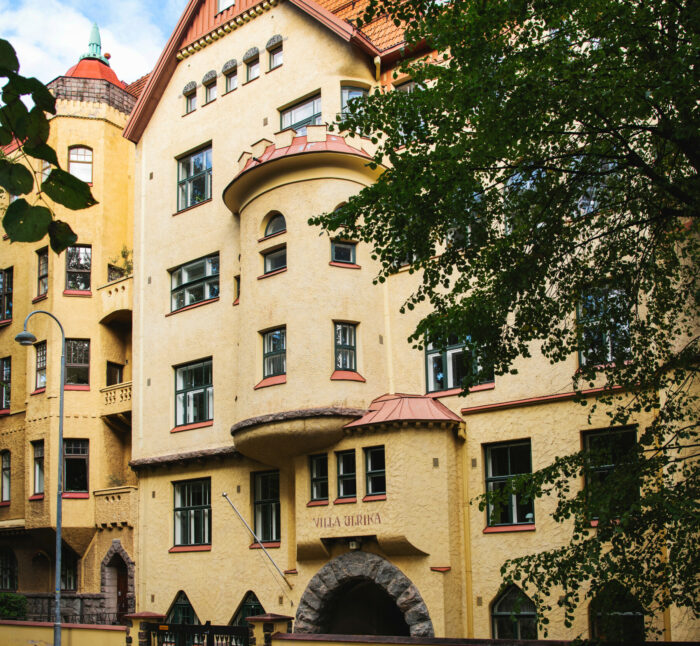
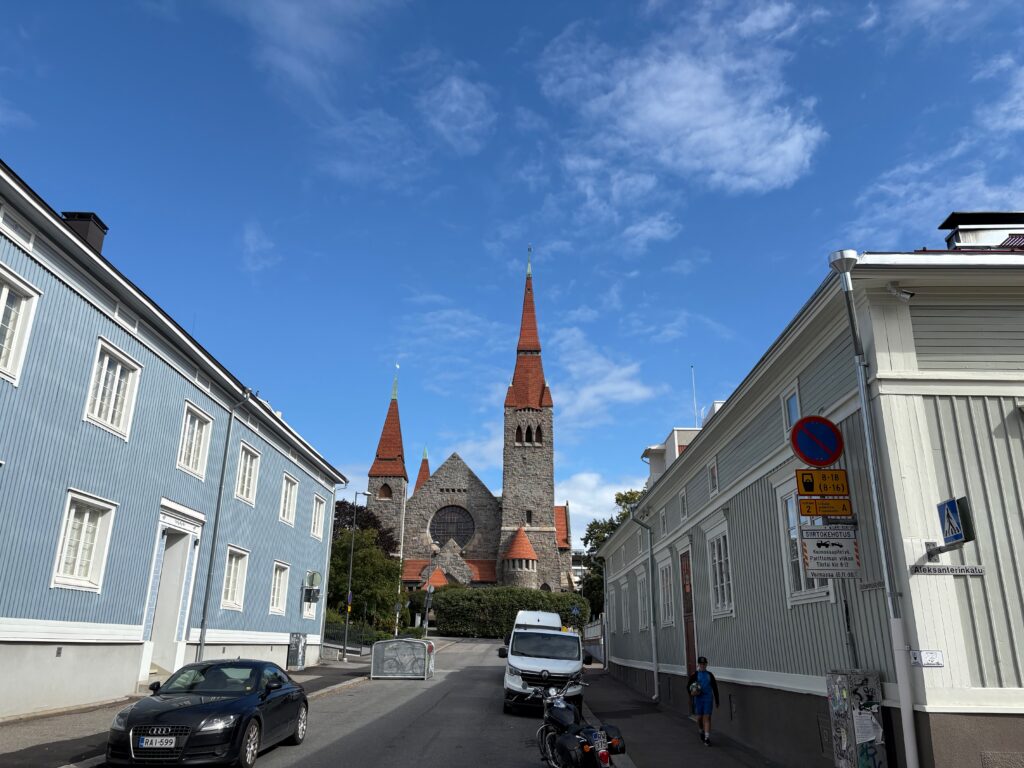
Tampere Cathedral, with its mix of Jungstil and Neo Gothic, was a revolutionary building for Finland when it was constructed between 1902 – 1907. Lars Sonck was joined by another bright new architect, Valter Jung (1879 – 1946) for the decorative details of the exterior of the cathedral and for the design of the interior.
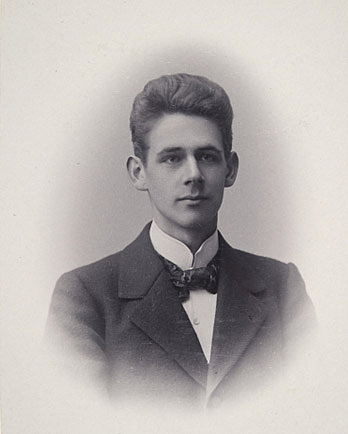
Valter Jung and Lars Sonck collaborated on other buildings too, including the Ars Nouveau masterpiece in Helsinki, Jugend Hall.
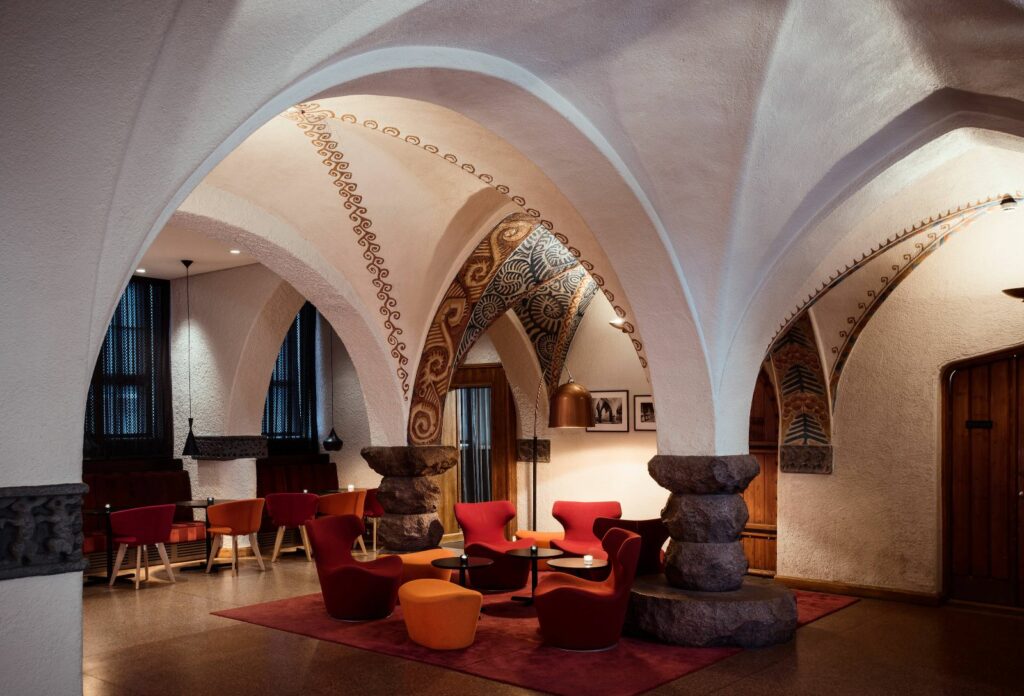
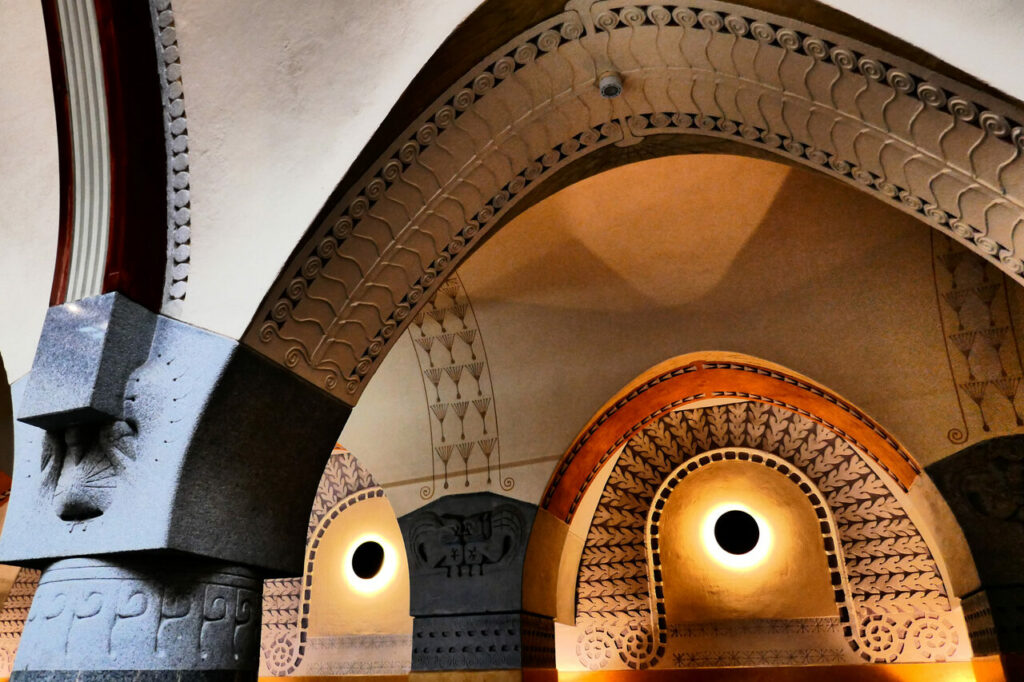
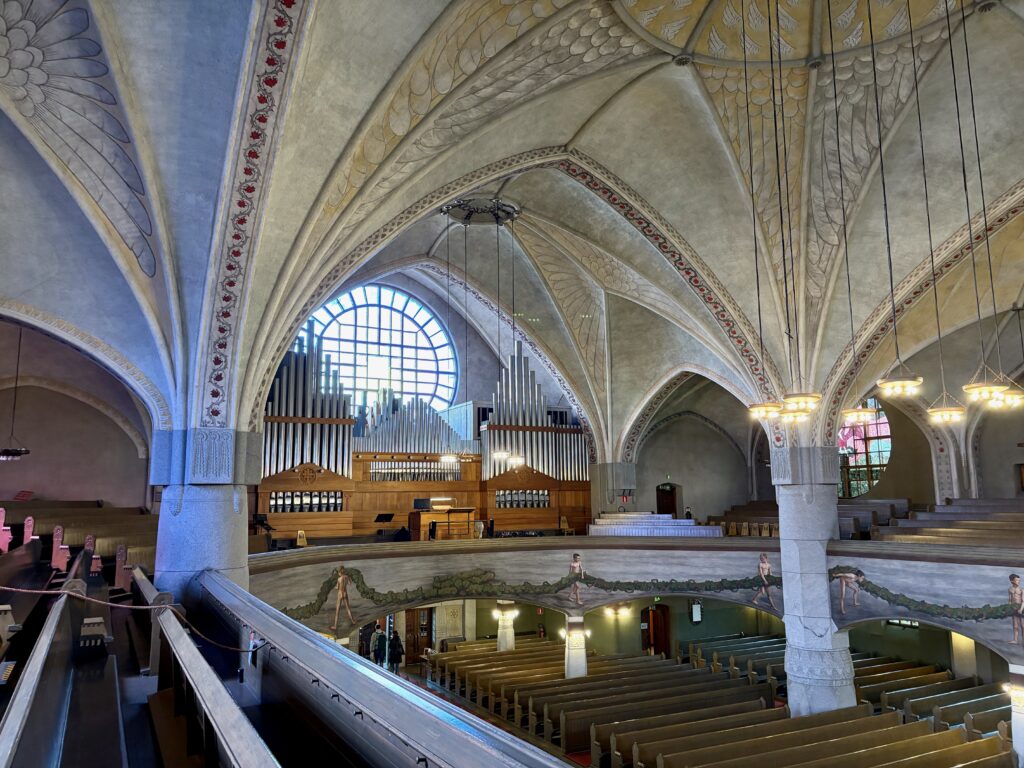
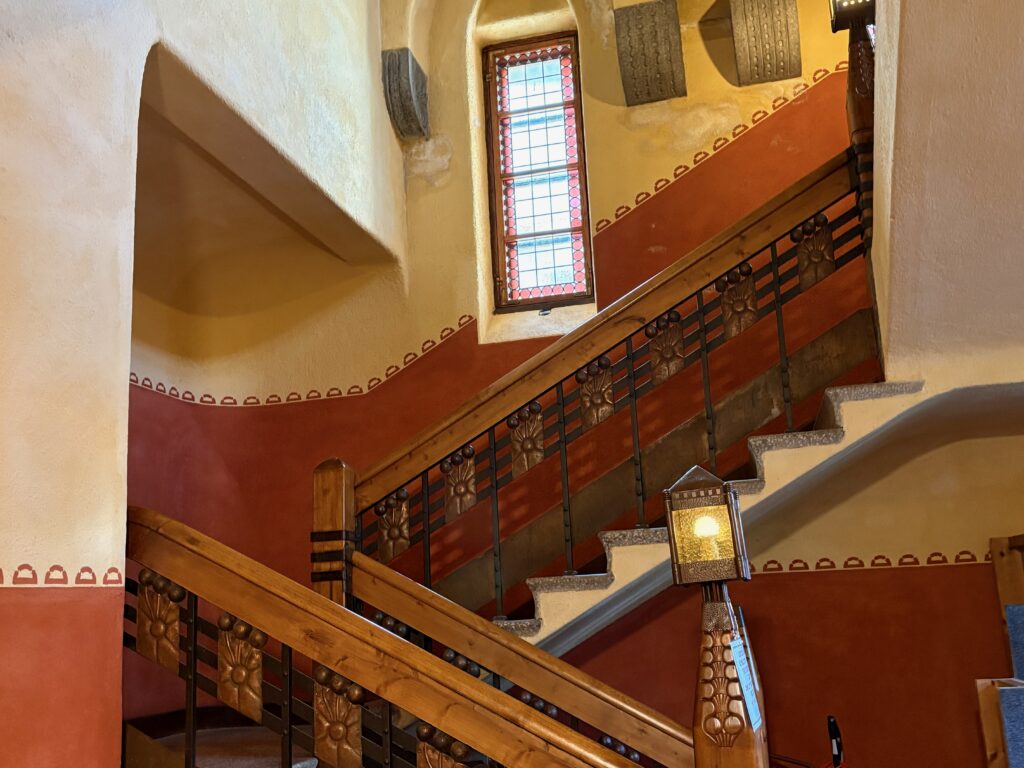
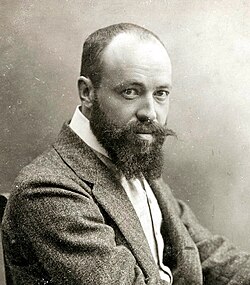
This church was a collaborative creation built as a unified concept, shared by Lars Sonck, who also designed the organ frontage, and Valter Jung who designed the Jugendstil interior. these two architects also shared their vision of the decorative work in the interiors with two other young and revolutionary artists, Hugo Simberg (1873 – 1917) and Magnus Enckell (1870 – 1925). Between these four young men, all excited by the artistic possibilities of creating a building as work of art in the Jugendstil style, one of Finland’s great influential buildings came to life.
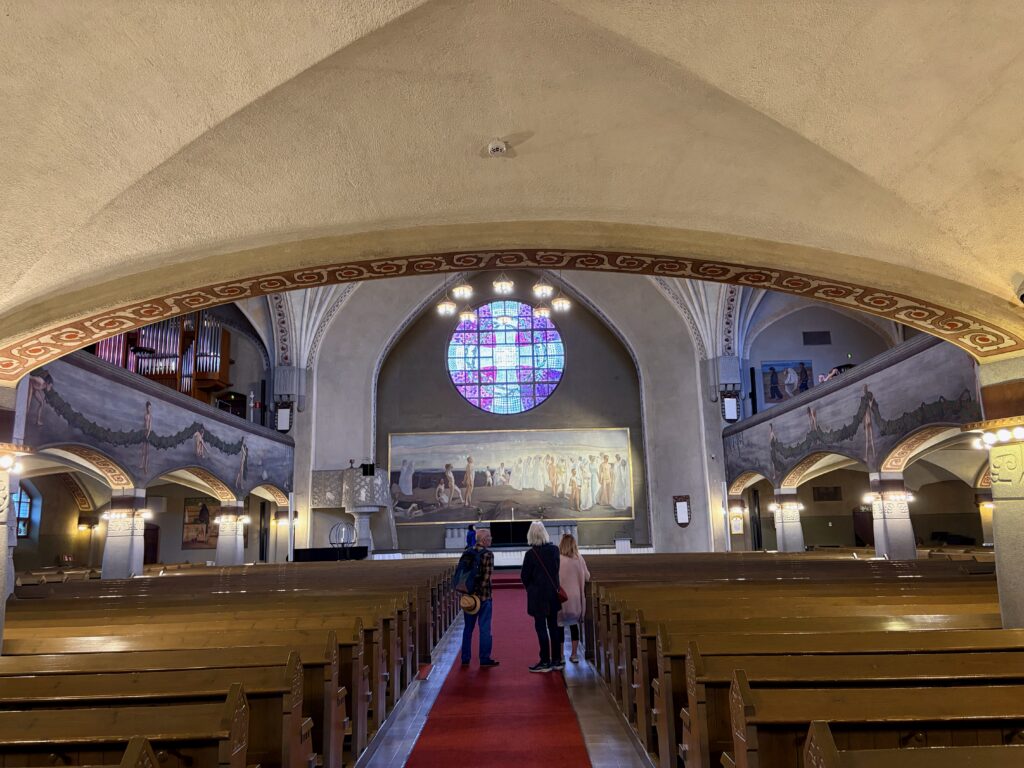
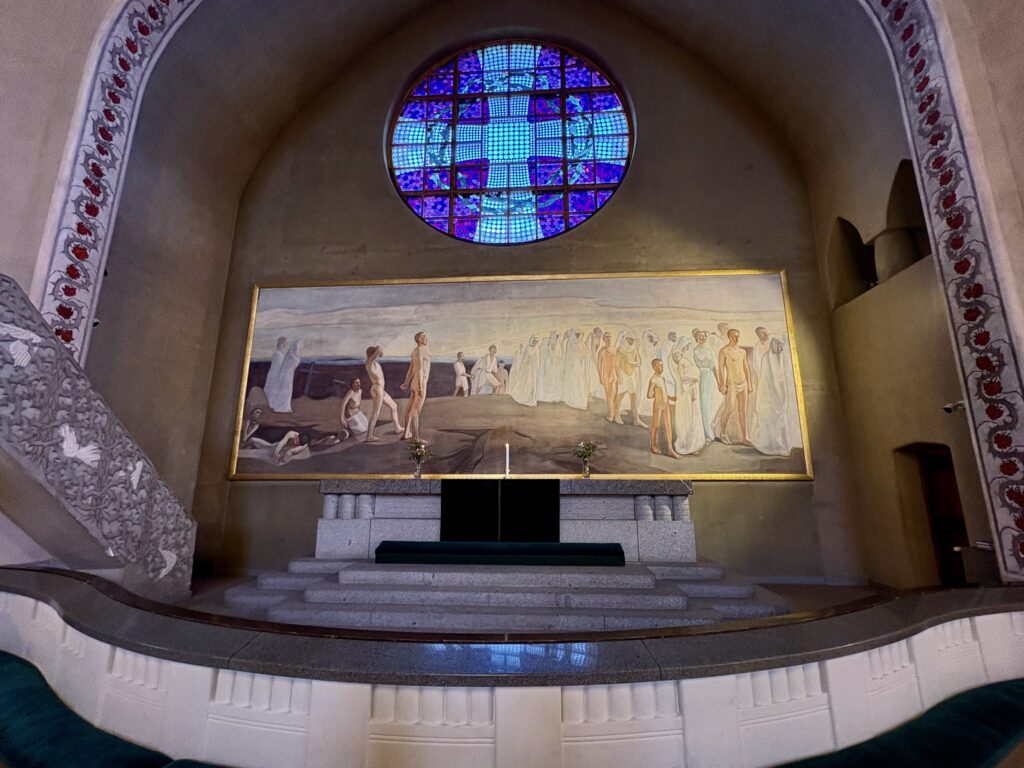
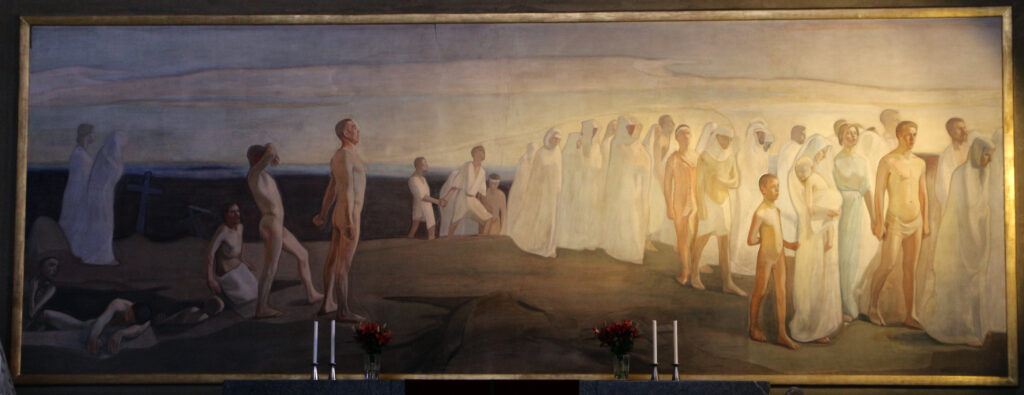
Magnus Enckell’s altarpiece fresco, Resurrection, shows people of all races, and, or so it seems, by the two men holding hands in the centre, all sexual orientations. They have risen from their graves to a world inspired, maybe, by Enckell’s study of works by the French Symbolist painter, Pierre-Cécile Puvis de Chavannes (1824 – 1898) and by the Italian Renaissance master, Fra Angelico (1395 – 1455).
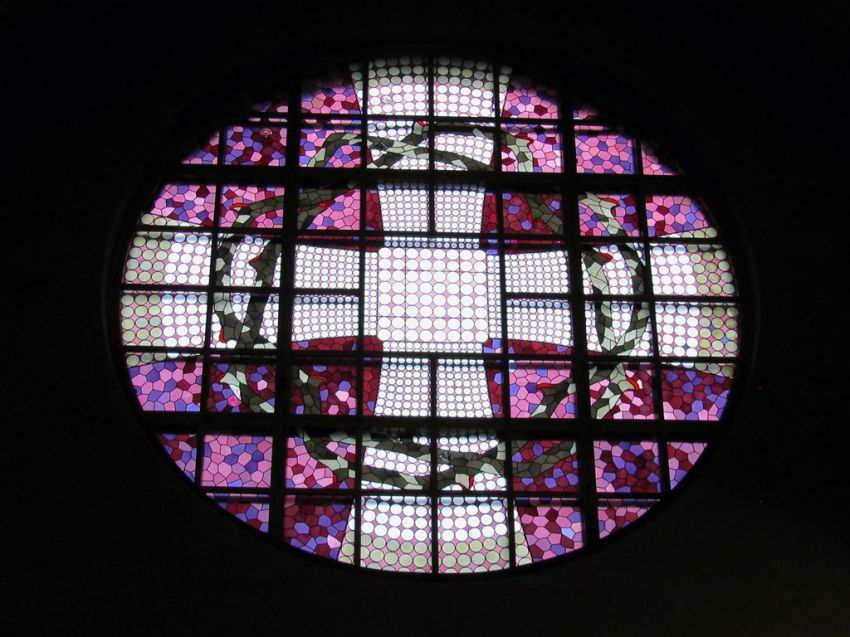
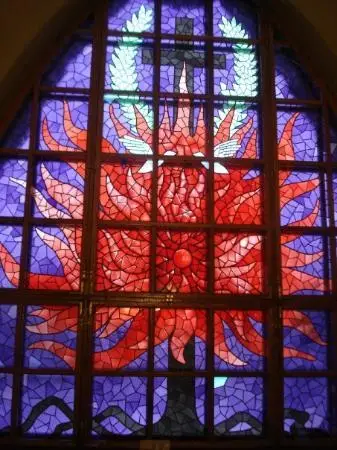
Magnus Enckell also designed the spectacular stained glass window, the crucifixion with a crown of thorns, above his Resurrection fresco.
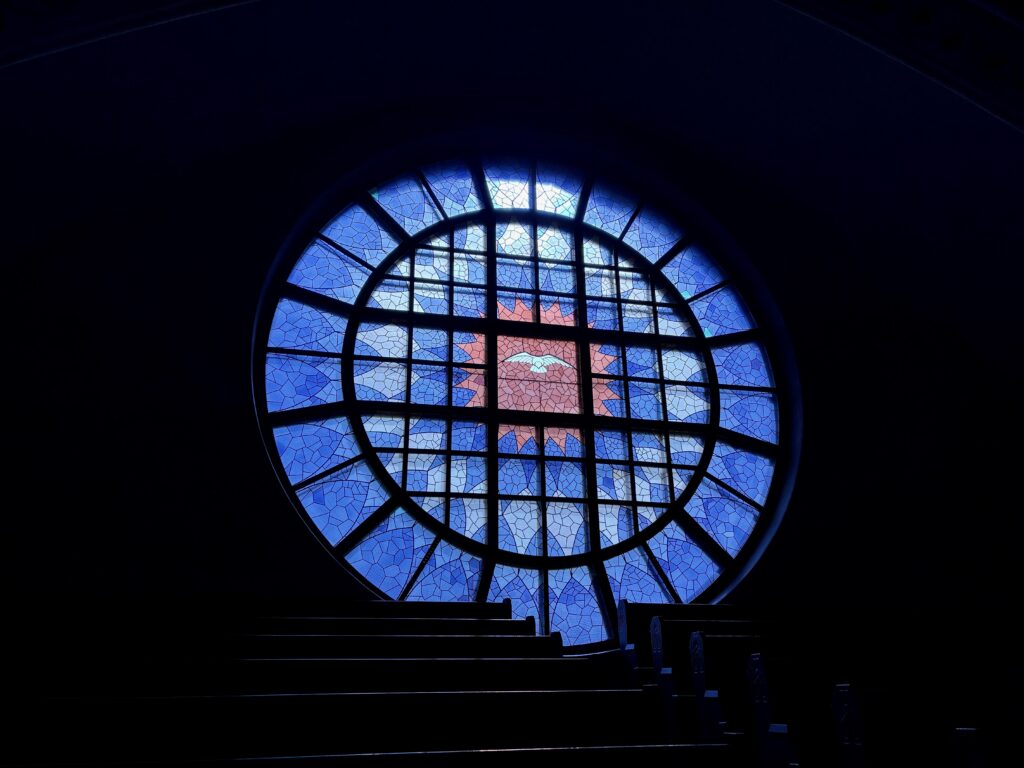
The other windows were designed by the fourth of the young revolutionary artists who worked extensively on the cathedral, the Symbolist painter, Hugo Simberg (1873 – 1917), who based his designs on episodes from the Bible, such as the Holy Spirit descending as a dove at the baptism of Christ, and the Moses’ Burning Bush.
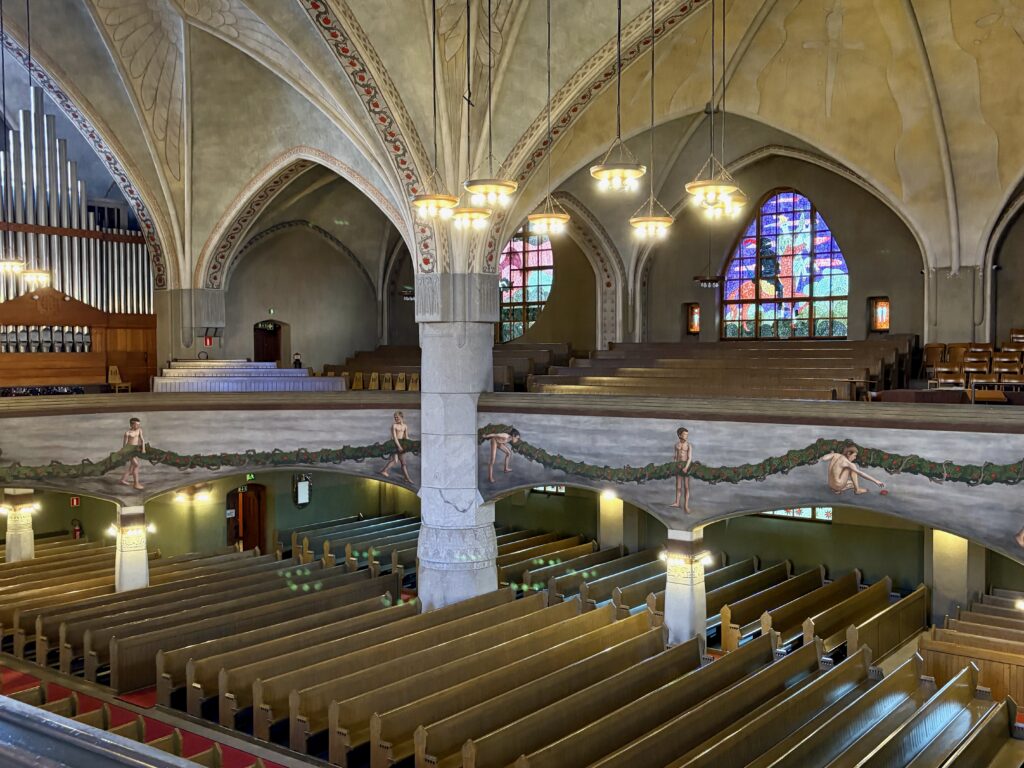
Simberg also painted a giant and controversial fresco, The Garland of Life , which stretches, like a snake, across three sides of the cathedral’s nave.
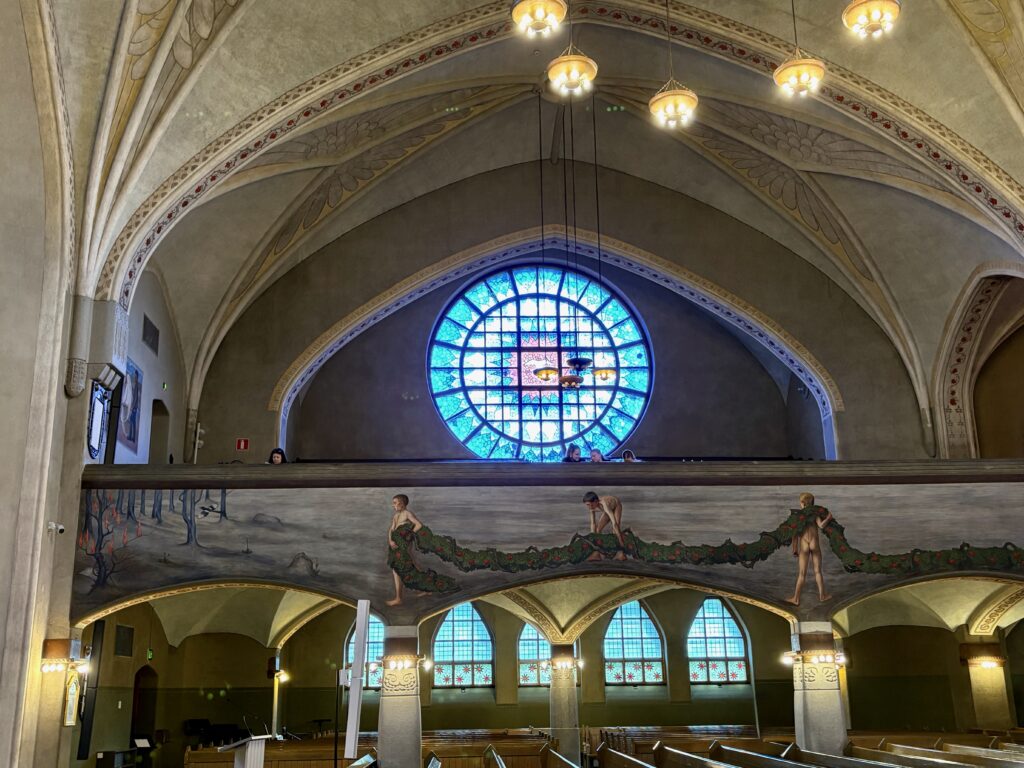
Hugo Simberg’s Symbolist fresco, The Garland of Life shows twelve nude boys, who represent the twelve disciples, in their innocence, carrying a giant and thorny garland of red roses. The size and thorniness of the garland resembles a snake, or the serpent from the Garden of Eden, with the red roses as symbols of love and sacrifice. The nudity shocked a number of the Lutheran clergy and some members of the congregation, and it was given planning permission with a one vote majority by a jury.
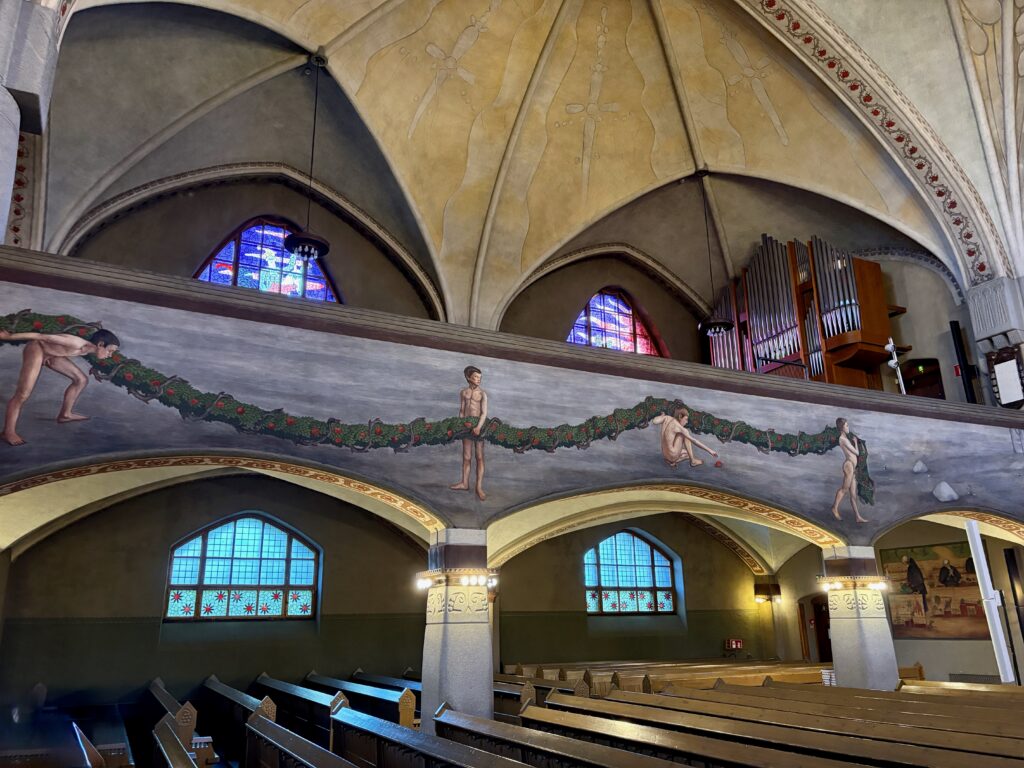
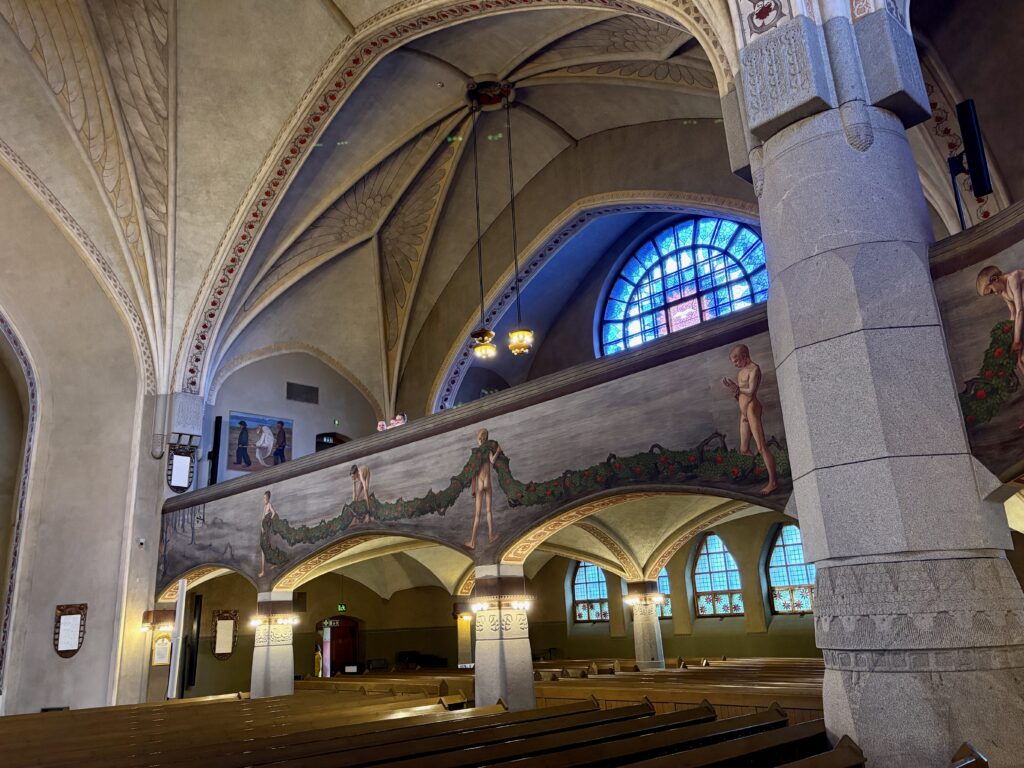
The twelve nude figures were modelled by local children who stood on wooden platforms holding a dummy version of the garland.
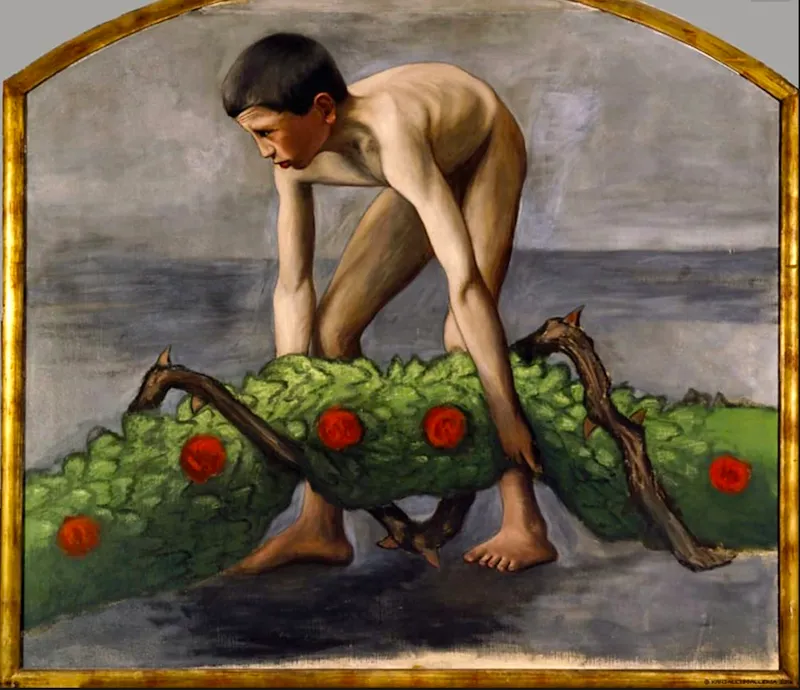
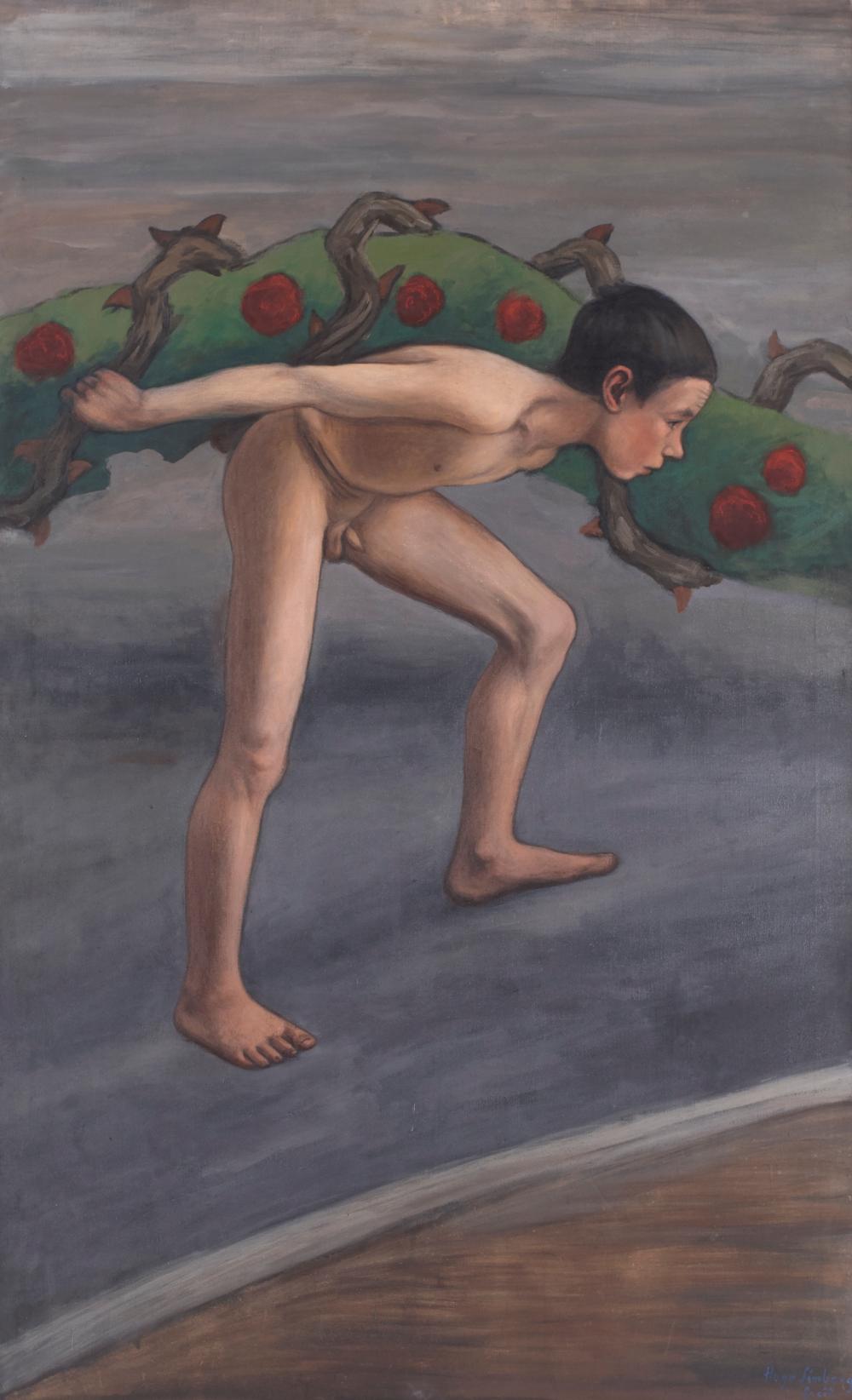
There was more controversy over Simberg’s design for the highest point of the vaulted ceiling with its image of a serpent set within symbols of angels’ wings. Simberg defended the imagery as showing how everything, including Satan, was ultimately under divine control.
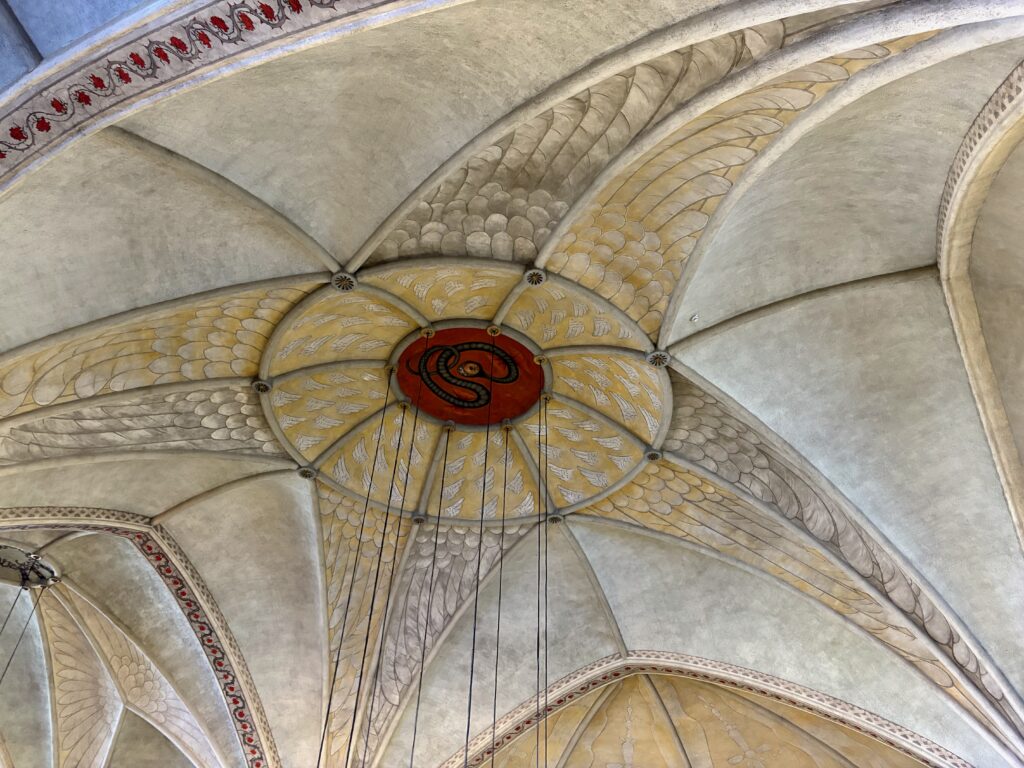
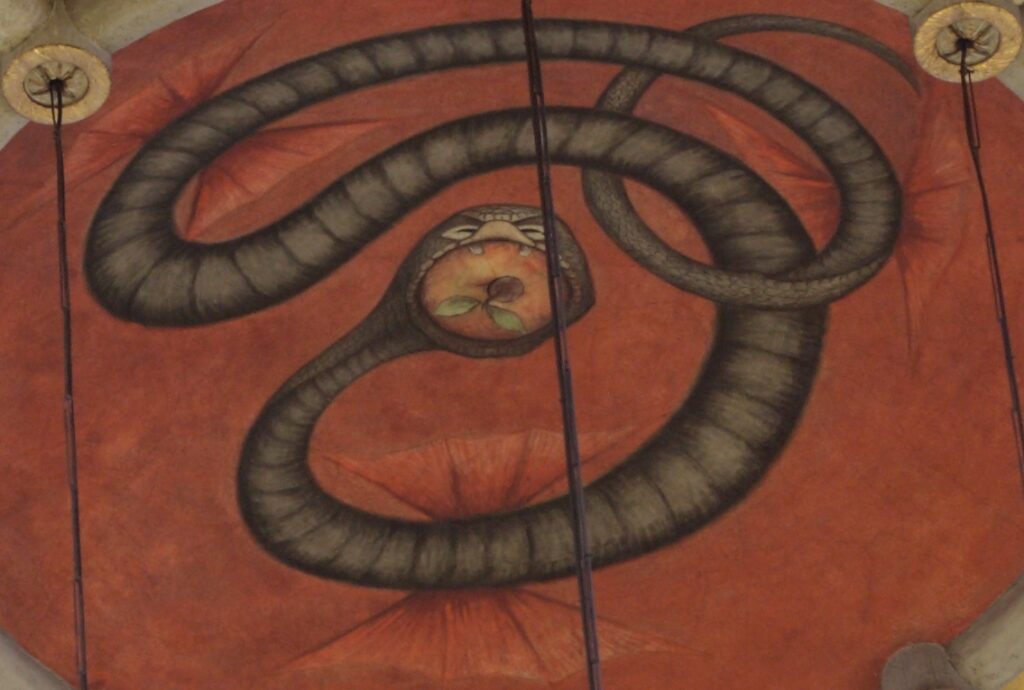
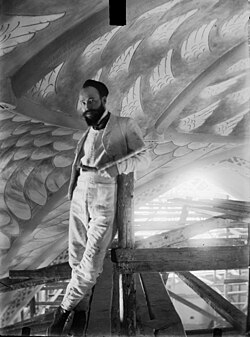
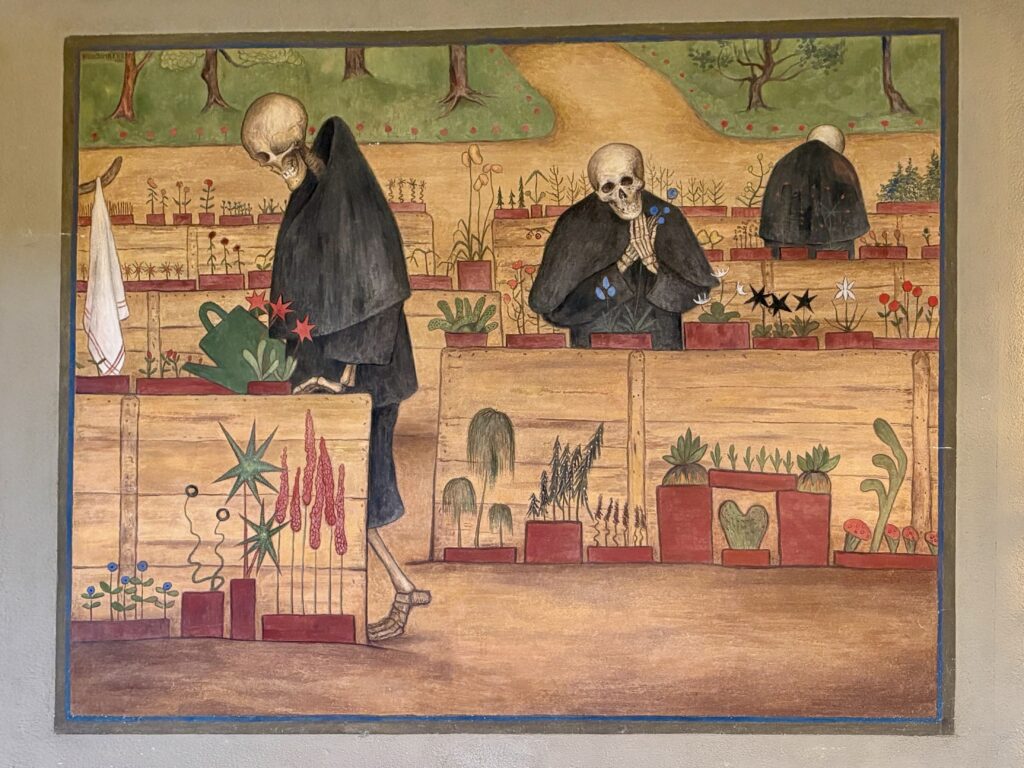
Two well-known and disturbing, Symbolist paintings by Hugo Simberg were also included in the over-all design of the cathedral. The Garden of Death, 1896, with smiling death figures lovingly tending the garden, after the serpent’s victorious temptation of Adam and Eve, preparing the way, maybe, for the final journey that awaits us all.
And finally, Simberg’s most famous painting, The Wounded Angel, 1903. Was the angel wounded by the serpent up there on the ceiling, or was it wounded by us? One of the boys looks accusingly in our direction as Tampere’s factory chimneys send smoke into a steel grey sky.
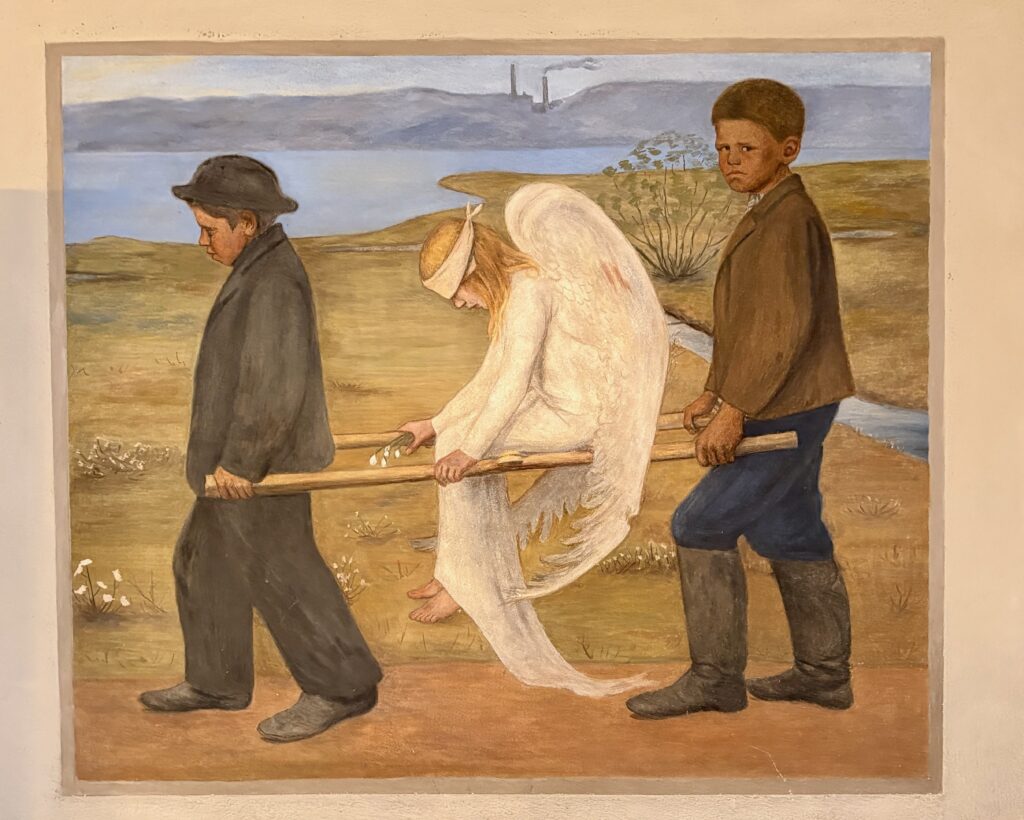
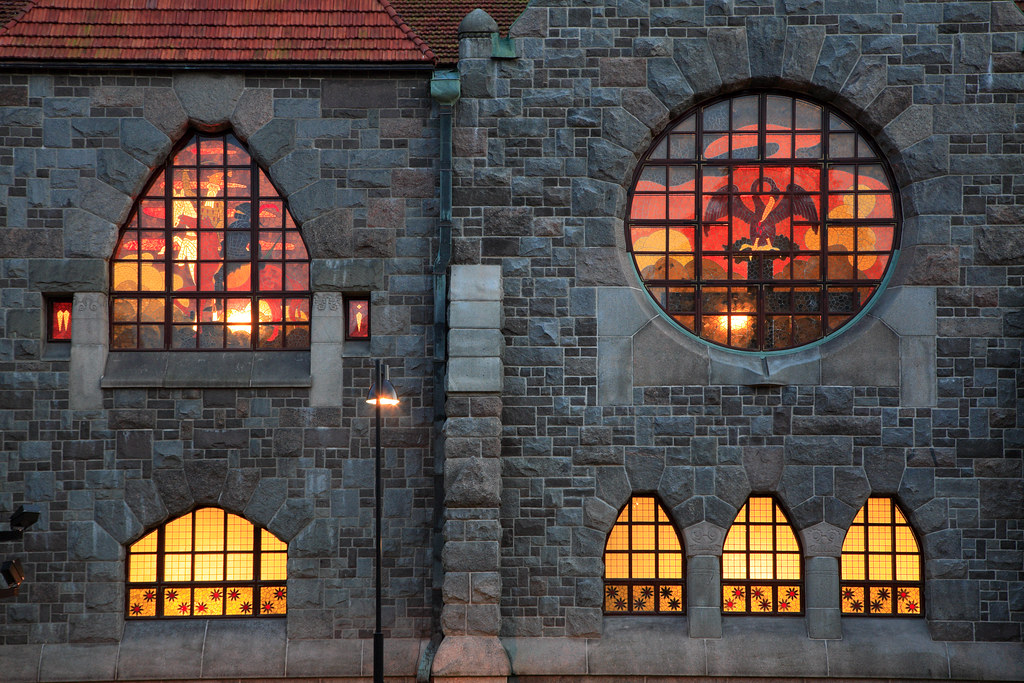
I have given a lot of space to Tampere Cathedral because it is a truly remarkable building – it was very special to have spent time there.
Farewell Dinner and Drinks in Tampere
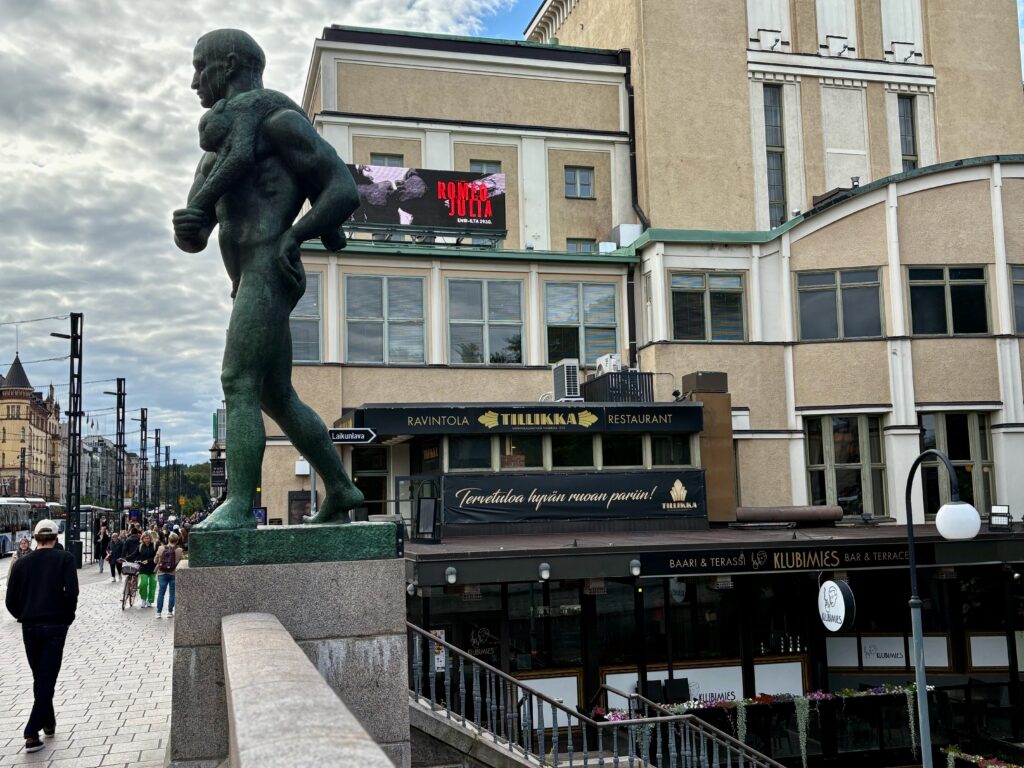
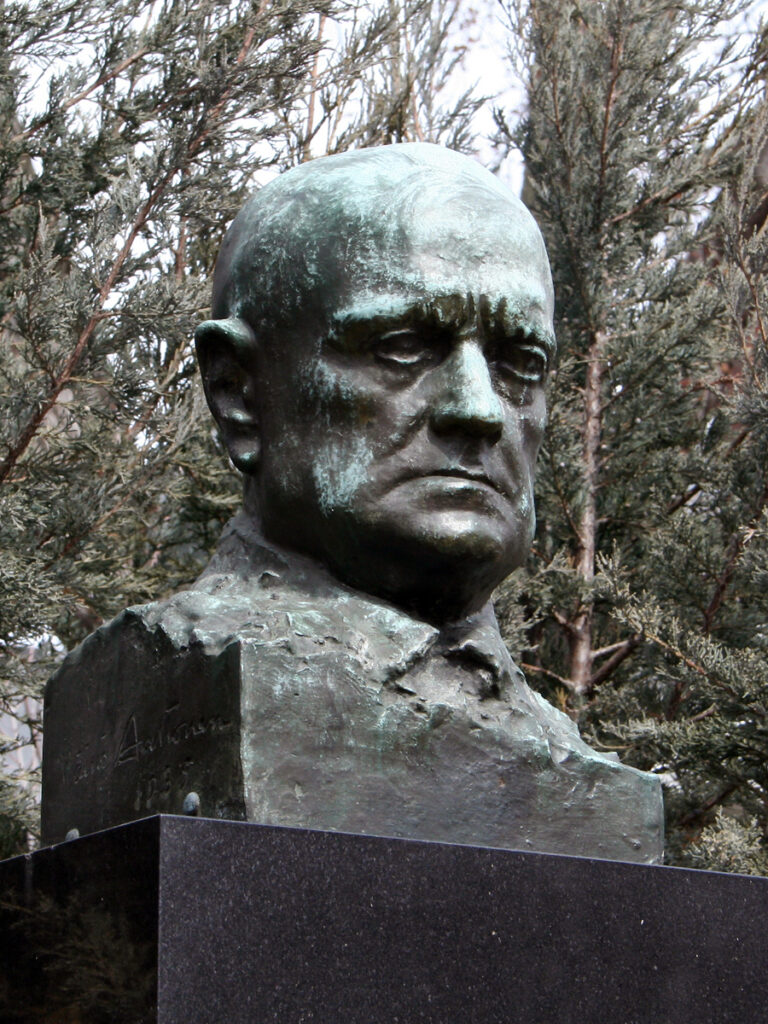
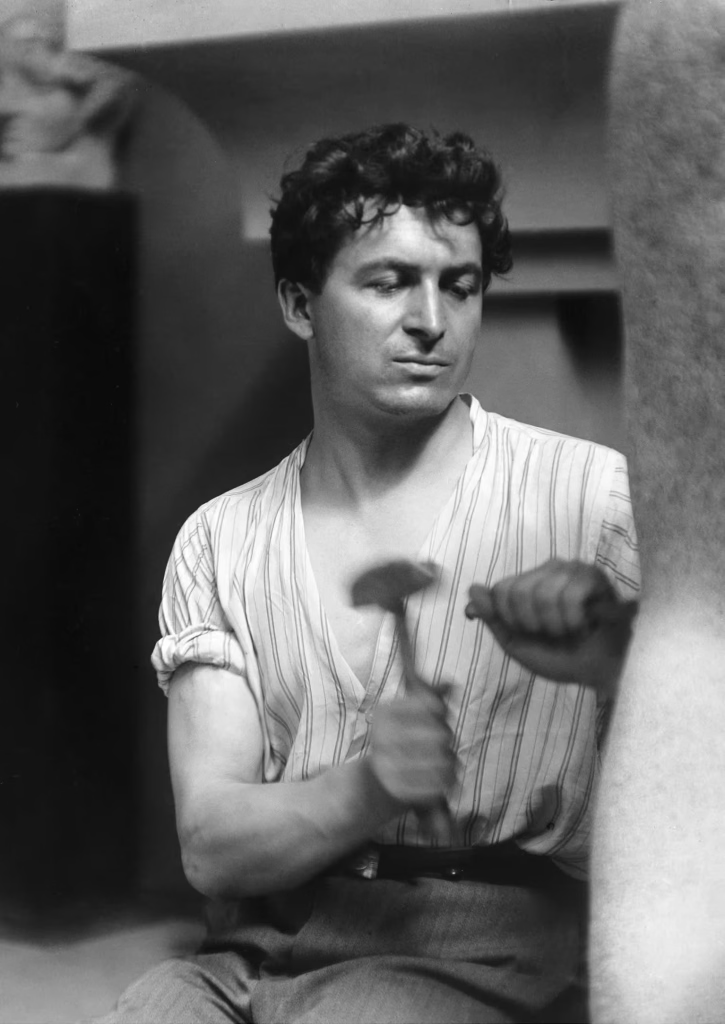
We had time for dinner and a couple of drinks in the Tillikka Restaurant on Hämeensilta Bridge with The Hunter, one of its four bronze statues by Wäinö Aaltonen (1894 – 1866), the Cubist and Futurist inspired sculptor who also made a fine bronze but of Sibelius..
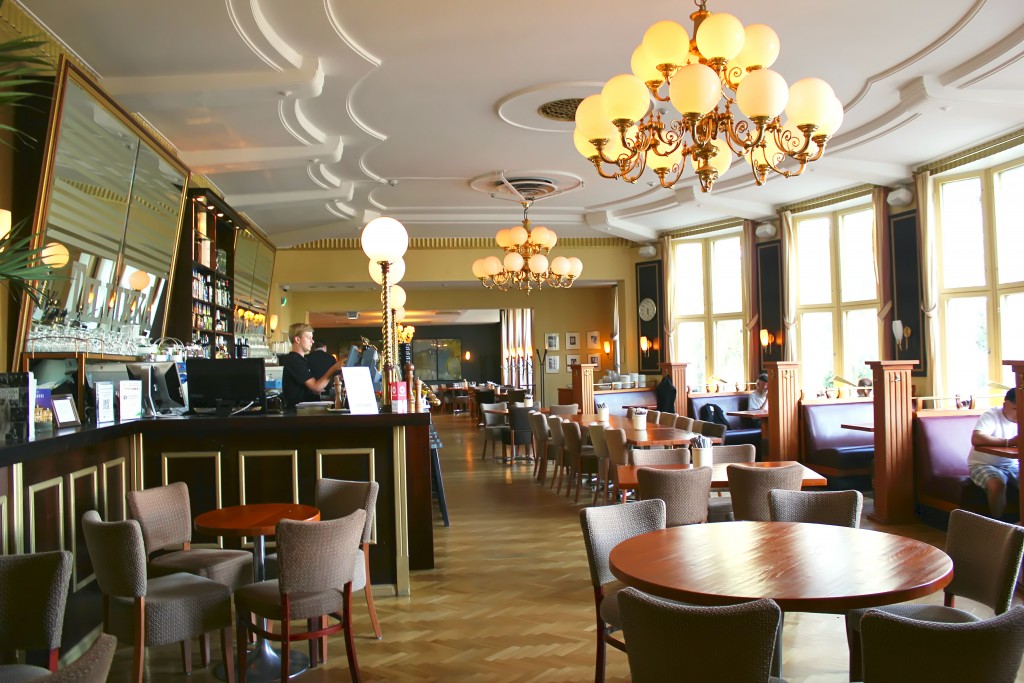
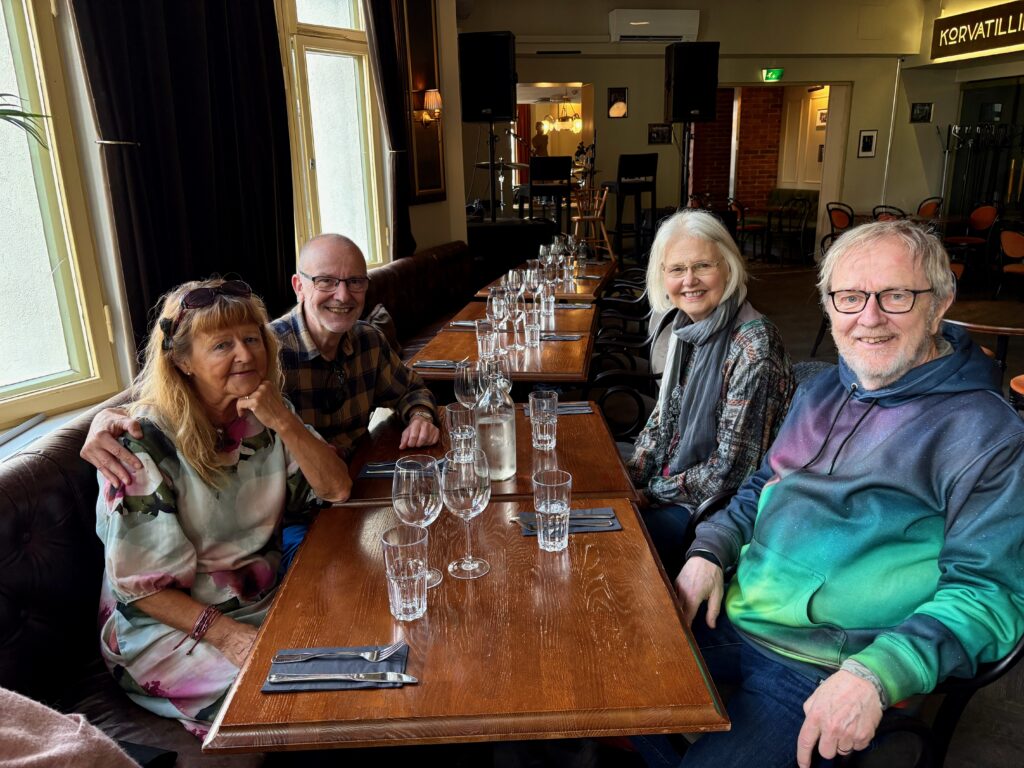
It was a great day with a great dinner, Finnish-style in this splendid but pleasantly informal Tillikka Restaurant …we were later joined by some very athletic and extremely tall athletes in their national teams tracksuits – they were plahyng in FIBA Eurobasket 2025 at The Tampere Deck Arena (Nokia Arena) that was hosting the Group B games for the EuroBasket 2025 tournament. There is always something very sporty going in in Finland.

I like to think that we weren’t exactly out of place in such athletic company.
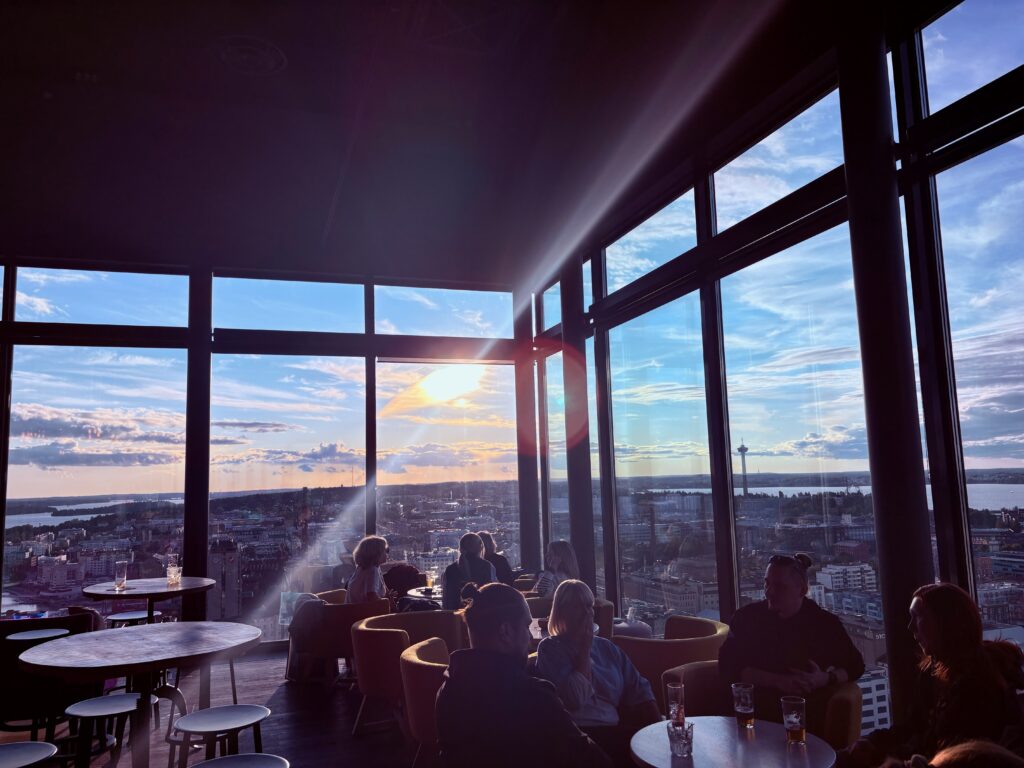
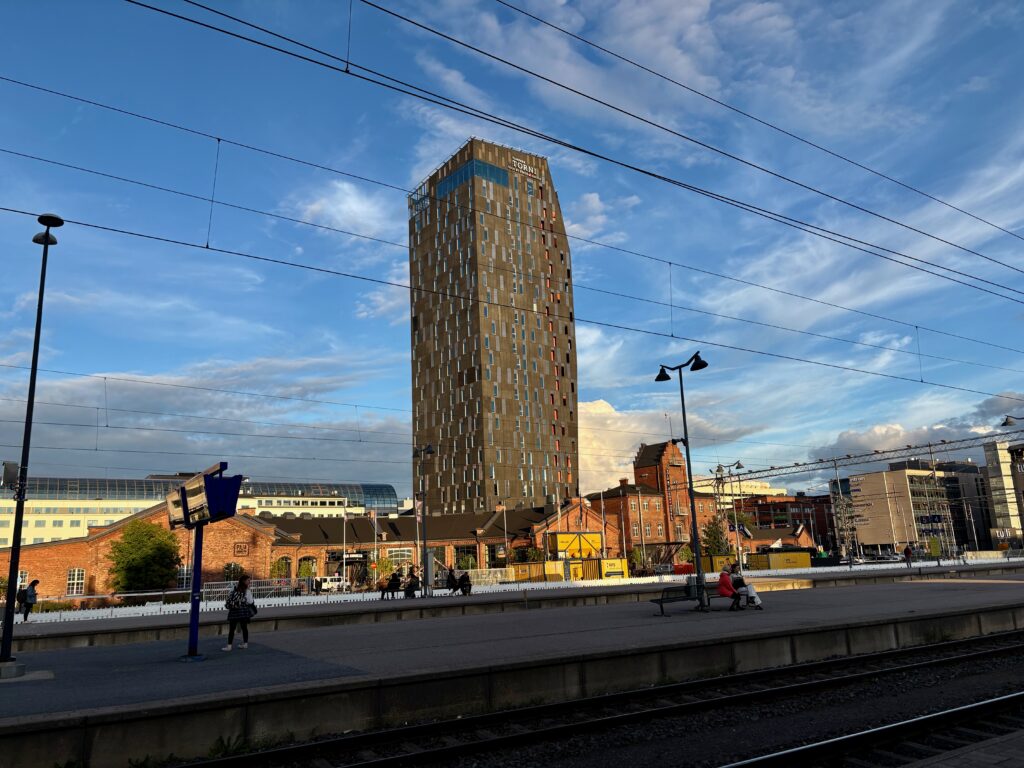
There was time for one last drink in the Moro Sky Bar on the 25th floor of Solo Sokos Hotel Torni Tampere, the tallest hotel in Finland. Kippis ja kiitos, Mike ja Eevi!
Back in Lahti
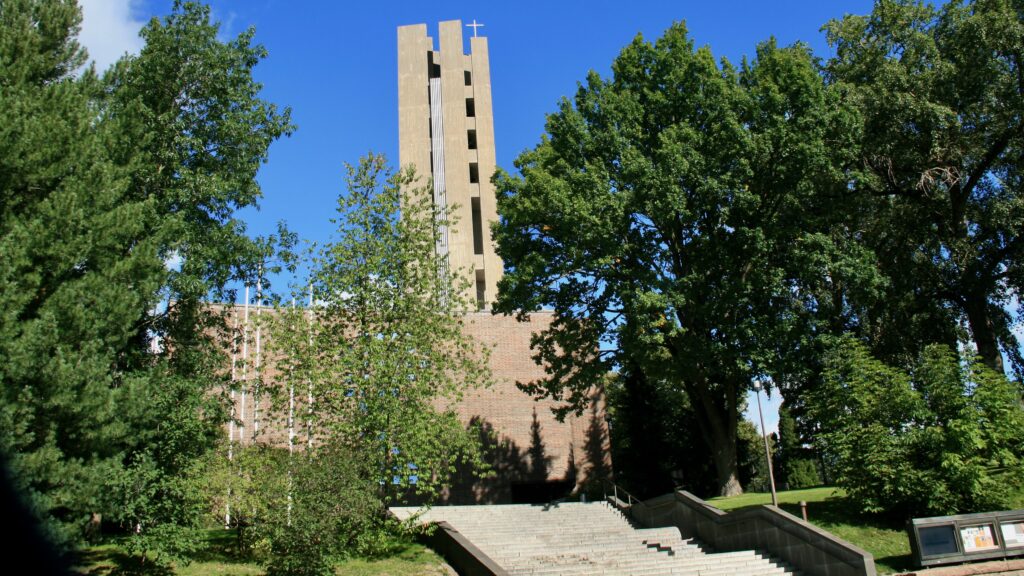
Lahti Museum of Visual Arts, Malva
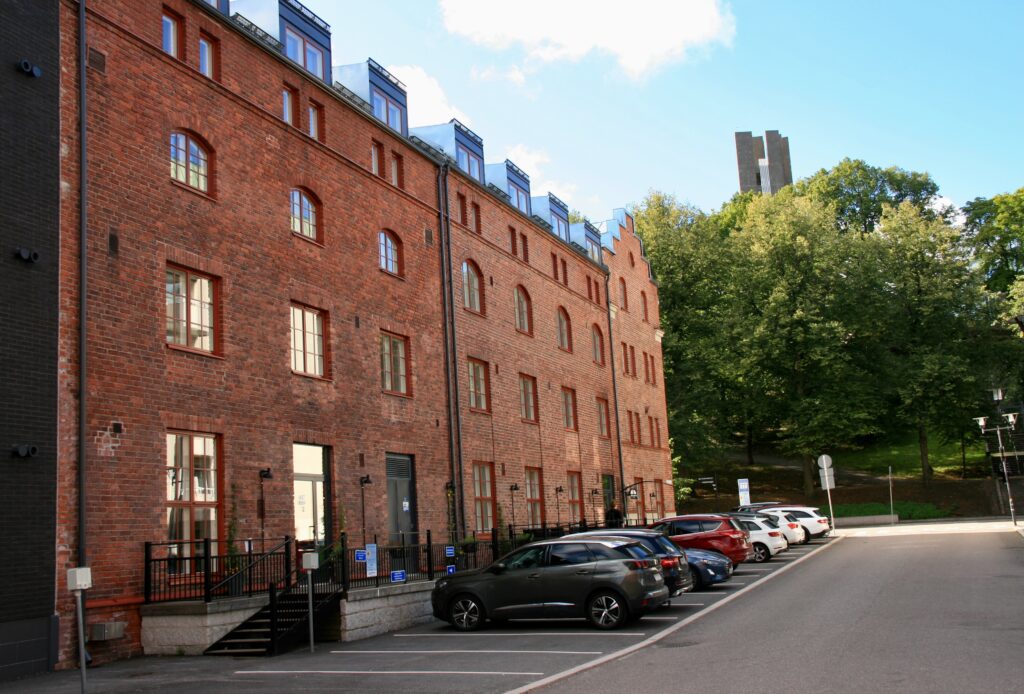
As on my three previous visits to Lahti, I spent an afternoon at the city’s excellent and bravely experimental modern art gallery, MALVA, the civilised heart of of town. This year they were mounting an exhibition called Transformations.
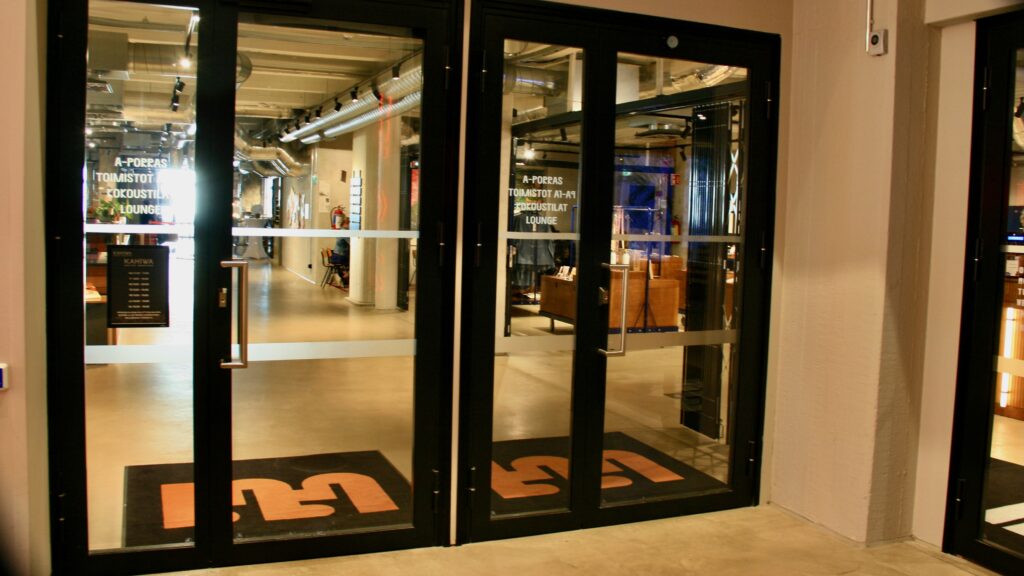
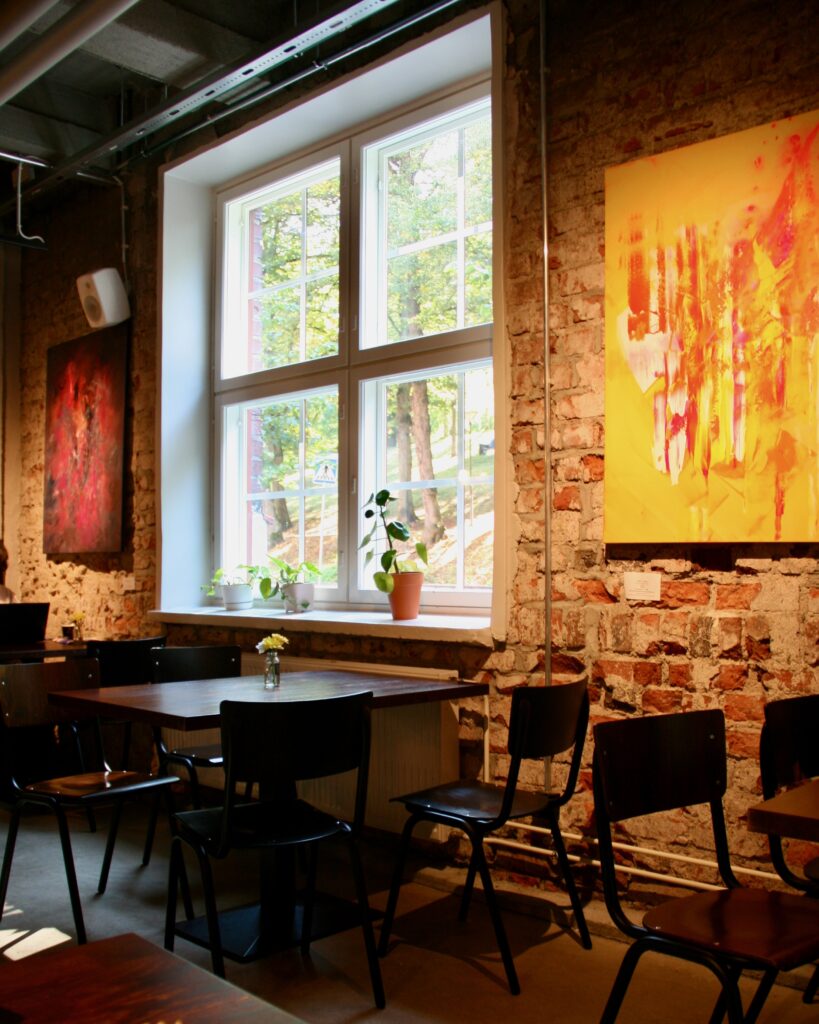
Transformations
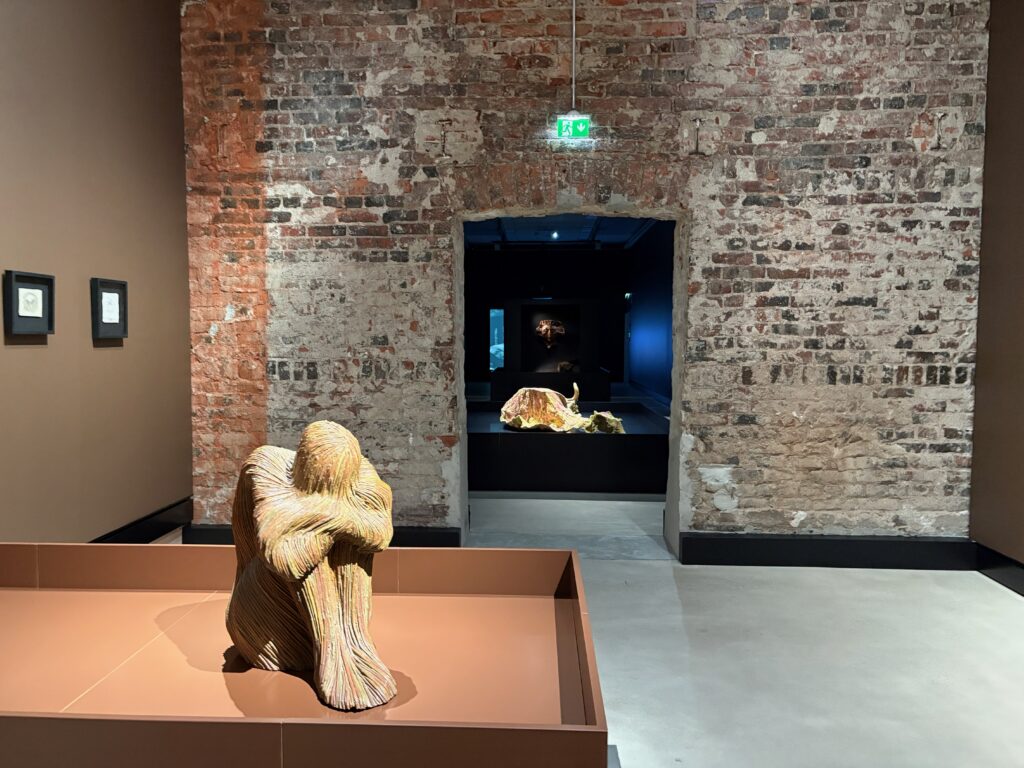
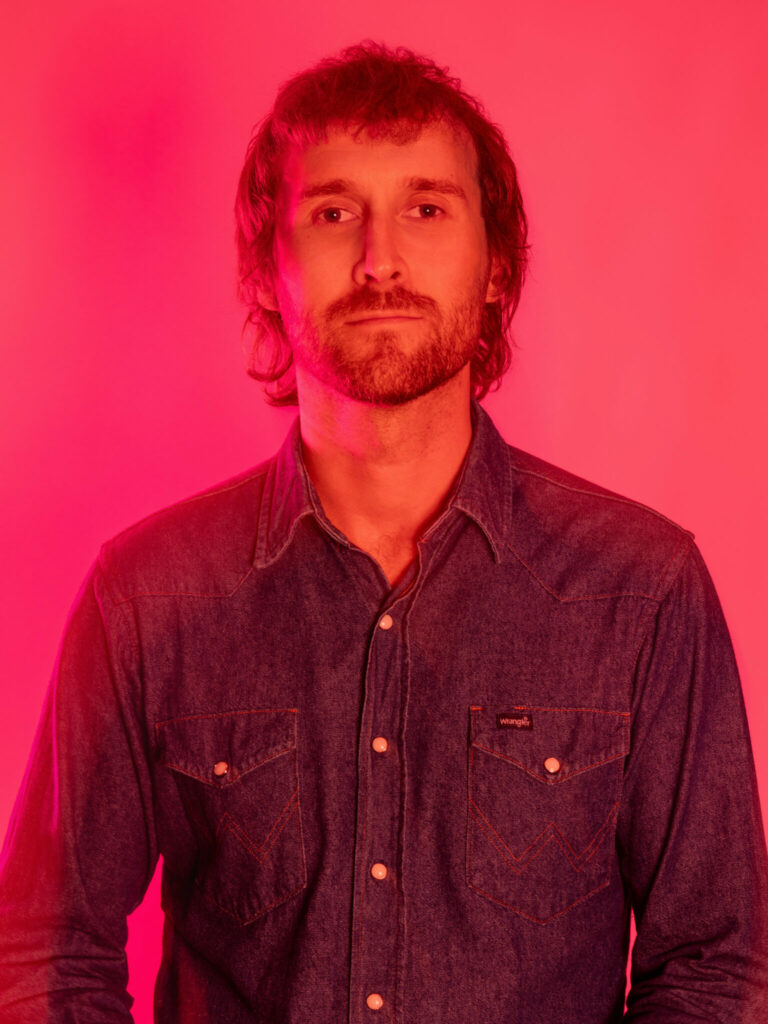
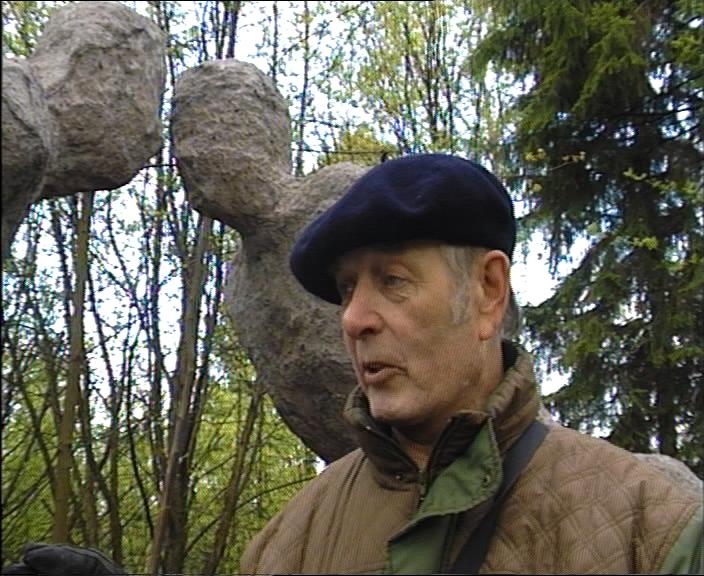
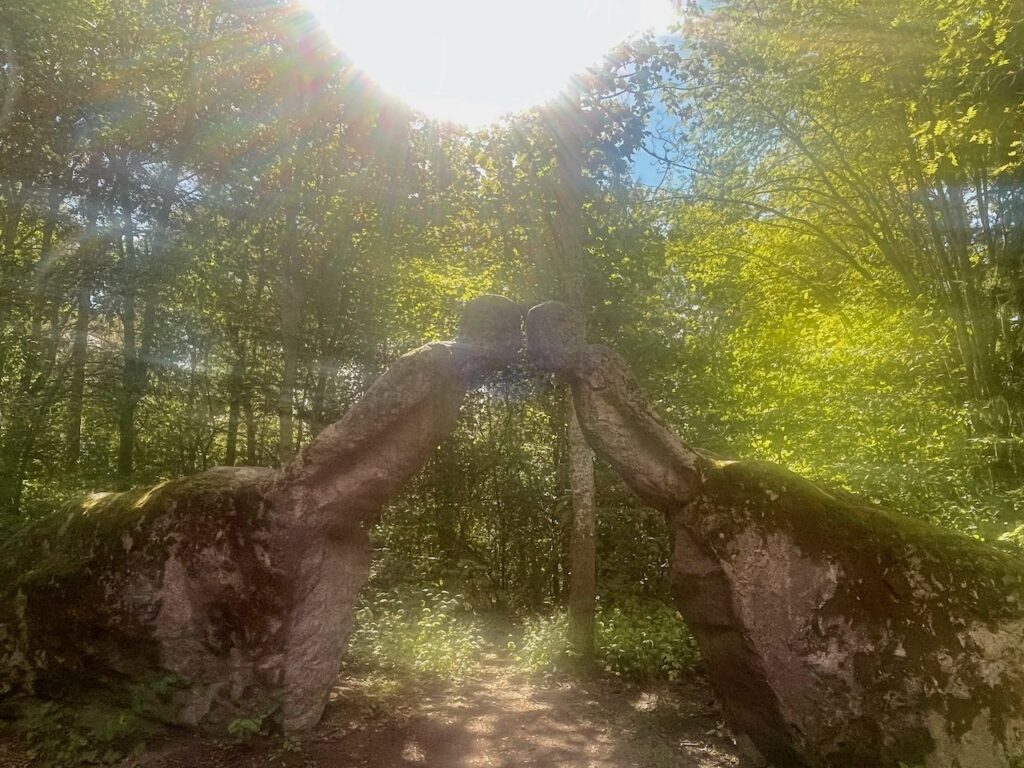
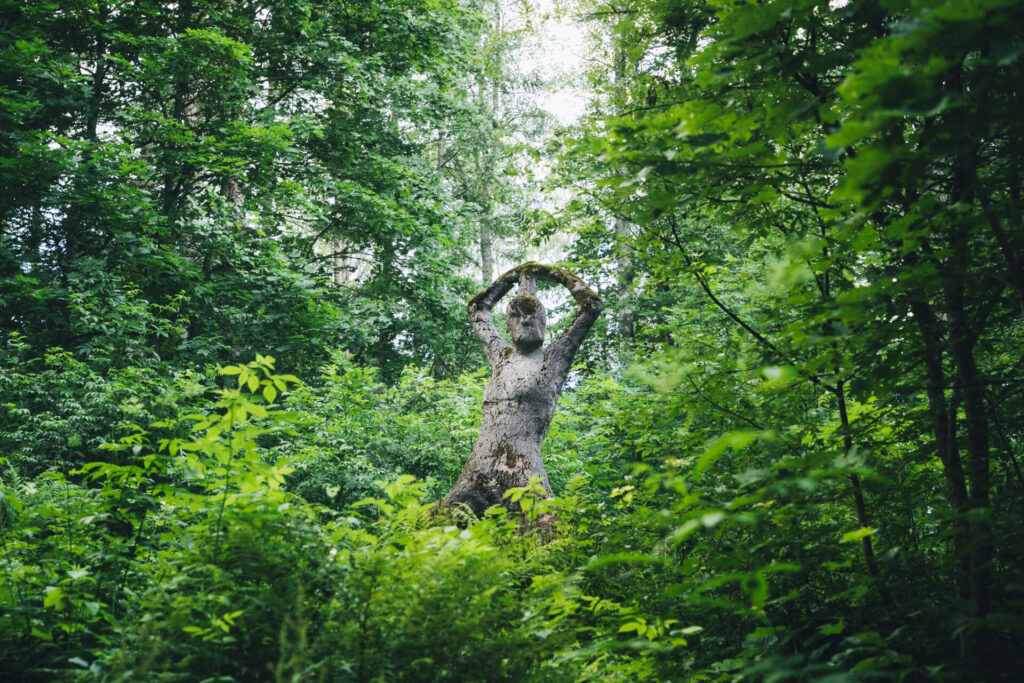
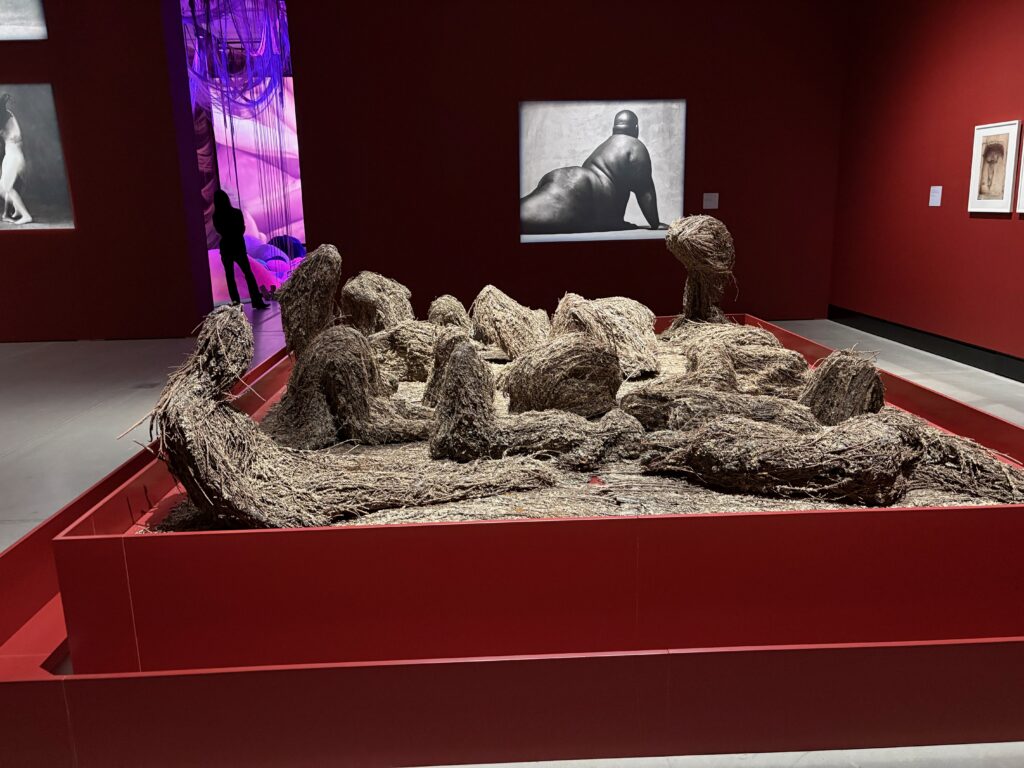
The exhibition Transformations brought together work by the Finnish sculptor Olavi Lanu (1925 – 2015), some of whose concrete sculptures can be seen on permanent display in the Lahti’s Lanu Sculpture Park. Olavi Lanu sculpted human figures always in relation to different living environments. He understood that change is a constant both in nature and in the lives of humans. The exhibition’s curator, Ilari Laamanen said that ‘a dynamic relation to nature acts as a starting point for this exhibition that brings works by Olavi Lanu into dialogue with his own contemporaries and with artists working today… Human existence is fundamentally a part of nature’s cycles, not something separate from them. The exhibition reflects on the cyclical nature of things and how to surrender to life. The body traverses an entire lifespan: pain, pleasure, playfulness, growth, wilting, a continuous transformation.’
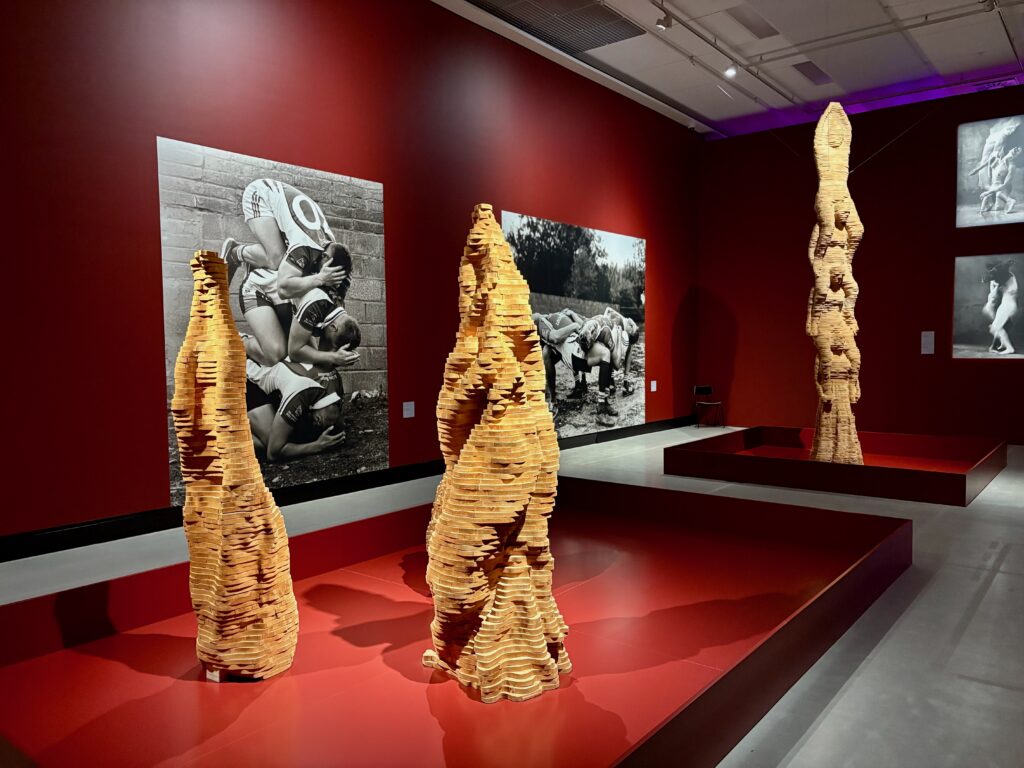
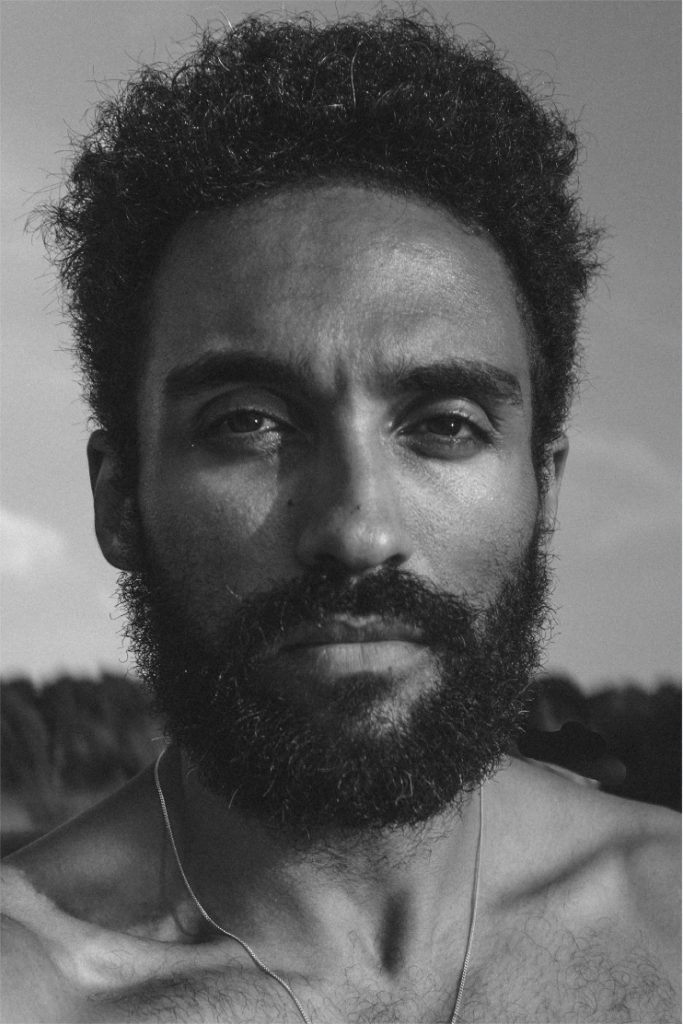
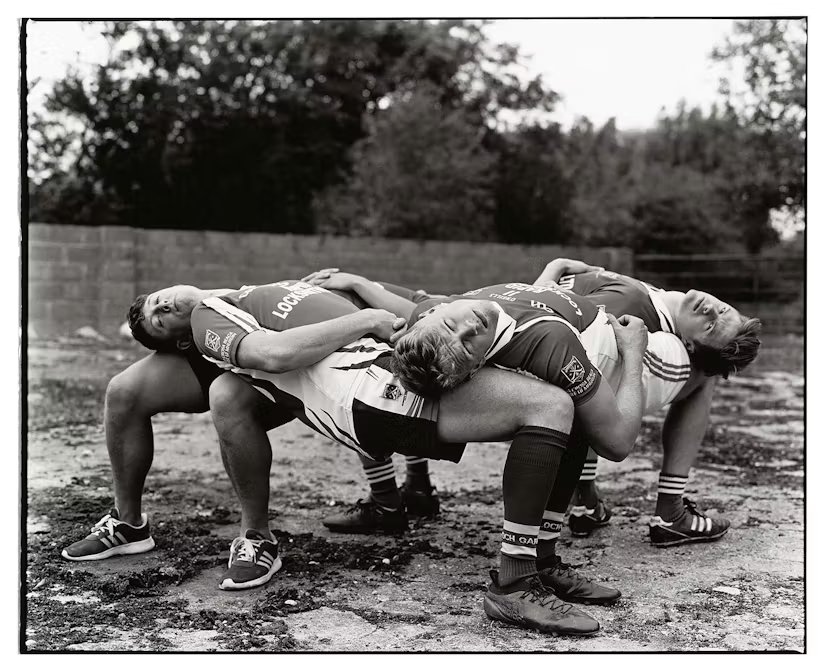
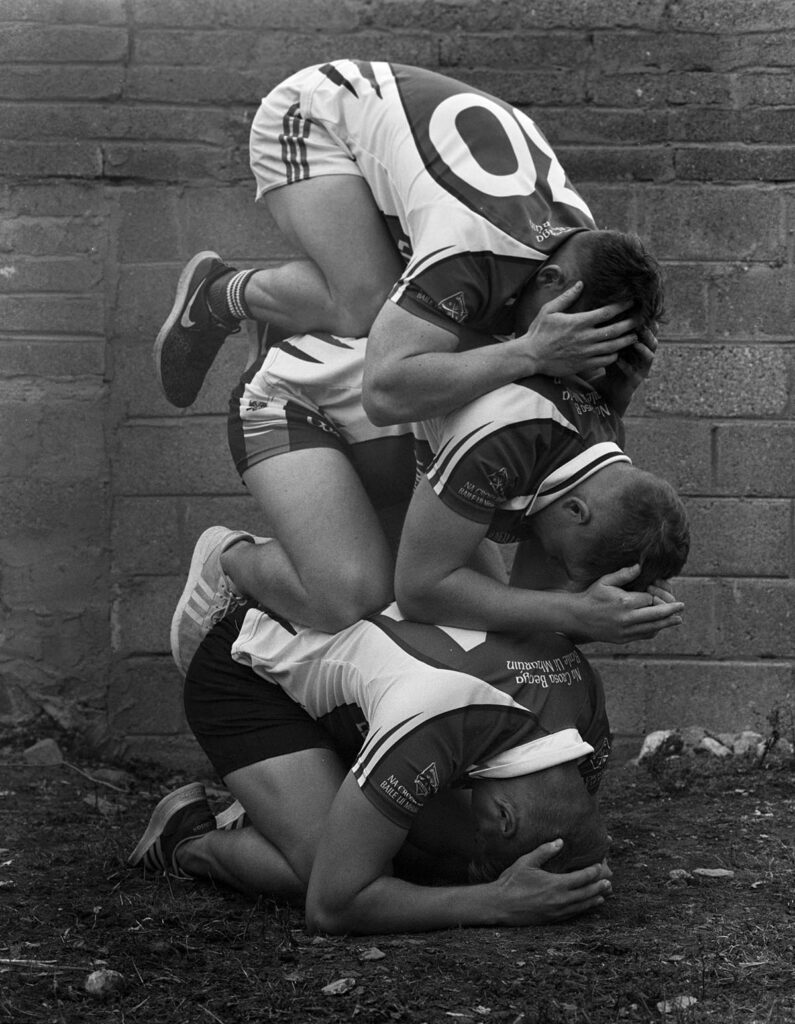
In Wexford, Ireland, American-Dominican photographer and choreographer Luis Alberto Rodriguez was struck by the intense physicality of the sport of hurling. Considered to be the fastest sport on grass, while watching slow-motion footage of hurling, Rodriguez saw that within seconds the players would go through pushing, shoving, grabbing, hugging, knocking each other down and then lifting one another up. Rodriguez worked with players to reform these gestures: creating sculptures out of bodies, directing and literally layering players upon one another.
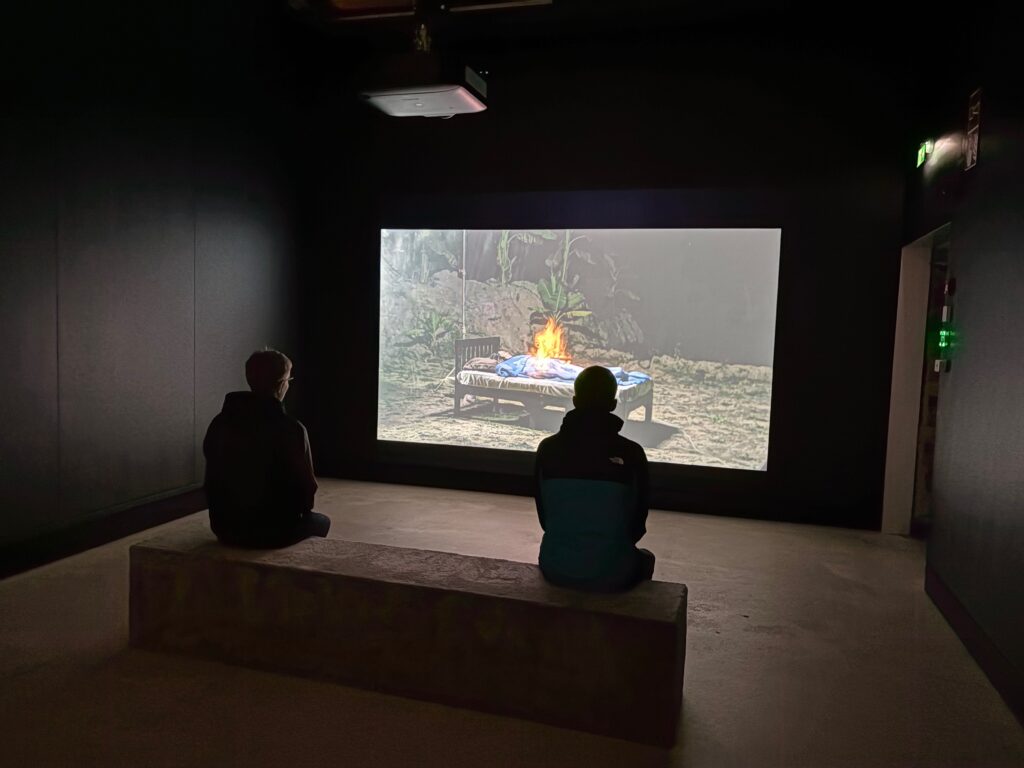
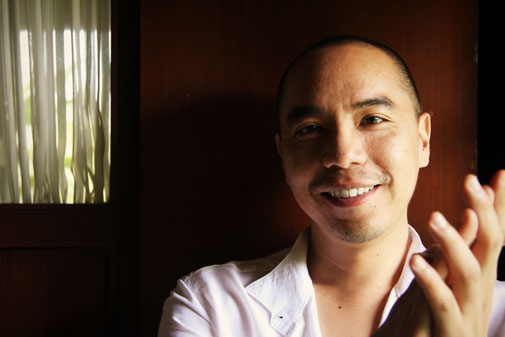
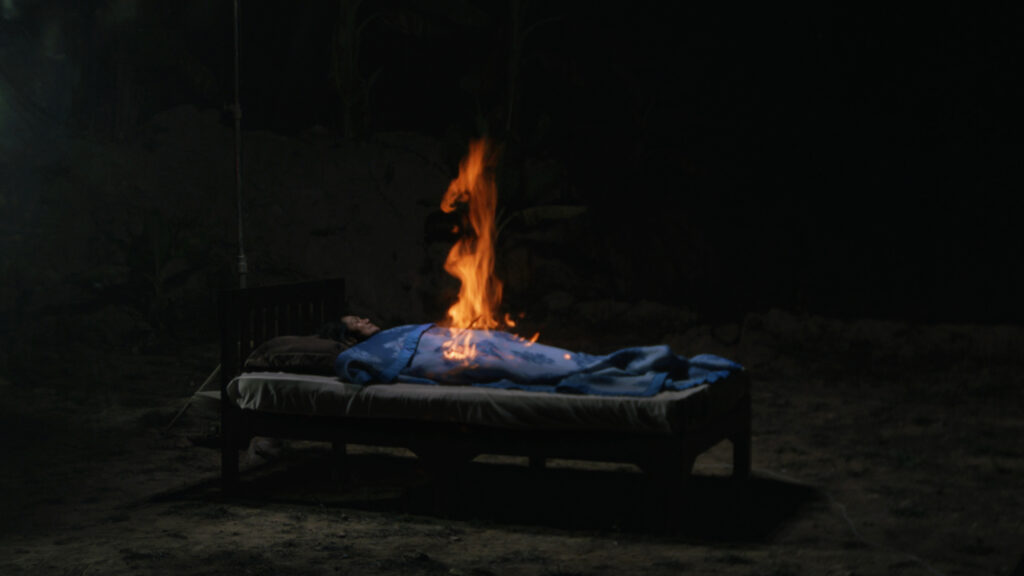
In the hushed yet unsettling Blue, curator Ilari Laamanen writes, ‘artist and film-maker, Apichatpong Weerasethakul’s video blurs the boundary between personal and collective memories and enacts a new layer of memories augmented in the audiences’ experience. Jenjira Pongpas Widner, Apichatpong’s frequent collaborator, slumbers while the makeshift stage of Likay, a Thai folk theatre, keeps automatically changing its backdrop. At the threshold of consciousness, the theatrical scenery forges a transitional space between corporeality and incorporeality. Like his other works, Blue hovers in a realm of uncertainty that reflects a state of national despair and failed utopia.’
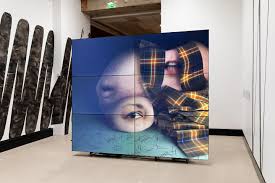
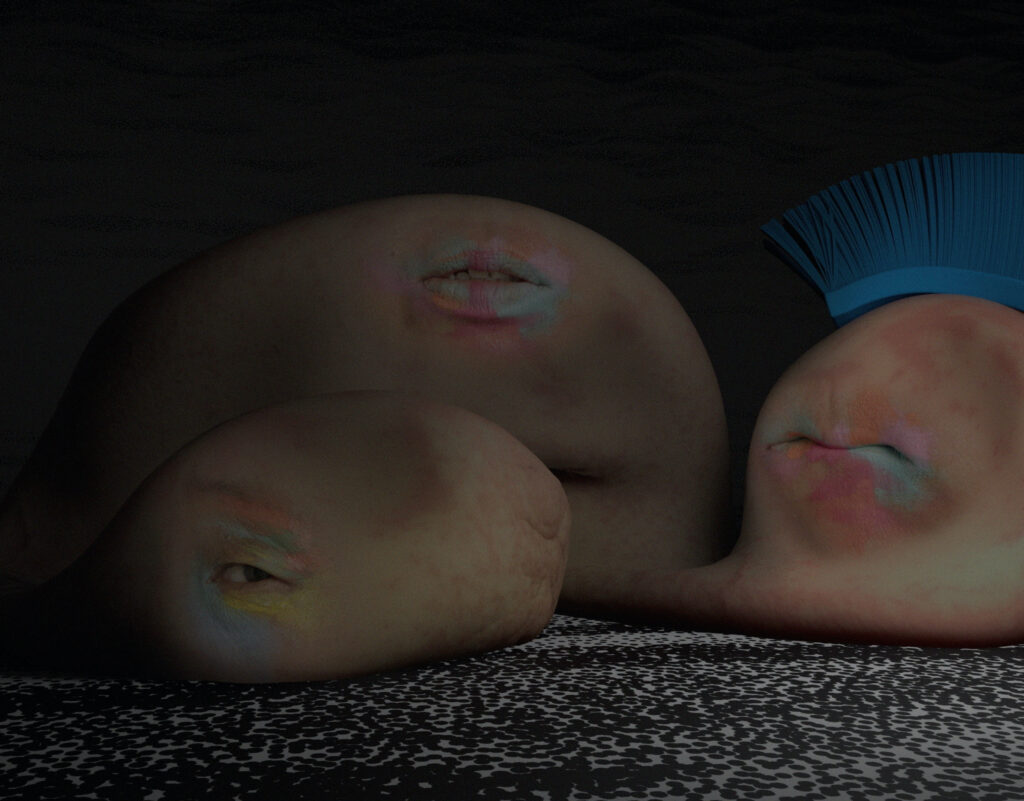
According to the Finnish artist, Jani Ruscica, his sculptural video installation Polynotknot (and they bloom) keeps changing its form, with its clips continuously and randomly shuffled into a new order. Within the imaginative fleshy shapes and masses one can discern a varying number of mouths, eyes and drawings on the skin. Subjectivities dissolve into a polyphonic rejection of linguistic expression and normative conceptions of the body, with the organically folding and piling figures remaining corporeally uncoded.’
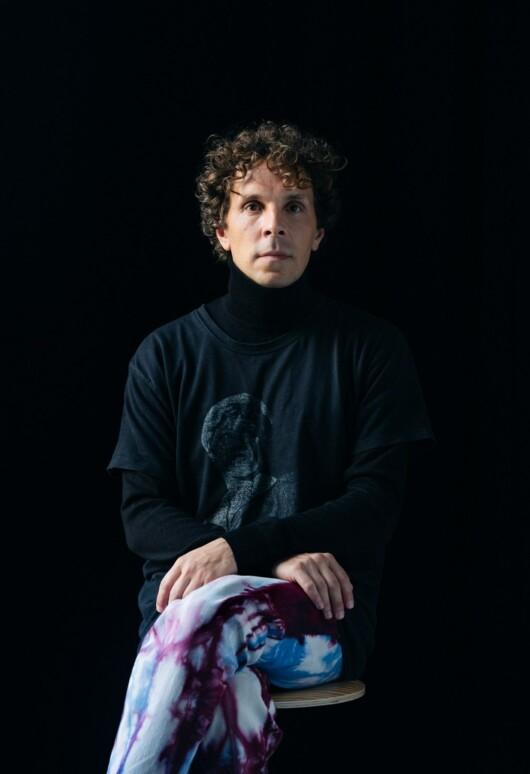
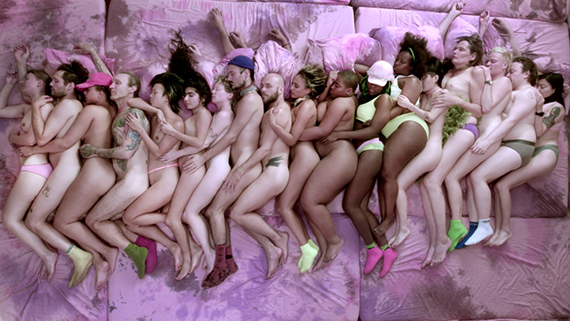
Dutch artist and film maker Melanie Bonajo says: “Love is not learned in isolation and, if you have felt it, someone else has probably felt it too. We created a collective spell in the form of a pleasure-positive camp, an eco-erotic queer eros, celebrating our kin through skinship. A place of productive chaos and care, where we practiced touch tutorials, set boundaries, gave and received consent, drank our own poison at the trigger bar, did weird therapies and acknowledged feelings as valid.
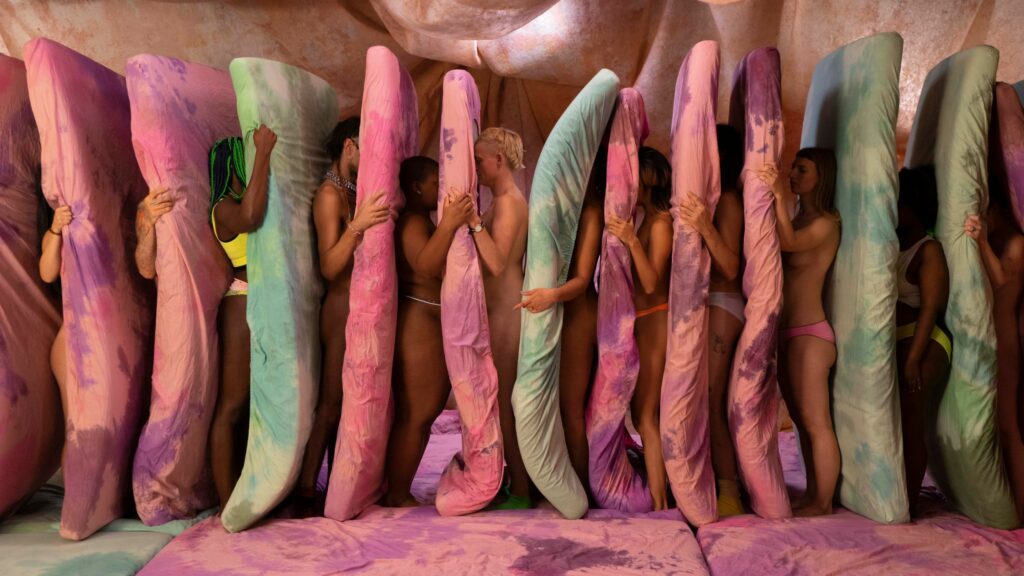
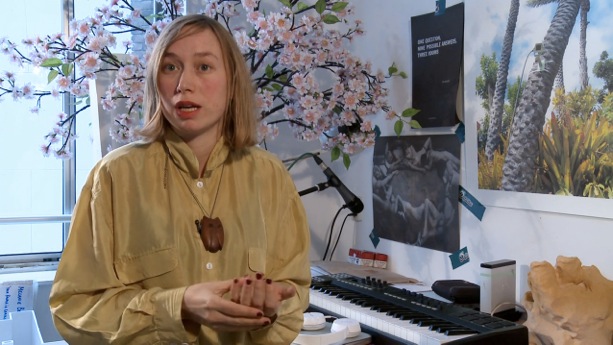
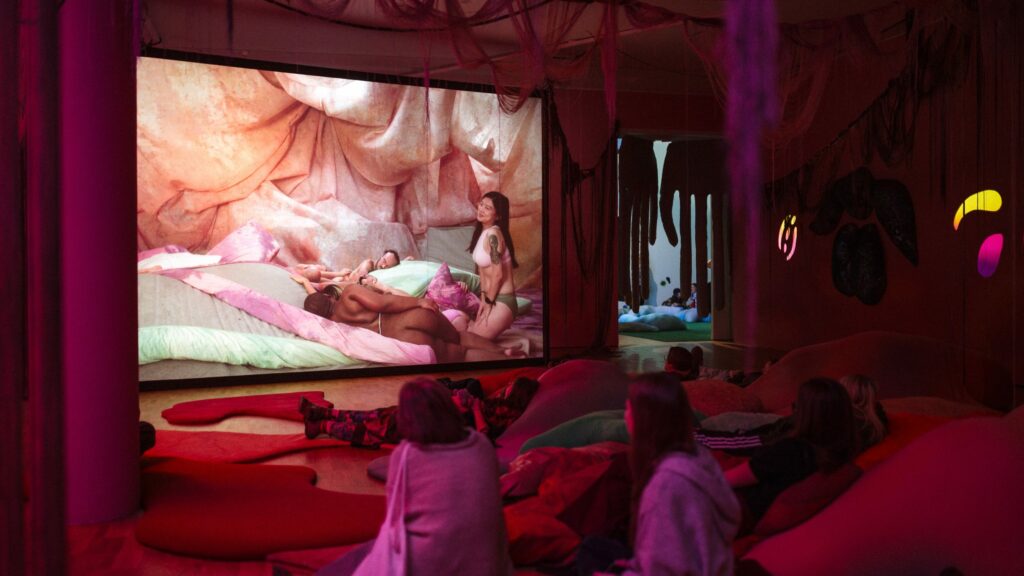
Melanie Bonajo says: When the body says Yes invites visitors to reflect on the meaning of touch and intimacy in relation to their own bodies. Immersed in an atmosphere of softness and sensuality—a cushioned refuge from the outside world—they can discover their own “touch language.”
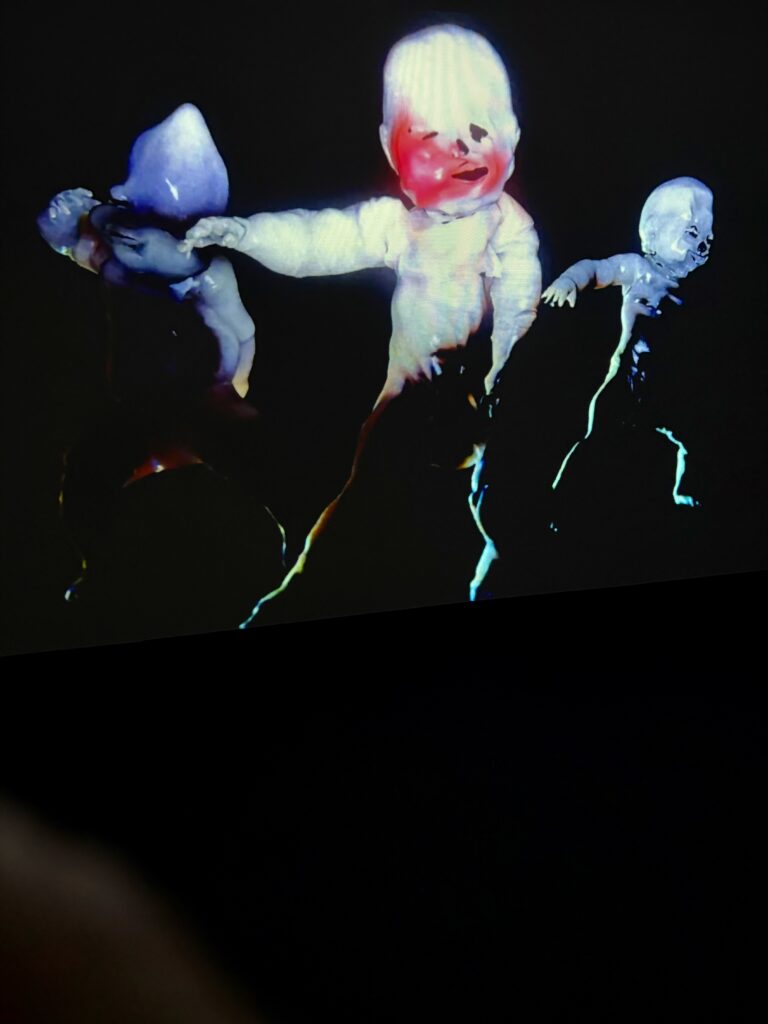
Scene 1 depicts a trio of disfigured children locked in synchronised dance, celebrating their inner and outer beauty in the limelight,’ say the collaborative artists, Arca and Jesse Kanda. Arca is the Venezuelan musician and performer, Alejandra Ghersi and Jesse is the British visual artist Jesse Kanda.
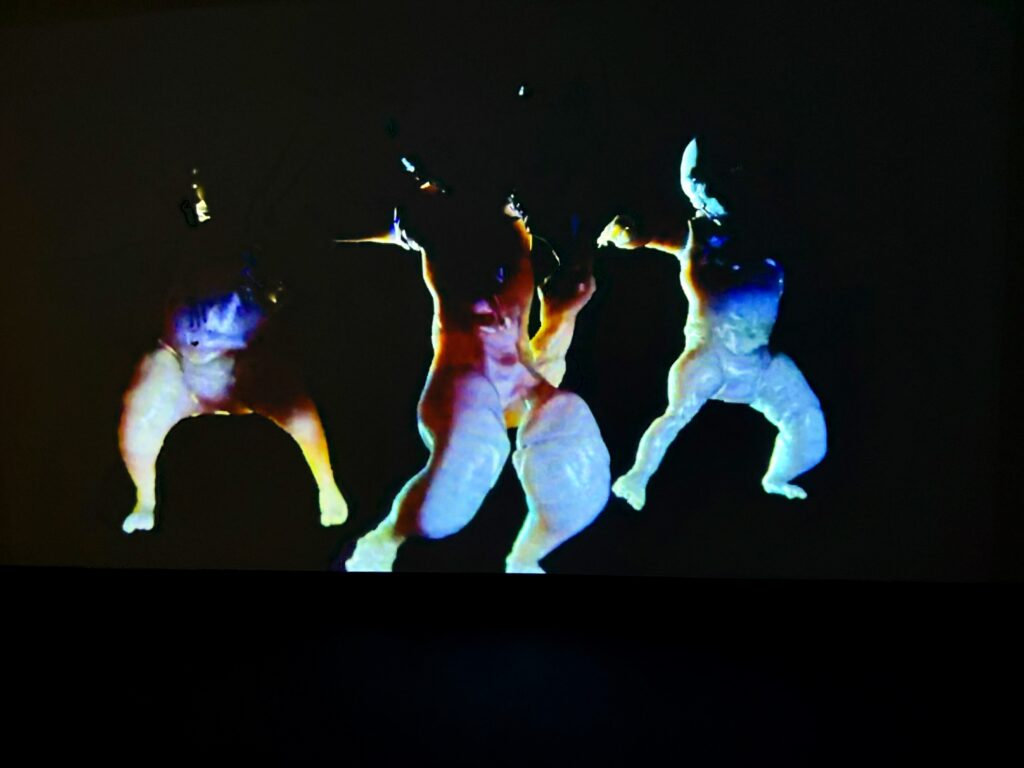
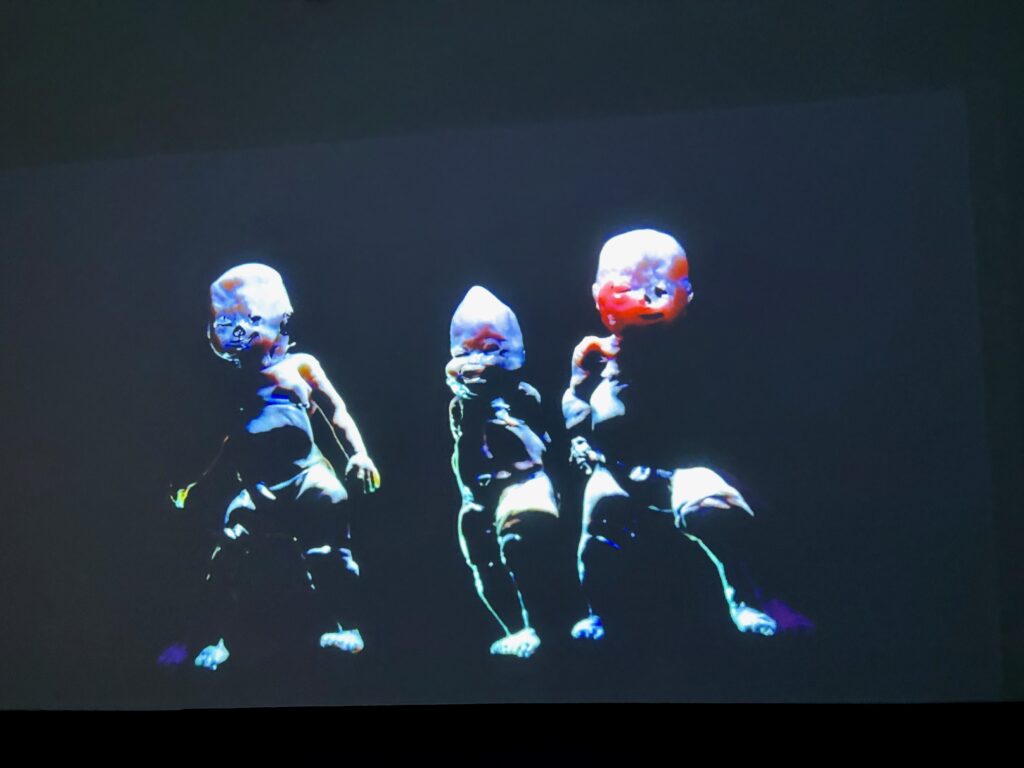
Transformations was a deeply memorable meditation on who and what we are as various deeply vulnerable and diverse examples of life on Earth. Lahti’s highly creative and challenging museums deserved their award in 2025 as Finland’s Museum of the Year. I’ll leave you with the video by Arca and Jesse Kanda, Trauma Scene I: https://youtu.be/NApVOHrbhqg?si=MDsDfj_35N9m_0po Part two of this blog about my visit to Finland will cover the 2025 Sibelius Festival.